

A B2B content marketing strategy is a documented system for creating, publishing, distributing, and measuring content that targets other businesses, not consumers, and supports real revenue goals. Not traffic for the sake of traffic. Not posting because “we should be active.” A system tied to demand, sales cycles, and decision-makers.
According to Content Marketing Institute, 73% of B2B marketers actively use content marketing. But here’s the part most people skip over: companies with a documented content marketing strategy are 313% more likely to report success. That gap is not about talent or creativity. It’s about structure.
This guide breaks down what a B2B content marketing strategy actually looks like when it’s done correctly, how teams build it, where it usually breaks, and what happens when companies get it wrong.
No warm-up. Let’s get into it.
Table of Contents
- What is B2B Content Marketing?
- Why B2B Content Marketing Matters
- Benefits of a B2B Content Strategy
- Elements of Successful Content Strategies
- 6 Steps to Develop Your Strategy
- Content for Each Funnel Stage
- Content Distribution Channels
- Advanced B2B Content Tactics
- Measuring Content Performance
What is B2B Content Marketing?

B2B content marketing is a planned approach to creating and distributing content that helps businesses make buying decisions. The audience isn’t “everyone.” It’s specific roles inside specific companies, often with multiple people involved in a single purchase.
A real strategy answers five questions clearly:
- Who is the content for?
- What problem does it solve?
- Where does it show up?
- How does it support revenue?
- How do we know it’s working?
Unlike B2C marketing, B2B content operates inside longer buying cycles. Decisions take weeks or months. There are budget approvals. Internal debates. Vendor comparisons. Content exists to support that entire process.
A documented strategy becomes a working reference for content teams. It decides what gets created, what doesn’t, where time is spent, and what success looks like before anything is published.
Common B2B Content Formats (And Why They Exist)
Different formats exist because buyers need different levels of information at different stages.
- Blog posts and articles
Used for search visibility and early-stage education. A post like “How SaaS Companies Reduce Customer Churn” attracts buyers who are researching problems, not vendors yet. - Videos
Product walkthroughs, tutorials, and customer interviews help prospects understand how something works without booking a sales call. - Case studies
These show outcomes. Not features. A case study that explains how a platform increased qualified leads by 150% in six months gives buyers proof they can defend internally. - E-books and whitepapers
Long-form content for deeper evaluation. These usually sit behind forms because they’re high-intent assets. - Webinars
Live or recorded sessions that combine education with interaction. They work well for mid-funnel buyers asking specific questions. - Social media content
Mostly distribution and amplification in B2B. Especially on LinkedIn. - Email marketing
Newsletters, nurture sequences, and product updates. Still one of the highest ROI channels in B2B. - Podcasts
Useful for thought leadership and long-form discussions. Not great for direct conversion, but strong for brand trust over time.
Each format exists to serve a specific buyer need. Using all of them without a reason is where teams burn out.
Why B2B Content Marketing Matters Now (More Than Before)
B2B buyers do their research independently. That’s not new. What is new is how and where they search.
Three shifts matter right now.
1. Search Is No Longer Just Google
Buyers are actively using AI-driven tools like ChatGPT and Perplexity to evaluate vendors and solutions. If your content doesn’t exist, or isn’t clear, it doesn’t show up.
2. Most Questions Happen Early
More than 70% of AI-powered search users ask top-of-funnel questions. If your content only talks about your product, you miss the entire discovery phase.
3. Revenue Is Directly Affected
AI-powered search is expected to influence $750 billion in US revenue by 2028. Content visibility is no longer optional. It’s a revenue lever.
Beyond search, content marketing builds authority, lowers customer acquisition costs, and supports sales teams with material buyers already trust.
The Business Benefits of a B2B Content Marketing Strategy

When it’s done right, content produces compounding results.
Brand awareness – Consistent, useful content increases recognition among relevant buyers.
Engagement – Educational content drives repeat visits, social shares, and email subscriptions.
Trust and credibility – Buyers trust vendors who explain problems clearly and don’t hide behind vague claims.
Organic traffic growth – Search-driven content keeps attracting visitors long after publication.
Lead generation – Gated assets, trials, and demos turn readers into contacts.
Without a strategy, content becomes random output. With one, it becomes a growth system.
Elements of a Successful B2B Content Strategy
The most successful B2B content marketing teams share 6 common characteristics that drive results.
Knowing your audience ranks as the top success factor, with 79% of high-performing teams attributing their results to deep audience understanding. Teams invest time researching customer pain points, goals, and buying behaviors.
Content aligned with organizational objectives matters to 68% of successful teams. The content strategy supports broader business goals like revenue growth, market expansion, and customer retention rather than existing in isolation.
Effective measurement and performance demonstration enables 61% of top performers to prove content marketing value. These teams track metrics that matter to leadership and adjust strategies based on data insights.
Thought leadership from business leaders contributes to success for 60% of advanced content teams. Executive participation in content creation and promotion adds credibility and amplifies reach.
Collaboration with other teams helps 55% of successful content marketers achieve better results. Cross-functional work with sales, product, and customer success teams creates more relevant and effective content.
Documented content strategy separates 53% of top performers from average teams. Written strategies ensure team alignment, maintain consistency, and provide clear direction for content initiatives.
6 Key Steps to Develop a B2B Content Strategy
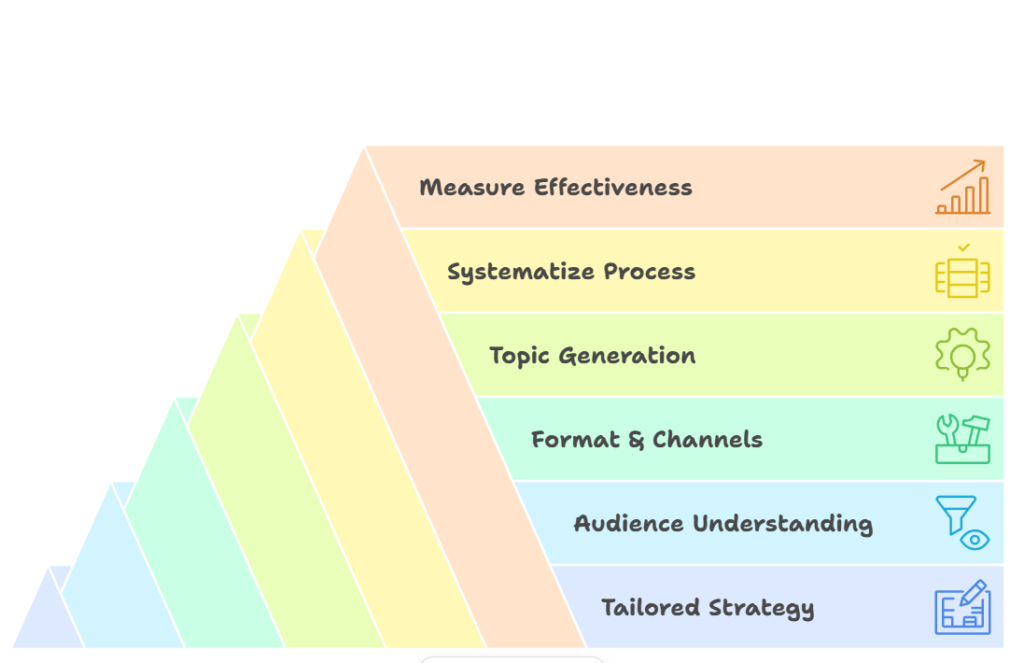
1. Get a Tailored B2B Content Strategy
Start with a foundation that aligns content plans with your specific business needs and target audience. A tailored approach analyzes your company’s unique value proposition, competitive landscape, and customer base.
Content strategy tools can jumpstart this process by analyzing your website, identifying content pillars, researching target keywords, and creating initial content calendars. These platforms examine your existing content, competitor strategies, and industry trends to generate actionable recommendations.
The initial strategy should include your core content themes, primary audience segments, key performance indicators, and a preliminary publishing schedule. This foundation guides all subsequent content decisions and keeps teams focused on business objectives.
2. Understand Your Audience/Identify the Buyer’s Persona
Understanding your audience starts with research into their daily challenges, business goals, and decision-making processes. The goal is to know what keeps your prospects awake at night and what solutions they’re actively seeking.
YouTube video comments reveal real questions from your target audience. Read through comments on industry-related videos to find recurring themes and specific problems people mention. Questions like “How do I find my first enterprise client?” or “What tools automate our reporting process?” show genuine pain points.
Competitor product reviews contain valuable insights about what customers value and what frustrates them. Reviews mention specific features customers love, problems they encountered, and results they achieved. This information helps you create content addressing these same concerns.
Online communities and forums provide ongoing access to audience conversations. Join LinkedIn groups, Reddit communities, and Facebook groups where your target customers discuss their challenges. Monitor these spaces regularly to spot trending topics and emerging needs.
Customer surveys and interviews deliver direct feedback about content needs. Talk to existing customers about their research process before buying, questions they had during evaluation, and information they wish they’d found earlier. These conversations reveal content gaps and opportunities.
Create detailed buyer personas documenting demographics, job roles, business goals, pain points, and content preferences for each audience segment. A complete persona includes information like company size, industry, decision-making authority, preferred content formats, and typical objections to purchase.
3. Pick Your Core Content Formats & Channels
Select content formats matching how your audience prefers to consume information. Different audiences favor different formats based on their industry, role, and available time.
SEO-optimized blog content works well for B2B companies targeting customers who research solutions online. Blog posts rank in search engines and provide value to prospects at every stage of the buying journey. Companies should publish 2-4 long-form blog posts monthly to maintain visibility.
Video content suits audiences that need visual demonstrations or prefer watching over reading. Product tutorials, customer success stories, and educational series perform well on YouTube and LinkedIn. Start with one video monthly and scale based on performance and resources.
Social media platforms vary by audience type. LinkedIn reaches business decision-makers and professionals, while platforms like Facebook and Instagram work better for businesses serving consumers. Choose platforms where your specific audience spends time rather than trying to maintain presence everywhere.
Email marketing provides direct access to interested prospects and customers. Weekly or bi-weekly newsletters keep your brand top-of-mind and deliver valuable content directly to subscriber inboxes.
Podcasts reach audiences during commutes and exercise when they can’t read or watch videos. B2B podcasts work well for thought leadership and long-form discussions with industry experts.
Webinars combine education with lead generation, allowing real-time interaction with prospects. Quarterly webinars on high-value topics attract qualified leads and position your company as an expert resource.
4. Come Up With Amazing Topics
Topic ideation begins with audience conversations and searches. The best content topics solve specific problems your target customers face right now.
Ask your audience directly what content they need through surveys, social media polls, and customer interviews. Questions like “What’s your biggest challenge with [topic]?” or “What would you like to learn more about?” generate dozens of content ideas.
Answer the Public reveals questions people ask about specific topics. Enter your core keywords to see related questions, prepositions, and comparisons people search for online. These queries become blog post titles and video topics.
Quora and Reddit discussions show real problems people discuss in your industry. Search for topics related to your products and services to find recurring questions and debates. Popular threads with many responses indicate high-interest topics.
Keyword research identifies topics with search demand and ranking opportunities. Target keywords with medium to high search volume and low to medium competition. Tools can analyze keyword difficulty and search trends to prioritize topics.
Content audits uncover gaps in your existing content library. Map current content to buyer journey stages to identify which stages lack sufficient material. This analysis shows where to focus new content creation efforts.
Competitor content analysis reveals successful topics and formats in your industry. Study which competitor posts generate high engagement and backlinks, then create superior content on those same topics with unique angles and deeper insights.
5. Systematize Your Content Process
Content processes determine whether strategies succeed or fail. Without systems for planning, creating, reviewing, and publishing content, teams struggle to maintain consistency and quality.
Content calendars provide visibility into what’s being created, who’s responsible, and when it publishes. A central calendar prevents duplicate efforts, ensures balanced topic coverage, and helps teams meet deadlines.
Workflow management assigns clear roles and responsibilities for each content piece. Define who handles research, writing, editing, design, approval, and publishing. Clear assignments prevent bottlenecks and confusion.
Collaboration platforms centralize communication and file sharing for content projects. Using one tool instead of email threads, shared drives, and messaging apps makes it easier to track progress and find information.
Publishing schedules establish consistent content output. An example schedule might include 4 blog posts monthly, 4 social posts weekly, 1 webinar quarterly, and 1 ebook quarterly. Consistency builds audience expectations and maintains momentum.
Speed matters in B2B content marketing. Faster content production means capturing timely topics, responding to industry changes, and reaching prospects before competitors do. Streamlined processes reduce time from ideation to publication.
6. Measure Leads and Micro-metrics/Measure the Effectiveness of Your Content
Measurement starts with tracking current performance across key metrics. Monitor impressions, views, and conversions for recent content to understand what’s working now.
Current stats to track include impressions for recent posts showing how many people saw your content, views indicating actual engagement, conversions measuring email sign-ups and trial registrations, and social shares revealing content that resonates with audiences.
Benchmarks and trends show performance changes over time. Compare metrics to previous periods to identify improvements and declines. Track changes in read time, bounce rate, and active email subscribers versus prior months or quarters.
Highest performing content analysis identifies your best assets. Review top 20 posts with highest views, best 20 posts with longest read times, and top 20 posts with most conversions. These insights reveal content types and topics that deliver results.
Use performance data to adjust your strategy. High-performing content deserves additional promotion through paid ads or email campaigns. Successful topics can become series with multiple related pieces. Underperforming content may need updating or indicates topics to avoid.
Attribution tracking connects content to revenue outcomes. Monitor which content pieces influence deal closures, generate qualified leads, and move prospects through the sales funnel. This data proves content marketing ROI to stakeholders.
Content Creation for All Stages of the Funnel
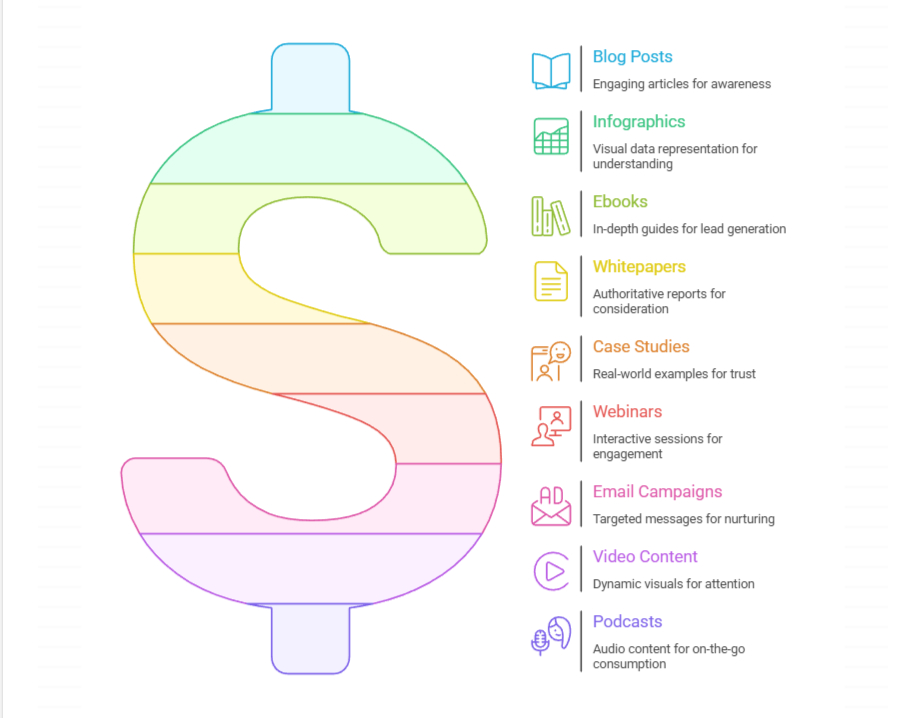
Different content types serve prospects at different buying journey stages. Top-of-funnel content builds awareness, middle-of-funnel content facilitates evaluation, and bottom-of-funnel content supports purchase decisions.
Blog Posts
Blog posts work at every funnel stage depending on topic and format. Awareness-stage posts answer general questions and educate prospects about industry challenges. Consideration-stage posts compare solutions and explain evaluation criteria. Decision-stage posts address specific product questions and objections.
Infographics
Infographics simplify complex data and processes into visual formats. These assets work well for awareness and consideration stages, earning social shares and backlinks while explaining concepts prospects need to understand before buying.
E-books
E-books provide comprehensive guides on topics requiring deeper exploration than blog posts allow. These gated assets work best at awareness and consideration stages, capturing lead information while delivering substantial value to prospects researching solutions.
Whitepapers
Whitepapers present research, analysis, and authoritative perspectives on industry issues. These technical documents suit consideration and decision stages, helping prospects understand methodologies, evaluate approaches, and justify purchase decisions to stakeholders.
Case Studies
Case studies demonstrate real results achieved by customers using your solution. These bottom-of-funnel assets address proof and credibility concerns, showing prospects how similar companies solved problems successfully with your product or service.
Webinars
Webinars combine education with product demonstration, working well at consideration and decision stages. Live events allow direct interaction with prospects, answering specific questions and building relationships with potential customers.
Email Campaign
Email campaigns nurture prospects across all funnel stages. Awareness emails deliver educational content and build brand familiarity. Consideration emails provide comparison resources and success stories. Decision emails offer demos, consultations, and incentives to purchase.
Video Content
Video content engages prospects throughout the buyer journey. Awareness videos explain concepts and industry trends. Consideration videos demonstrate product features and compare solutions. Decision videos showcase customer testimonials and detailed product walkthroughs.
Podcasts
Podcasts build thought leadership and awareness over time. Regular episodes establish expertise and keep your brand top-of-mind with prospects during their extended research and evaluation processes.
Content Distribution
Content distribution decides how many people actually see your content. Even strong material delivers no value if nobody finds it.
Use owned channels such as your website, blog, email list, and social media profiles first. These channels cost nothing and give full control over timing and messaging.
Earned channels extend reach through guest posts, media coverage, backlinks, and influencer shares.
Paid channels amplify proven content. Promote high-performing posts on LinkedIn, sponsor industry placements, and run search ads for high-value gated assets.
Match distribution to content goals. Awareness content needs broad reach, while decision-stage content works best with targeted accounts and retargeting audiences.
Track Channel Results
Tracking channel performance reveals which distribution methods deliver the best results for different content types. Some content performs better on LinkedIn while other pieces generate more engagement through email.
Monitor traffic sources in analytics to see which channels drive visitors to each content piece. Track referral sources, social platforms, email campaigns, and search queries bringing people to your content.
Measure engagement by channel to understand where audiences interact most with your content. Compare time on page, scroll depth, and conversion rates across different traffic sources.
Calculate cost per lead by channel for paid distribution efforts. Compare acquisition costs across LinkedIn ads, Google search ads, and sponsored content placements to optimize budget allocation.
Adjust distribution mix based on performance data. Invest more in channels delivering qualified leads at acceptable costs while reducing or eliminating spending on underperforming channels.
Create Content for Lead Nurturing
Lead nurturing content maintains relationships with prospects not yet ready to buy. These contacts need ongoing education and value to stay engaged with your brand throughout extended B2B buying cycles.
Segment leads based on behavior and engagement level. Group contacts by content they’ve consumed, pages they’ve visited, and actions they’ve taken. Different segments need different nurturing approaches.
Behavioral triggers initiate relevant content delivery. When someone downloads an ebook, send related blog posts over the following weeks. When someone visits pricing pages multiple times, trigger a sales outreach sequence.
Educational email series deliver value over time without being sales-focused. A 5-email series might cover industry trends, common challenges, solution approaches, implementation considerations, and success factors.
Personalized content recommendations suggest relevant resources based on previous engagement. If someone reads multiple posts about a specific topic, recommend your comprehensive guide on that subject.
Multi-touch nurturing combines email, retargeting ads, and social media to maintain visibility. Prospects should encounter your brand across multiple channels as they research solutions.
Progressive profiling gradually collects more information about leads over time. Each content download requests 2-3 new fields rather than long forms that create friction. This approach builds complete contact records while maintaining conversion rates.
Optimize the Content
Content optimization improves existing assets instead of relying only on new content. Updating pages often delivers faster results than publishing more material.
Maintain relevance and rankings by adding 30% new content or revising 50% of existing material. Updated content often sees traffic gains within 2–4 weeks.
Align content with current search intent by reviewing top results for target keywords. Refresh keyword research to capture new and emerging terms.
Improve readability for humans and machines using clear headings, short paragraphs, and bullet points. Add visuals to increase engagement and time on page.
Strengthen calls-to-action, improve internal linking, and apply semantic SEO (Schema.org) so search engines understand context. Use precise language and structure to support LLM optimization and accurate AI summaries.
Prioritize Link Building and Collaboration
Backlinks from authoritative websites signal content quality to search engines and drive referral traffic. The number and quality of backlinks significantly impact search rankings.
Research link prospects by identifying websites that link to competitor content or cover similar topics. Focus on industry publications, partner companies, and complementary service providers.
Create linkable assets that provide unique value other websites want to reference. Original research, comprehensive guides, and useful tools naturally attract backlinks from other content creators.
Outreach campaigns request backlinks from relevant websites. Personalize each request by explaining why your content benefits their audience and how it complements their existing content.
Guest posting on industry blogs builds backlinks while reaching new audiences. Write valuable content for partner websites and include relevant links back to your resources.
Digital PR pitches your research, surveys, and expert insights to journalists and bloggers. Media coverage generates high-authority backlinks and brand visibility.
Content partnerships with complementary businesses create co-marketing opportunities. Joint webinars, ebooks, and research reports benefit both partners through shared promotion and cross-linking.
B2B Content Strategy Tactics
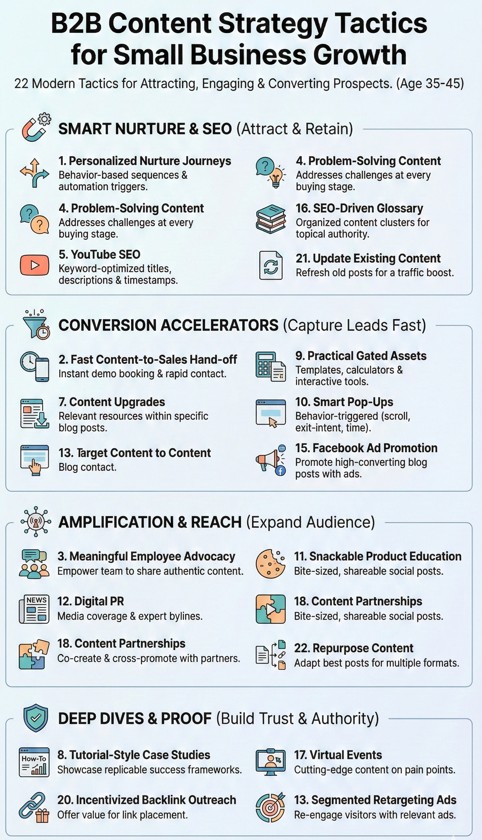
1. Personalized Nurture Journeys Based on Behavior
Behavioral nurturing delivers content based on specific actions prospects take. Marketing automation platforms track website visits, content downloads, and email engagement to trigger relevant follow-up.
Action-based email sequences respond to prospect behavior automatically. When someone downloads a specific guide, they receive related content over subsequent weeks that builds on that topic.
On-site chat prompts appear based on pages viewed and time on site. Visitors who view multiple product pages might see a demo offer, while blog readers see content subscription prompts.
Customized landing pages display different content based on traffic source or previous behavior. Visitors from social media see different messaging than those from search or email.
Multi-path nurturing creates different journeys for different segments. Product interest, company size, and industry all influence which content sequences prospects receive.
2. Fast Hand-Off of Content Leads to Sales
Speed to lead contact dramatically improves conversion rates. Leads contacted within 5 minutes are 21 times more likely to qualify than those contacted 30 minutes later.
Instant demo booking allows prospects to schedule sales conversations immediately when interest peaks. Chat tools and calendar booking widgets eliminate delays between content engagement and sales contact.
Lead scoring identifies which content engagements indicate high purchase intent. When prospects reach specific scores through their content consumption, sales receives immediate notification.
CRM integration ensures sales teams have complete context about prospect content engagement. Sales representatives see which content each lead consumed before reaching out with relevant conversation starters.
3. Meaningful Employee Advocacy
Employee advocacy amplifies content reach through team members’ professional networks. The strategy works when employees build engaged audiences that actually care about shared content.
Audience building training helps employees grow their professional followings on LinkedIn and other platforms. Teaching team members how to create valuable posts and engage authentically builds audiences that respond to company content.
Content sharing programs provide employees with pre-approved content they can share with their networks. Make sharing easy with ready-to-post content snippets and images.
Employee-generated content featuring team member expertise performs better than always sharing company accounts. Videos, posts, and articles from real employees feel more authentic and generate higher engagement.
4. Problem-Solving Content for Key Buying-Cycle Stages and Audience Segments
Problem-focused content addresses specific challenges prospects face at different buying stages. Creating content for particular situations ensures relevance and value.
Stage-specific content maps directly to awareness, consideration, and decision stages. Awareness content identifies and explains problems. Consideration content compares solution approaches. Decision content addresses implementation and selection concerns.
Segment-specific content speaks to different audience roles and industries. A CFO evaluating software needs different content than an IT manager implementing it. Create content for each stakeholder involved in buying decisions.
Pain point-focused topics address pressing challenges prospects actively seek to solve. Research customer support tickets, sales call recordings, and forum discussions to identify recurring problems worth addressing.
5. YouTube SEO
YouTube ranks as the second-largest search engine, making it valuable for B2B content distribution. Many business buyers search YouTube for product information and tutorials.
Keyword-optimized video titles and descriptions help content rank for relevant searches. Research keywords people use to find information on YouTube, not just Google.
Comprehensive video content that thoroughly answers questions performs better than brief clips. Aim for 7-15 minute videos that fully address topics rather than surface-level overviews.
Timestamps in video descriptions improve user experience and SEO. Breaking videos into chapters helps viewers find specific information and increases watch time.
Custom thumbnails with clear text improve click-through rates from search results. Design thumbnails that clearly communicate video topics and stand out in search results.
7. Content Upgrades to Gated Assets
Content upgrades offer downloadable resources directly related to specific blog posts. The high relevance between content and offer increases conversion rates significantly.
Blog-specific downloads provide deeper information on the post’s topic. A blog post about email marketing might offer an email template bundle. A post about SEO could include a technical audit checklist.
In-content placement positions download offers where engagement is highest. Place offers after making key points rather than only at post endings where many readers never reach.
Exit-intent popups capture leaving visitors with relevant offer based on the content they just consumed. These offers get one last chance to convert readers into leads.
8. Tutorial-Style Case Studies That Benefit Readers
Tutorial case studies combine customer success stories with actionable how-to content. These hybrid pieces prove results while teaching readers how to achieve similar outcomes.
Step-by-step breakdowns show exactly what customers did to succeed. Detail the process, tools used, and decisions made rather than just highlighting final results.
Replicable frameworks give readers templates they can apply to their situations. Explain the methodology behind customer success so others can follow similar approaches.
Educational value makes case studies useful even for non-customers. Readers gain knowledge regardless of whether they buy, building goodwill and trust.
9. Practical Gated Assets Like Templates and Calculators
Practical tools save time for prospects, making them more valuable than guides requiring reading time. Templates, calculators, and spreadsheets deliver immediate utility.
Ready-to-use templates eliminate the need to build tools from scratch. Provide templates for processes your prospects regularly perform, like project plans, budgets, or analysis frameworks.
Interactive calculators help prospects quantify problems or potential solutions. ROI calculators, cost comparison tools, and sizing assessments provide personalized insights.
Editable resources allow customization for specific situations. Spreadsheets and documents prospects can modify offer more value than static PDFs.
10. Smart Pop-Ups That Are Based on User Behavior
Behavioral targeting makes popups less intrusive and more effective. Triggers based on user actions create relevant offers at opportune moments.
Scroll-depth triggers display offers after visitors read a certain percentage of content. Someone who scrolls through 60% of a blog post shows high engagement and interest.
Exit-intent detection catches visitors about to leave and presents relevant offers. These popups get one final chance to convert abandoning visitors.
Time-on-site triggers wait until visitors demonstrate interest before showing offers. Display popups after 60-90 seconds rather than immediately upon arrival.
Multi-visit triggers recognize returning visitors and show different offers than first-time visitors. Loyal readers might see newsletter subscriptions while new visitors see starter guides.
11. Snackable Product Education
Bite-sized educational content makes complex topics accessible and shareable. Short videos, infographics, and social posts break down features and concepts into digestible pieces.
Feature highlights showcase one capability at a time rather than overwhelming audiences with everything at once. Weekly tips introduce features gradually.
Social-first formats optimize content for platform-specific consumption. Instagram carousels, LinkedIn posts, and Twitter threads each require different approaches to the same information.
Micro-content libraries organize small educational pieces by topic. Prospects can browse topics of interest and consume multiple quick pieces in one session.
12. Digital PR for Promotion and Reach
Media coverage and guest contributions extend content reach beyond owned channels. Publications with established audiences provide access to new prospects.
Executive bylines in industry publications position leadership as thought leaders. Pitch article ideas to relevant blogs and news sites, linking to valuable resources on your website.
Expert commentary on trending topics gets your brand mentioned in news articles. Respond quickly to journalist requests for quotes and insights on developing stories.
Research and data sharing attracts media attention. Surveys, studies, and original research provide newsworthy content journalists want to cover.
13. Segmented Retargeting Ads
Retargeting keeps your brand visible to website visitors as they browse other sites. Segmented audiences see ads relevant to their specific interests and behaviors.
Content-based segments group visitors by which blog categories or topics they consumed. Technology-focused readers see different ads than marketing-focused readers.
Funnel-stage segments deliver appropriate messages based on where prospects are in the buying process. Awareness-stage visitors see educational content while decision-stage visitors see demo offers.
Account-based segments target specific companies with personalized creative and messaging. Enterprise prospects see different ads than small business visitors.
15. Facebook Ad Promotion for High-Converting Blog Posts
Paid promotion of proven content expands reach beyond organic channels. Blog posts with demonstrated conversion rates deserve advertising investment.
Lookalike audiences find new prospects similar to current customers. Upload customer lists to create audiences with matching characteristics and interests.
Interest targeting reaches people based on pages they follow and content they engage with. Target specific job titles, industries, and interests relevant to your offering.
Conversion-optimized campaigns focus on driving specific actions rather than just traffic. Optimize for lead generation, landing page views, or other meaningful outcomes.
16. SEO-Driven Glossary or Library for Valuable Topic Clusters
Organized content hubs improve SEO for competitive keywords by clustering related content. Glossaries and resource libraries create structure search engines reward.
Pillar page structure connects comprehensive main pages to detailed supporting content. The main page covers a topic broadly while linked pages dive deep into specific aspects.
Internal linking between related pieces signals content relationships to search engines. Connect all cluster pieces to strengthen topical authority.
Alphabetical or categorical organization helps users find information quickly. Clear structure improves user experience and encourages exploration of additional content.
17. Virtual Events With Cutting-Edge Content That Hits Popular Pain Points
Online events generate large numbers of qualified leads when content addresses pressing challenges. Event success depends entirely on content quality and relevance.
Expert speakers add credibility and draw audiences. Partner with recognized industry figures to deliver insights attendees can’t find elsewhere.
Actionable takeaways ensure attendees gain immediate value. Focus on practical strategies participants can implement rather than theoretical concepts.
Interactive elements like Q&A, polls, and breakout sessions increase engagement. Passive watching doesn’t generate the same value as active participation.
18. B2B Content Marketing Partnerships
Collaborative content creation with complementary businesses expands reach to new audiences. Partners promote joint content to their audiences, multiplying distribution.
Non-competing partners serve similar audiences without direct competition. Marketing automation companies might partner with CRM providers to create joint content.
Co-created resources combine expertise from both organizations. Joint ebooks, webinars, and research reports offer more comprehensive value than single-company content.
Cross-promotion agreements ensure both partners actively promote collaborative content. Establish clear promotion commitments before creating content together.
20. Incentivized Backlink Outreach That Works
Backlink requests succeed more often when requesters offer something valuable in return. Incentives make link placement worth the effort for website owners.
Charitable donations in recipients’ names provide feel-good incentives for link placement. Offer to donate to a charity of their choice when they add your link.
Reciprocal value creates win-win situations. Offer to link to their content from high-authority guest posts you write elsewhere.
Product access gives prospects reason to link and try your solution. Lifetime deals or extended trials incentivize both linking and product evaluation.
21. Update Existing Content
Refreshing current content increases traffic faster than creating new pieces. Updates take 2-3 hours per article but can boost traffic by 50-200% within weeks.
Content refresh criteria ensure updates deliver meaningful improvements. Add 30% new content or revise 50% of existing material to signal freshness to search engines.
Search intent verification confirms content still matches current searcher needs. Review top-ranking competitors to ensure your angle and depth remain competitive.
Keyword expansion incorporates new related terms that emerged since original publication. Research current keyword variations and questions to address in updates.
Date updates in titles and content show recency. Change “2023 Guide” to “2026 Guide” and reference current statistics and examples.
22. Repurpose Best-Performing Content in Other Formats
Content repurposing extends the value of successful pieces by transforming them into different formats. One comprehensive blog post can become a video, infographic, social thread, and podcast episode.
Cross-format adaptation reaches audiences with different content preferences. Some people prefer watching videos while others prefer reading blog posts on the same topic.
Platform-specific optimization tailors repurposed content to each channel’s best practices. A blog post becomes a LinkedIn article, Twitter thread, and Instagram carousel with format-specific adjustments.
Compilation approaches group related content into larger resources. Multiple blog posts on similar topics become ebook chapters or email course lessons.
In Summary
B2B content marketing strategy requires a documented plan that prioritizes the needs of the business audience over generic traffic metrics.
A successful B2B content strategy improvements include a 500% increase in lead generation and 1,100% organic growth. By systematizing the content process and using proven tactics like YouTube SEO and behavioral nurture journeys, companies establish lasting brand affinity and authority.
Implementation starts with a deep understanding of your target audience and ends with the continuous measurement of ROI to ensure long-term marketing success.