

Content marketing has become the backbone of modern digital strategy, with 97% of marketers now incorporating it into their approach. This isn’t surprising. Businesses that embrace strategic content creation see three times as many leads per euro spent compared to traditional advertising methods.
Whether you’re a medium-sized company exploring inbound marketing for the first time or an established brand looking to refine your approach, understanding content marketing benefits can transform how you connect with potential customers. This guide walks you through everything you need to know about leveraging valuable content to achieve your most important business goals.
What is Content Marketing?
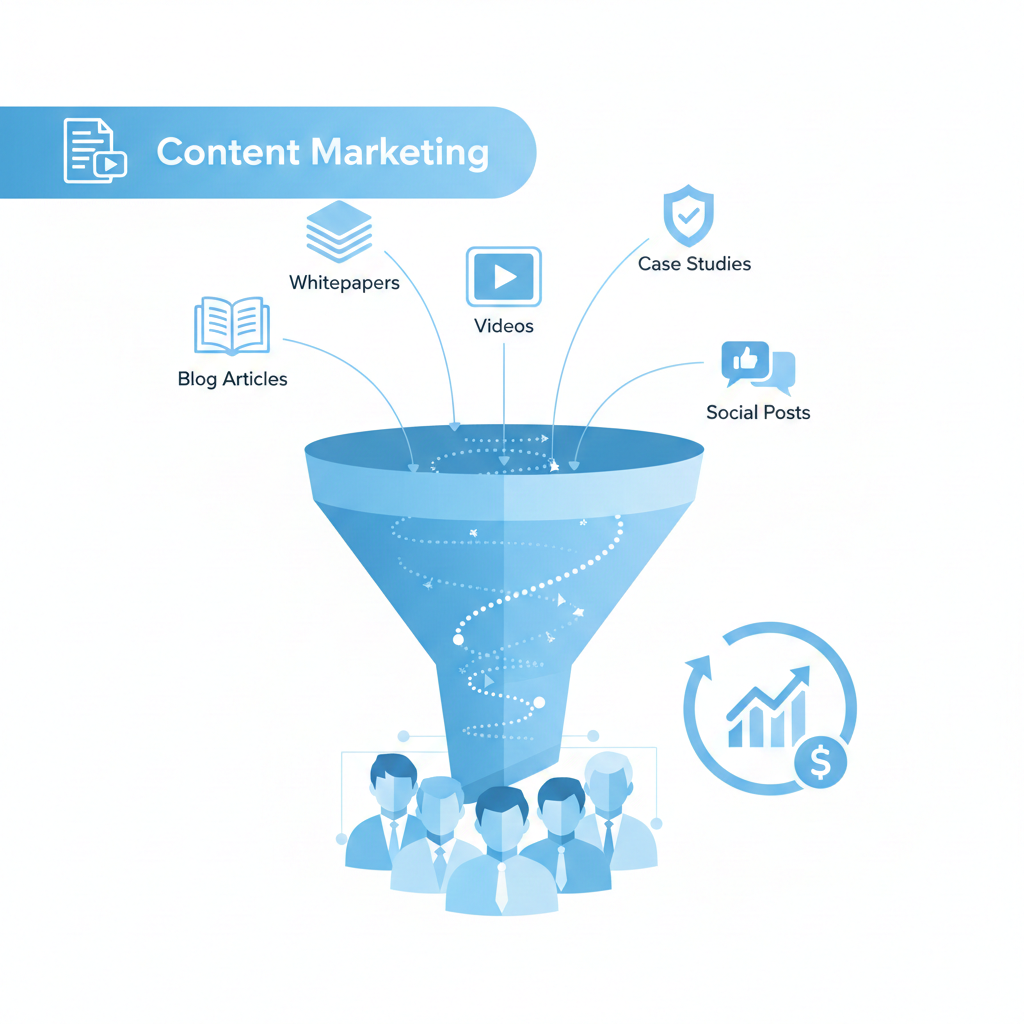
Content marketing is a strategic approach to publishing easily accessible information that informs, entertains, and attracts audiences who are likely to fit your brand perfectly. Unlike traditional outbound advertising that interrupts people, content marketing draws interested prospects to you naturally.
The core principle is simple: create and distribute valuable content that addresses your target audience’s questions, challenges, and interests. When someone searches for information related to your expertise, they discover your content-establishing your first connection without any paid ads.
This approach manifests across multiple formats. Blog posts answer common questions in your industry. White papers provide in-depth analysis of complex topics. Customer cases demonstrate real-world success stories. Social media channels share bite-sized insights that spark conversations. Each piece works together as part of a comprehensive digital marketing ecosystem.
What separates content marketing from traditional marketing is the value exchange. You’re not asking for attention, you’re earning it by solving problems and providing genuine help before any purchase occurs.
19 Content Marketing Benefits for Business Growth
The advantages of content marketing extend far beyond simple visibility. When executed properly, quality content becomes a powerful engine driving multiple business objectives simultaneously.
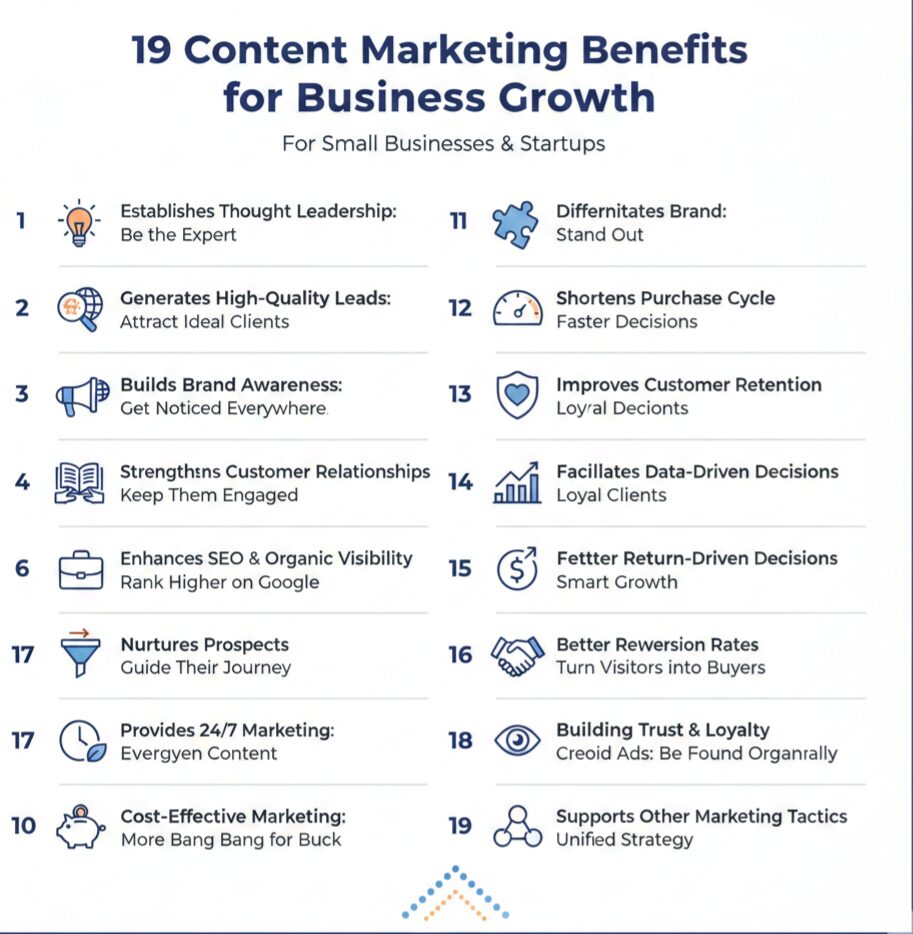
1. Establishes Thought Leadership

Publishing insightful content positions your brand as an authority in your field. When you consistently share expert perspectives on industry challenges, emerging trends, and practical solutions, people begin viewing your organization as a trusted source of knowledge.
This authority compounds over time. Each article, guide, or analysis adds another data point proving your expertise. B2B buyers review an average of 11–13 pieces of content from multiple sources before making purchase decisions-and they gravitate toward brands demonstrating deep understanding of their needs.
Thought leadership creates a competitive advantage that’s difficult to replicate. While competitors focus on promotional messages, your content educates and enlightens, building credibility that directly influences buying decisions.
2. Generates High-Quality Leads

Effective content marketing attracts people actively seeking solutions you provide. Someone searching for answers to specific problems is far more valuable than a random person seeing a generic advertisement.
These qualified leads arrive with context. They’ve already consumed your content, understand your perspective, and recognize the value you offer. The lead generation process becomes more efficient because you’re connecting with prospects at the exact moment they need information.
Content marketing generates three times as many leads as paid advertising per euro spent. This efficiency stems from targeting intent rather than demographics. You’re not hoping the right person sees your ad-you’re creating resources that the right people actively seek out.
3. Builds Brand Awareness and Recognition

Consistent content creation expands your digital footprint across search engines and social media platforms. Each piece becomes a discovery point where someone new encounters your brand for the first time.
Raising brand awareness through content differs from traditional advertising. Rather than forcing your name in front of people, you’re creating multiple pathways for organic discovery. Someone might find your blog post through Google, share it on LinkedIn, and introduce dozens of colleagues to your brand-all without any advertising spend.
This organic spread creates lasting recognition. When your content provides genuine value, people remember your brand positively. They return for more information, bookmark your resources, and recommend you to others facing similar challenges.
4. Educates Target Audience
Quality content helps potential customers understand complex concepts, evaluate different solutions, and make informed decisions. This educational function builds trust while simultaneously moving prospects closer to purchase readiness.
Consider technical products or professional services where buyers need substantial knowledge before committing. Your content bridges the gap between initial curiosity and genuine understanding. You’re not just promoting-you’re enabling smarter decision-making.
This education benefits both parties. Buyers arrive at conversations better informed, reducing time spent on basic explanations. Sales teams engage with prospects who already understand the value proposition and are ready for deeper discussions.
5. Strengthens Customer Relationships
Content marketing doesn’t end when someone becomes a customer. Ongoing valuable content keeps your brand top-of-mind, demonstrates continued commitment to their success, and provides reasons to stay engaged long after the initial purchase.
Existing customers who regularly consume your content remain more connected to your brand. They see new features, learn advanced techniques, and discover additional ways to extract value from their investment. This sustained engagement naturally leads to higher customer lifetime value.
The relationship deepens through consistent value delivery. Each helpful article or insightful guide reinforces their decision to choose your brand, reducing churn and creating advocates who actively promote you to peers.
6. Enhances SEO and Organic Visibility
Search engine optimization relies heavily on quality content. Google’s algorithms prioritize websites that consistently publish relevant, authoritative information addressing user search intent.
Every piece of content creates new opportunities to rank for specific search terms. Blog posts targeting long-tail keywords capture niche searches your competitors might miss. Comprehensive guides addressing broad topics establish authority for competitive terms. The cumulative effect significantly improves your organic traffic over time.
Fresh content signals to search engines that your website remains active and relevant. Regular publishing, combined with proper optimization, steadily improves your search rankings. This sustainable organic visibility continues generating traffic long after the content’s initial publication.
7. Supports Sales Teams with Resources
Sales representatives armed with quality content close deals more effectively. Case studies provide proof points during negotiations. Technical guides answer detailed questions without requiring custom responses. Comparison articles address objections before prospects even raise them.
This content library becomes a force multiplier for your sales team. Instead of creating unique materials for each prospect, representatives share existing resources that already present information persuasively. The time saved translates directly to more productive customer conversations.
Prospects appreciate receiving helpful resources rather than aggressive sales pitches. When your team leads with valuable content, conversations feel collaborative rather than transactional. This approach builds trust and accelerates the sales process naturally.
8. Nurtures Prospects Through the Sales Funnel
Different content types address various stages of the customer journey. Top-of-funnel awareness content introduces your brand to new audiences. Middle-funnel consideration content helps prospects evaluate options. Bottom-funnel decision content provides the final push toward purchase.
This customer journey orchestration ensures prospects receive relevant information precisely when needed. Someone just learning about a problem needs different content than someone actively comparing vendors. Strategic content marketing addresses each stage deliberately.
Automated nurturing sequences deliver this content systematically. Email marketing campaigns share relevant articles based on prospect behavior. Marketing automation tools track engagement and adapt content delivery accordingly. The result is a sophisticated system guiding prospects toward purchase naturally.
9. Provides 24/7 Marketing via Evergreen Content
Evergreen content asset creation produces materials that remain relevant indefinitely. Unlike time-sensitive campaigns requiring constant refresh, evergreen pieces continue attracting traffic and generating leads months or years after publication.
This creates a compounding return on your content investment. The initial effort to create a comprehensive guide continues paying dividends as new prospects discover it through search engines. Your marketing works around the clock without additional spending.
The mathematical advantage becomes obvious over time. Traditional advertising stops delivering results the moment you stop paying. Evergreen content becomes increasingly cost-effective with each passing month as its cumulative impact grows while costs remain fixed.
10. Offers Cost-Effective Marketing Alternative
Content marketing accounts for 26% of an average B2B company’s marketing budget-a significant allocation reflecting its proven effectiveness. Yet the cost per lead remains substantially lower than traditional outbound advertising.
This cost effective marketing advantage stems from the organic, pull-based nature of content. You’re not paying for each impression or click. Instead, you invest in creating assets that attract prospects naturally through search engine optimization and social sharing.
The mathematics favor content marketing decisively. While paid ads require continuous spending to maintain visibility, quality content continues generating returns long after creation. The return on investment accelerates as your content library grows and compounds over time.
11. Differentiates Brand from Competitors
Most companies in any industry offer similar products or services. Competitive advantage sculpting through unique content helps you stand out by showcasing distinctive perspectives, proprietary methodologies, and authentic brand persona development.
Your content communicates what makes your approach different. Perhaps you’ve developed a unique framework for solving customer problems. Maybe your company culture emphasizes values that resonate with your target audience. Strategic content brings these differentiators to life far more effectively than generic advertising claims.
This differentiation becomes increasingly important as markets mature. When potential customers struggle to distinguish between similar offerings, your content provides clear reasons to choose you specifically. The brands investing in substantive, differentiated content win the attention and trust that drive purchasing decisions.
12. Shortens Purchase Decision Cycle
Comprehensive content addresses questions and concerns before prospects need to ask them. When someone can find detailed information answering their objections independently, they move through the decision process faster.
This acceleration benefits everyone involved. Prospects appreciate efficient access to information without waiting for sales calls. Your team spends less time on basic education and more time on high-value conversations. The overall sales cycle compresses, improving velocity and closing rates.
Educational content particularly impacts complex B2B purchases with multiple stakeholders. When you provide resources that help buyers build internal consensus, you’re actively facilitating the purchase process rather than merely waiting for decisions.
13. Improves Customer Retention
Customer retention improvement through ongoing valuable content keeps your brand relevant long after the initial sale. Customers who regularly engage with your content maintain stronger connections to your brand and renew at higher rates.
This retention focus proves especially valuable given acquisition costs continue rising across most industries. Keeping existing customers engaged through helpful content costs far less than replacing churned accounts with new acquisitions.
The content supporting retention looks different from acquisition-focused materials. Customer-exclusive resources, advanced technique guides, and strategic best practices demonstrate ongoing investment in their success. This sustained value delivery directly impacts customer lifetime value and reduces churn.
14. Facilitates Data-Driven Decision Making
Content marketing generates rich behavioral data revealing what topics resonate with your audience. Analytics show which articles attract the most traffic, where readers spend time, and which pieces drive conversions.
This data-informed content iteration creates a continuous improvement cycle. You identify high-performing content patterns and double down on what works. Underperforming topics get revised or retired. Your strategy becomes increasingly sophisticated as you accumulate insights.
The predictive content intelligence emerging from this data helps forecast which topics will succeed before publication. You begin recognizing patterns in audience preferences, seasonal trends, and evolving interests. This foresight transforms content marketing from guesswork into science.
15. Better Return on Investment
Measuring content marketing ROI requires looking beyond immediate conversions to include long-term brand value, organic visibility improvements, and customer lifetime value increases. When evaluated holistically, content marketing delivers measurable ROI acceleration that compounds over time.
The math becomes compelling when you consider all benefits simultaneously. Brand awareness expansion, lead generation, SEO ranking improvements, sales enablement, customer retention. Each objective achieved through the same content investment multiplies your effective return.
Organizations tracking content marketing success properly see the full picture. Early results might seem modest, but the cumulative effect over 12-24 months typically surpasses paid advertising returns significantly. Patience and consistency unlock the true economic advantages.
16. Boosting Conversion Rates
Strategic content targeted at bottom-funnel prospects directly impacts conversion optimization. Case studies demonstrating success with similar customers overcome skepticism. Detailed product comparisons address specific feature questions. Free tools or templates provide risk-free ways to experience your value.
Boosting conversion rates through content requires understanding precisely what information prospects need before committing. Sometimes it’s pricing transparency. Other times it’s security certifications or integration capabilities. The right content at the right moment removes friction from the decision process.
Testing different content formats and messages reveals what converts best for your specific audience. Video testimonials might outperform written case studies. Interactive tools might generate more leads than static guides. Continuous optimization steadily improves conversion performance.
17. Building Trust and Loyalty
Authenticity in content creates emotional connections extending beyond transactional relationships. When your content reflects genuine expertise and honest perspectives-including acknowledging limitations-you build trust that translates to long-term brand loyalty.
This trust becomes a defensive moat protecting against competitive threats. Customers loyal to your brand because of the value you consistently provide prove far less susceptible to competitor offers. The relationship transcends price and features to encompass trust and reliability.
Building trust requires consistency over time. One helpful article doesn’t create loyalty. Twelve months of consistently valuable content transforms casual readers into devoted advocates who actively promote your brand within their networks.
18. Reaching an Audience Who May Avoid Ads
Ad fatigue and ad blockers increasingly limit traditional advertising effectiveness. Meanwhile, people actively seeking information through search engines remain highly receptive to quality content that answers their questions.
This shift in consumer behavior makes content marketing essential for reaching audiences who’ve tuned out traditional advertising. You’re not interrupting-you’re providing exactly what they’re actively seeking. The permission is implicit in their search query.
Younger demographics particularly avoid traditional advertising while consuming enormous amounts of online content. Brands successfully reaching these audiences do so through authentic, valuable content rather than interruptive ads. Content marketing meets your audience where they already spend time.
19. Supporting Other Marketing Tactics
Content marketing creates assets that amplify every other marketing channel. Email marketing campaigns share blog posts to nurture leads. Social media channels distribute content to expand reach. Paid advertising can promote high-performing content to new audiences more cost-effectively than promoting products directly.
This cross-channel content synergy creates integrated campaigns where each tactic reinforces the others. A comprehensive guide becomes the centerpiece for a multi-week campaign spanning organic social, email nurturing, and targeted paid promotion. The content provides substance while various channels provide distribution.
Sales teams, customer success managers, and even recruiting efforts all benefit from quality content. Everyone in your organization gains resources that help them communicate value more effectively. Content becomes the connective tissue unifying your entire go-to-market strategy.
Disadvantages and Challenges of Content Marketing
While content marketing benefits are substantial, honest evaluation requires acknowledging genuine challenges organizations face when implementing this approach.
1. Skills and Resource Requirements
Creating quality content demands specific expertise many companies lack internally. Strong writing skills, SEO knowledge, design capabilities, and strategic thinking rarely exist within a single person. Building a capable content team requires significant investment.
The time commitment also surprises many organizations. Producing one high-quality article might require 8-15 hours including research, writing, editing, design, and optimization. Maintaining consistent publishing schedules strains resources, particularly for smaller teams juggling multiple responsibilities.
Organizations frequently underestimate these requirements initially. What seemed like a simple blog writing task reveals itself as a complex discipline requiring dedicated resources and budget. Companies succeeding with content marketing either build internal capabilities or partner with specialized agencies.
2. Finding Content Ideas
Content ideation becomes challenging after publishing dozens or hundreds of pieces. Identifying fresh angles on familiar topics, discovering emerging questions your audience asks, and maintaining creative momentum requires deliberate systems.
Many content programs stall because teams run out of ideas rather than resources. The initial enthusiasm driving the first 20 articles fades when brainstorming the next 20 feels repetitive. Without structured approaches to idea generation, content calendars become inconsistent.
Successful programs implement systematic ideation processes. Customer service teams share frequently asked questions. Sales representatives report common objections. Keyword research reveals search queries competitors haven’t addressed. Analytics identify content gaps where traffic drops off. These inputs feed a sustainable content pipeline.
3. Evaluation and Analytics
Measuring content marketing effectiveness proves more complex than tracking paid advertising campaigns. Attribution becomes murky when someone consumes six pieces of content over three months before converting. Which content deserves credit? How do you value brand awareness versus direct conversion?
Many analytics platforms provide incomplete pictures of content performance. Page views don’t indicate value delivered. Time on page doesn’t confirm comprehension. Conversion tracking misses assisted conversions where content played a supporting role. Building comprehensive measurement systems requires technical sophistication.
Organizations sometimes abandon content marketing prematurely because they can’t measure results effectively. The impact exists but remains invisible without proper analytics infrastructure. Investing in measurement capabilities alongside content creation ensures you can demonstrate value and optimize performance.
Types of Content
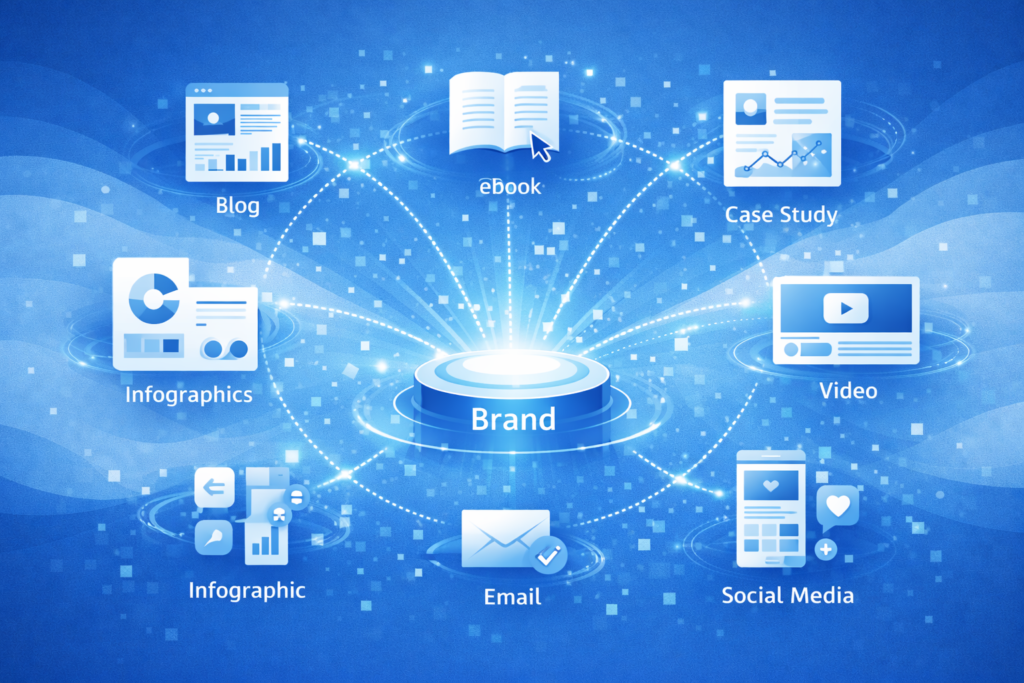
Effective content marketing strategies leverage diverse formats, each serving specific purposes within your overall approach:
Blog posts form the foundation for most content programs. They’re relatively quick to produce, highly shareable, and excellent for SEO. Regular blog publishing drives consistent organic traffic growth while demonstrating ongoing expertise.
White papers and ebooks provide comprehensive exploration of complex topics. These longer formats establish deep authority and work exceptionally well as lead magnets, where prospects exchange contact information for valuable downloadable resources.
Case studies and customer stories offer social proof through real-world examples. They address skepticism by showing concrete results similar customers achieved, making them particularly valuable during the consideration and decision stages.
Videos engage audiences preferring visual content. Explainer videos, product demonstrations, and thought leadership interviews reach people who rarely read long articles. Video content particularly dominates social media channels where attention spans favor dynamic formats.
Infographics distill complex information into visual formats that are easily digestible and highly shareable. They work well for statistical content, process explanations, and comparison charts.
Podcasts create intimate connections through authentic conversations. This audio format fits naturally into daily routines-commuting, exercising, or household tasks-capturing attention when reading isn’t practical.
Email newsletters nurture existing relationships by delivering curated content directly to subscribers. They maintain consistent touchpoints with your audience and drive traffic back to your website.
Social media content adapts your core ideas into platform-specific formats. Short posts tease longer articles, driving traffic while maintaining social presence. Native social content builds community and encourages conversation.
Interactive tools and calculators provide immediate utility while capturing valuable data about user needs. These assets generate qualified leads by offering genuine value in exchange for contact information.
The most successful programs combine multiple formats strategically. A comprehensive research report becomes a white paper, blog post series, infographic, video summary, and social media campaign-maximizing the return on your initial research investment.
Content Distribution Strategies
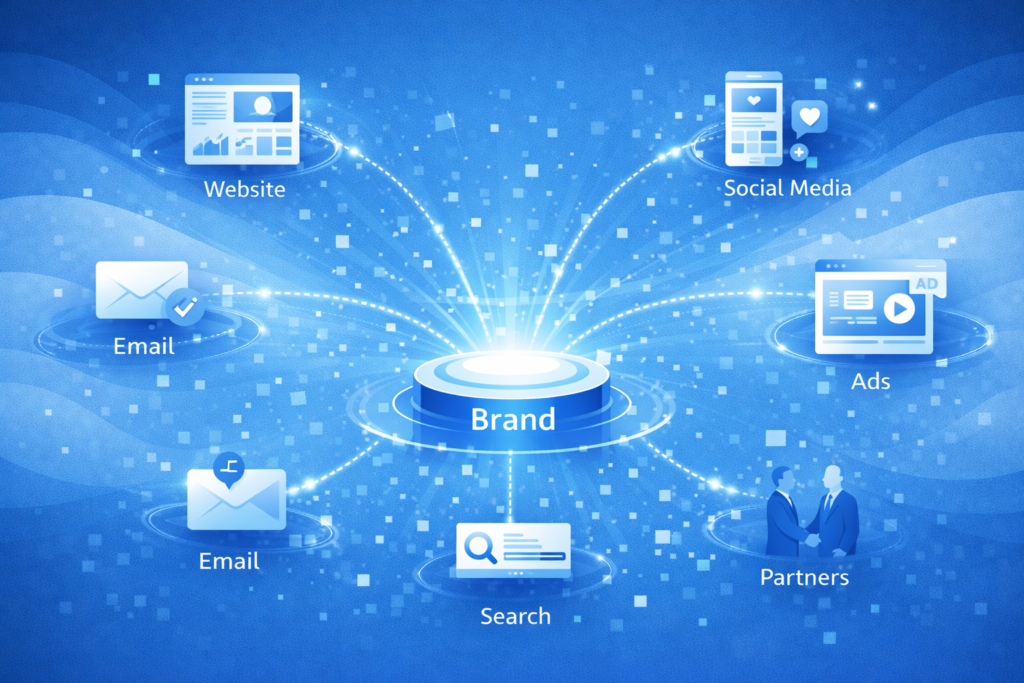
Creating quality content represents only half the challenge. Distribution determines whether your valuable content reaches the intended audience or sits undiscovered on your website.
Owned channels provide complete control over your content distribution. Your website, blog, and email list form the foundation where you maintain direct relationships with your audience. These channels require building from scratch but offer the highest long-term value.
Search engine optimization makes your content discoverable when prospects actively search for related topics. Proper keyword research, on-page optimization, and technical SEO ensure your content ranks prominently for relevant searches. This organic traffic provides the most cost-effective lead source over time.
Social media distribution extends your reach beyond owned channels. LinkedIn excels for B2B content, reaching professionals in their work context. Other platforms serve different audiences and content types. Strategic social sharing amplifies your content’s visibility without requiring paid promotion.
Email marketing delivers content directly to engaged audiences. Segmented email campaigns ensure subscribers receive content matching their interests and stage in the customer journey. Automated nurturing sequences systematically share relevant content as prospects progress toward purchase.
Content syndication republishes your articles on third-party platforms, exposing your ideas to new audiences. While you lose some control, syndication significantly expands reach. Proper attribution ensures readers can trace content back to your website.
Paid promotion accelerates content distribution by putting your best pieces in front of targeted audiences. Promoting high-performing content through Google Ads or social advertising often yields better results than promoting products directly. The content provides value first, making the promotional nature less intrusive.
Influencer partnerships leverage established audiences through collaborative content. Guest posting on industry publications, participating in podcast interviews, or co-creating resources with complementary brands exposes your expertise to relevant new audiences.
Employee advocacy transforms your team into distribution channels. When employees share company content with their networks, it reaches new audiences with implicit endorsement. Employee networks often exceed corporate following by orders of magnitude.
The most effective distribution strategies combine multiple channels synergistically. A flagship piece gets promoted through email, shared across social media, boosted with paid ads, and syndicated to relevant publications-maximizing its impact across your target audience.
Best Practices for Content Creation
Achieving content marketing success requires following proven principles that separate effective content from wasted effort.
What is Quality Content?
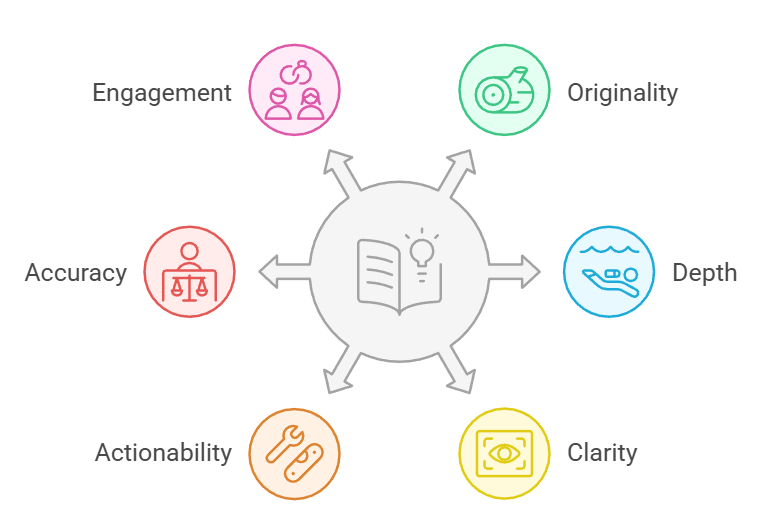
Quality content solves specific problems for clearly defined audiences. It demonstrates genuine expertise through original insights rather than recycling obvious information. Quality means comprehensive without being verbose, accessible without being simplistic.
Several characteristics consistently appear in high-performing content:
Originality brings fresh perspectives rather than rehashing common knowledge. Even familiar topics benefit from unique angles, proprietary data, or contrarian viewpoints that make people reconsider assumptions.
Depth addresses topics thoroughly enough that readers gain genuine understanding. Surface-level content frustrates audiences seeking substantive information. Going deep establishes authority while providing real value.
Clarity communicates complex ideas in straightforward language. Technical accuracy and accessibility aren’t mutually exclusive. The best content makes sophisticated concepts understandable without dumbing them down.
Actionability provides specific steps readers can implement immediately. Abstract theory has its place, but practical guidance that people can use right away delivers obvious value.
Accuracy builds trust through verifiable facts and honest representation. Overstated claims or cherry-picked data might generate short-term attention but damage long-term credibility.
Engagement maintains reader attention through compelling narratives, relevant examples, and varied formatting. Quality content respects the reader’s time by delivering value efficiently.
Assessing quality before publication prevents wasted effort. Ask whether this content meaningfully helps your target audience. If the honest answer is “not really,” either improve it substantially or redirect resources to more valuable topics.
SEO: Making Your Content Easy to Find
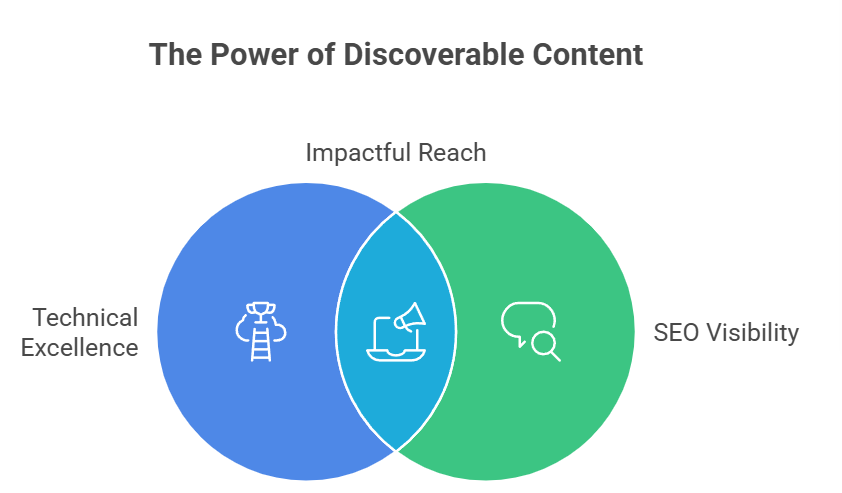
Search engine optimization ensures your valuable content actually reaches people searching for related information. Technical excellence means nothing if nobody discovers your work.
Keyword research identifies the specific terms and phrases your target audience uses when searching. Tools like Google’s Keyword Planner reveal search volume and competition levels. Focus on terms where you can realistically rank, particularly longer phrases with clear intent.
On-page optimization incorporates target keywords naturally into strategic locations: titles, headings, first paragraph, and throughout the body. Modern SEO prioritizes semantic relevance over exact keyword matching. Write for humans first, optimizing for algorithms second.
Content structure helps both readers and search engines understand your content’s organization. Descriptive headings, short paragraphs, bullet points, and logical flow improve readability while making content easier to index.
Internal linking connects related content across your website, helping visitors discover relevant additional resources while distributing SEO authority throughout your site. Strategic internal links keep readers engaged longer.
External linking to authoritative sources demonstrates thorough research and provides additional value to readers. Search engines view outbound links to quality sources as signals of content credibility.
Meta descriptions don’t directly impact rankings but significantly affect click-through rates from search results. Compelling descriptions that accurately summarize content encourage searchers to click through to your article.
Mobile optimization ensures content displays properly on smartphones and tablets. With mobile searches dominating most industries, responsive design isn’t optional-it’s fundamental.
Page speed affects both user experience and search rankings. Compress images, minimize code, and use reliable hosting to ensure fast loading times across devices.
SEO is an ongoing practice rather than a one-time task. Search algorithms evolve, competitor content improves, and new topics emerge. Regular content audits identify optimization opportunities for existing content while informing future creation priorities.
Analytics: How to Score Your Content’s Performance?
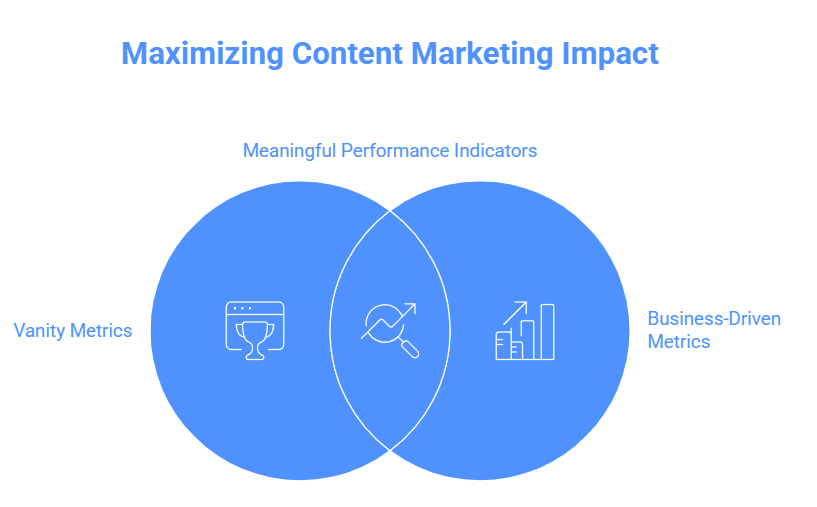
Measuring content marketing effectiveness requires tracking metrics that reflect your specific business objectives rather than vanity metrics that look impressive but don’t drive results.
Traffic metrics reveal how many people discover your content. Page views indicate reach, while unique visitors show audience size. Sessions per user suggest whether content engages people enough to return. Traffic sources identify which distribution channels work best.
Engagement metrics measure how people interact with content once they arrive. Time on page suggests whether visitors actually read rather than immediately bouncing. Scroll depth tracking reveals which sections maintain attention. Comments and social shares indicate content resonating enough to spark conversation.
Conversion metrics connect content to business outcomes. Lead capture rates show how many visitors provide contact information. Assisted conversions track content’s role in multi-touch customer journeys. Revenue attribution identifies which content ultimately drives sales.
SEO metrics evaluate organic visibility improvements. Keyword rankings reveal which terms you’re winning. Organic traffic growth demonstrates cumulative SEO impact. Backlinks from other websites signal authority and improve rankings.
Lead quality metrics assess whether content attracts the right audience. Marketing-qualified lead rates indicate alignment between content and ideal customer profile. Sales-accepted lead rates show whether marketing and sales definitions match. Customer acquisition cost reveals content marketing efficiency.
Content efficiency metrics identify your most valuable assets. Views per piece show which topics resonate. Conversion rate by content type reveals which formats drive action. Content ROI calculations demonstrate return relative to creation investment.
Establish baseline metrics before implementing new strategies so you can measure actual improvement. Monthly reporting tracks progress while revealing trends. Quarterly deep dives identify strategic adjustments needed to optimize performance.
The insights from analytics should directly inform content strategy. Double down on topics and formats performing well. Investigate why certain content underperforms-poor topic selection, inadequate promotion, or execution issues. Discontinue content types consistently failing to deliver results.
Are You Getting the Maximum Benefit Out of Your Content Marketing?
Maximizing content marketing benefits requires honest assessment of your current approach against proven best practices.
Consider whether your content strategy aligns with clear business objectives. Are you creating content because competitors do, or because you’ve identified specific goals it should achieve? Unfocused programs waste resources producing content that doesn’t move important metrics.
Evaluate your content quality objectively. Does your content provide genuine insights unavailable elsewhere? Or does it rehash information readily available with a quick search? Mediocre content generates mediocre results regardless of distribution excellence.
Assess your consistency and volume. Publishing sporadically whenever someone finds time produces minimal results. Content marketing rewards sustained commitment with regular publishing schedules. Are you producing enough content to build meaningful momentum?
Review your distribution effectiveness. Even remarkable content fails without proper promotion. Do you actively distribute content across multiple channels? Or do you simply publish and hope people somehow discover it?
Examine your measurement sophistication. Can you demonstrate content marketing’s impact on revenue? Or do you rely on traffic metrics loosely correlated with business outcomes? Mature programs connect content directly to pipeline and revenue.
Audit your content formats and topics. Are you diversifying beyond basic blog posts? Does your content address questions across the entire customer journey? Comprehensive programs serve awareness, consideration, and decision stages with appropriate content types.
Consider your competitive positioning. How does your content compare to what leading competitors publish? Are you matching their quality and consistency, or falling behind? Content marketing is increasingly competitive-standing still means losing ground.
If honest assessment reveals gaps, don’t feel discouraged. Most organizations operate well below their content marketing potential. Identifying specific improvement opportunities provides clear direction for enhancing your program’s effectiveness.
Small refinements compound over time. Improving content quality by 20%, publishing consistency by 30%, and distribution reach by 25% collectively transforms results dramatically. The brands dominating their industries with content marketing got there through continuous incremental improvement.
FAQs
Why is Content Marketing Important?
Content marketing has become essential because buyer behavior has fundamentally changed. People research independently before engaging with sales representatives, consuming an average of 2-7 pieces of content before making B2B purchase decisions. Brands not providing this content lose opportunities to competitors who do. Content marketing establishes credibility, builds relationships, and influences purchasing decisions at critical moments. It’s no longer optional, it’s how modern buyers prefer to learn about solutions and evaluate vendors.
What are the Challenges of Content Marketing?
The primary challenges include resource requirements, maintaining consistency, generating fresh ideas, and measuring effectiveness. Creating quality content demands specialized skills and significant time investment. Many organizations struggle to sustain regular publishing schedules as initial enthusiasm wanes. Proving ROI proves difficult without sophisticated analytics. Competition for attention increases constantly as more brands invest in content. Overcoming these challenges requires treating content marketing as a core business discipline rather than a casual side project.
What are the Pros and Cons of Content Marketing?
Content marketing pros include cost-effectiveness compared to traditional advertising, long-term compound returns, improved SEO, qualified lead generation, thought leadership establishment, and customer relationship strengthening. Cons include substantial upfront time and resource investment, delayed results compared to paid advertising, need for specialized skills, ongoing commitment requirements, and measurement complexity. The advantages significantly outweigh disadvantages for most businesses, particularly those with longer sales cycles and complex products requiring substantial buyer education.
What are the Benefits of Content Marketing Strategies?
Strategic content marketing delivers measurable improvements across multiple business objectives simultaneously. It generates three times more leads per euro than paid advertising while costing 62% less than outbound marketing. Content improves SEO, driving sustainable organic traffic growth. It shortens sales cycles by addressing objections preemptively. Customer lifetime value increases as ongoing content strengthens relationships and reduces churn. Content enables data-driven optimization as analytics reveal which topics, formats, and messages resonate with your audience. A well-executed strategy creates competitive advantages difficult for competitors to replicate.
In Summary
Content marketing has become a cornerstone of digital strategy for 97% of marketers because it effectively addresses objectives ranging from brand awareness to lead generation and long-term loyalty. However, achieving these results requires moving beyond sporadic efforts toward a systematic, strategic discipline.
Success in the modern landscape belongs to organizations that treat content as a core business function, investing in high-quality creation, sophisticated distribution, and rigorous measurement to outperform traditional outbound advertising.
With the rise of generative AI and accessible marketing technology, now is the ideal time to refine your approach. Begin by auditing your existing assets against industry best practices to identify and systematically close performance gaps.
Whether focusing on consistency, quality, or data-driven insights, these improvements compound over time. By committing to a clear strategy and high-value output, you can transform content into your organization’s most effective and sustainable marketing asset.