

Content marketing and demand generation are not competing strategies, content marketing is the engine that fuels demand generation. B2B teams that pit them against each other consistently underperform teams that treat them as one integrated system. The real mistake is not choosing between the two; it’s failing to understand how they connect.
Table of Contents
What Is Content Marketing vs Demand Generation?
Defining these terms clearly is step one, because most of the confusion comes from teams using them interchangeably when they mean different things.
Content Marketing Defined
Content marketing is the strategic creation and distribution of educational, useful, or entertaining content designed to attract, engage, and retain a clearly defined audience. The goal is to build trust and authority over time so that when your audience is ready to buy, your brand is the obvious choice.
Content marketing outputs include: blog posts, guides, case studies, video series, podcasts, email newsletters, and whitepapers. The defining feature is that the content provides genuine value independent of whether the reader buys anything.
Demand Generation Defined
Demand generation is the full system of marketing activities designed to create awareness, interest, and pipeline for your product or service. Demand generation is not a single tactic, it is a program that includes paid, earned, and owned channels working together to move prospects through the funnel.
Where content marketing asks “what value can we create for our audience?”, demand generation asks “what activities will generate measurable pipeline?” Demand gen is inherently revenue-focused and outcome-measured.
Why the Confusion Exists
The confusion exists because content marketing is one of the most effective demand generation tactics available. When B2B teams conflate them, they either treat all content as a demand gen campaign (stripping out educational value in favour of lead capture) or they create content with no demand goal attached.
In practice, what we see is that most B2B teams fall into one of these two traps, and neither produces results.
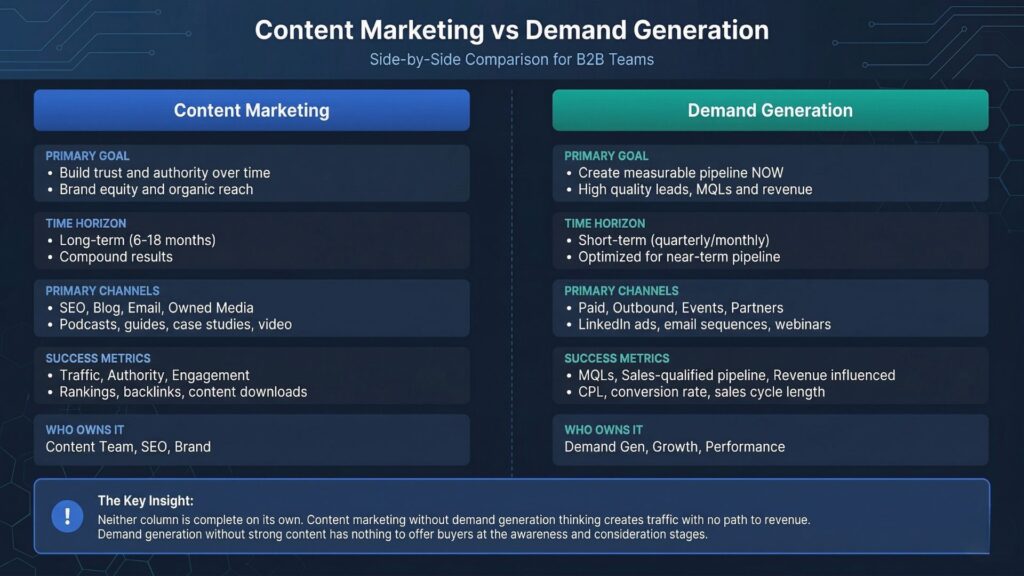
Figure 1: Content Marketing vs Demand Generation, Side-by-Side Comparison
The False Battle: Why Teams Pit Them Against Each Other
The content marketing vs demand generation debate is often a symptom of a deeper organisational problem: fragmented budgets and misaligned incentives.
The Budget Silo Problem
In many B2B companies, content marketing sits under “brand” or “SEO” with a mandate to generate organic traffic. Demand generation sits under “growth” or “revenue” with a mandate to generate leads and pipeline. Each function is measured differently, so they optimise for different things.
The content team produces articles that rank well but don’t convert. The demand gen team runs paid campaigns driving to landing pages that don’t build long-term trust. Both teams report “results” to their respective managers, but the company’s pipeline stagnates.
The fix is to make both teams accountable to the same revenue metric, not separate vanity metrics like “organic sessions” and “MQL volume.”
The Metrics Mismatch
According to Forrester Research, 74% of B2B buyers conduct more than half of their research online before contacting a salesperson. That research phase is where content marketing does its most important work, but it’s almost impossible to attribute directly to a demand gen campaign.
This creates a measurement gap. Content marketers struggle to show “pipeline influenced” from a blog post. Demand gen managers dismiss content as “soft” because the ROI isn’t immediate. Both are wrong.
How This Plays Out in Practice
Here’s a scenario that plays out at dozens of B2B companies every quarter: The demand gen team runs a LinkedIn paid campaign to a gated whitepaper. Leads come in, but the sales team reports that prospects “aren’t ready.” Meanwhile, the content team has published six blog posts over three months — all genuinely useful, all ranking on page one, but none of them link to the whitepaper, and none have a CTA that guides readers toward a next step.
Two functions doing good work independently, but producing no compounding effect together.
Key Differences: Content Marketing vs Demand Generation
The table below compares both disciplines across the dimensions that matter most for B2B teams making resource allocation decisions.
| Dimension | Content Marketing | Demand Generation |
| Primary goal | Build trust and authority over time | Create measurable pipeline now |
| Time horizon | Long-term (6–18 months) | Short-term (monthly/quarterly) |
| Primary channels | SEO, email, social, owned media | Paid, outbound, events, partnerships |
| Success metric | Organic traffic, authority, engagement | MQLs, pipeline, revenue influenced |
| Content role | Core deliverable | One tactic among many |
| Audience relationship | Educate and attract | Identify and convert |
| Budget ownership | Marketing / brand | Revenue / growth |
| Who “owns” it | Content team, SEO team | Demand gen, growth team |
The key insight: neither column is complete on its own. A demand generation program without strong content has nothing to offer prospects at the awareness and consideration stages. A content marketing program without demand generation thinking produces traffic with no clear path to revenue.
Where They Overlap (and Why That’s the Point)
The most effective B2B marketing programs are built at the intersection of content marketing and demand generation, not by choosing one or the other.
Awareness-Stage Content That Drives Pipeline
According to the Content Marketing Institute’s 2025 B2B Report, 71% of B2B buyers consume 3–5 pieces of content before engaging with a sales representative. That content consumption is content marketing doing its job. But if that content isn’t designed to progress the buyer toward a next step, the demand generation pipeline never fills.
The solution is to map every piece of content to a buyer journey stage and a demand outcome. A blog post on “content marketing vs demand generation b2b” should not just inform — it should include a relevant CTA pointing toward a deeper resource, a tool, or a direct conversation.
For a deeper view on how to structure this kind of content system, the B2B Content Marketing Strategy Guide covers the full framework for building a content program that drives consistent pipeline.
Gated Content as a Demand Gen Asset
Gated content, whitepapers, templates, research reports, sits at the intersection of both disciplines. It requires content marketing skills to produce (depth, authority, usefulness) and demand generation thinking to deploy (who do we target, through which channel, with what follow-up sequence).
Teams that handle both functions well treat gated content as a joint investment: the content team owns quality, the demand gen team owns distribution and follow-up.
Distribution Is Where Demand Gen Amplifies Content
Publishing a piece of content without a distribution plan is one of the most common mistakes in B2B marketing. Demand generation provides the distribution engine, paid promotion, email sequences, SDR outreach, event amplification, that takes content from “live on the blog” to “in front of the right buyers at the right time.” The top B2B content distribution channels article breaks down exactly how to build that engine.
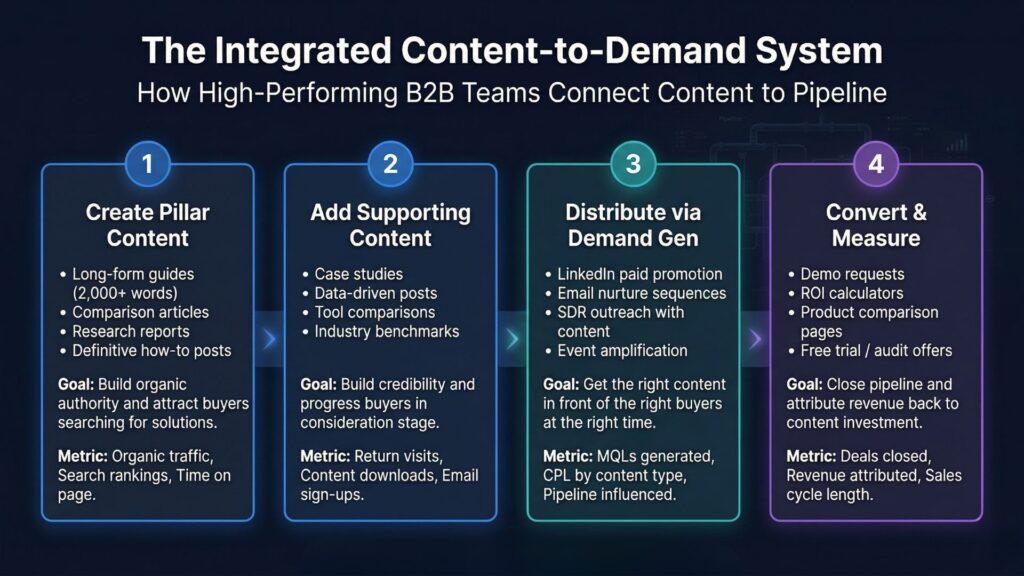
Figure 2: The Integrated Content-to-Demand System — How High-Performing B2B Teams Connect Content to Pipeline
What High-Performing B2B Teams Actually Do
The common advice is to pick a lane, “be a content marketing company” or “run a lean demand gen machine.” Here’s the problem: the data doesn’t support that advice for most B2B teams.
The Integrated Approach
High-performing B2B marketing teams, those generating consistent pipeline from content, operate with a unified content-to-demand system. Every piece of content is created with both an audience value goal (what does the reader get from this?) and a demand goal (what should the reader do next?).
In practice, what we see is this structure:
• Pillar content (guides, comparison articles) drives organic discovery and builds authority.
• Supporting content (case studies, data posts) provides proof and progresses consideration.
• Conversion content (product comparison pages, ROI calculators, demo requests) closes the loop.
Demand generation activities, paid ads, email nurture, sales outreach, promote and amplify all three layers, not just the bottom one.
How to Align Your Team Around the Same Goal
The practical mechanism for alignment is a shared content-to-revenue scorecard. Both teams track the same pipeline metric, with content marketing responsible for top-of-funnel volume and quality, and demand generation responsible for conversion rate from each stage.
According to LinkedIn’s B2B Institute, companies with aligned sales and marketing functions generate 208% more revenue from marketing. The same alignment principle applies within marketing, between content and demand generation functions.
The B2B Content Marketing Strategy Checklist is a practical starting point for teams who want to build this alignment without a six-month planning process.
Common Mistakes B2B Teams Make — and How to Fix Them
These are the three mistakes that account for the majority of wasted content and demand generation spend in B2B.
Mistake 1: Publishing Without a Demand Goal
Publishing content without a clear demand goal is the most common mistake — and the easiest to fix. Every piece of content should have a defined “next step” for the reader.
The fix: Before publishing any piece of content, define: (1) who is this for, (2) what stage of the buyer journey are they in, and (3) what is the one next action we want them to take? If you can’t answer all three, the content isn’t ready to publish.
For inspiration on content formats that convert across funnel stages, 15 Content Marketing Ideas for B2B provides a practical breakdown organised by funnel stage.
Mistake 2: Running Demand Gen Without Content Support
Paid campaigns without strong content in the funnel produce expensive, low-quality leads. When a prospect clicks an ad and lands on a page that doesn’t educate, inform, or build trust, they bounce. The conversion rate is low, the cost-per-lead is high, and the sales team gets weak prospects.
The fix: Before scaling any paid demand generation channel, audit your content library against the buyer journey. Do you have strong, credible content at awareness, consideration, and decision stages? If not, build it before spending on distribution. Using marketing automation for B2B content can help sequence content delivery to nurture leads more effectively once you have the content in place.
Mistake 3: Measuring the Wrong Things
According to Gartner’s 2024 CMO Survey, 58% of B2B marketing leaders say proving content marketing ROI is their biggest challenge. Most teams measure the wrong things: sessions, followers, open rates. These metrics don’t tell you whether your content is contributing to revenue.
The fix: Measure content marketing on pipeline influenced, not just traffic generated. Use UTM parameters and CRM attribution to track which content pieces are consumed by prospects before they enter the pipeline. This requires coordination between your content, demand gen, and sales teams, but it’s the only way to know what’s actually working.
The benefits of content marketing article includes a breakdown of the revenue metrics worth tracking, including cost-per-lead by content type and attributed pipeline by channel.
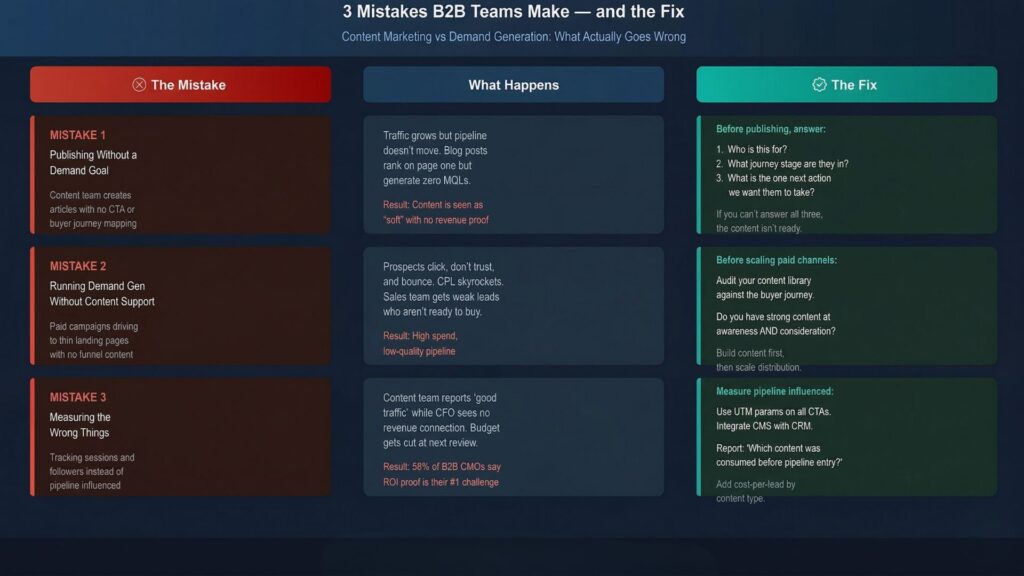
Figure 3: Three Mistakes B2B Teams Make — and the Fix
What to Do Next
If you’ve been running content marketing and demand generation as separate efforts, the most valuable thing you can do this week is map your content library against your demand generation funnel.
Start here: Pull a list of every content asset you published in the last 12 months. Tag each one with a buyer journey stage (awareness, consideration, decision). Then look at your demand generation activities for the same period, paid campaigns, email sequences, outbound sequences, and identify which content assets were used in those programs.
The gaps you find are your highest-priority content investments. You’ll almost certainly discover that you have strong awareness-stage content but weak consideration and decision-stage content, which is why your demand gen programs struggle to convert pipeline.
For a structured approach to building a content strategy that integrates with your demand generation goals, start with the B2B Content Marketing Strategy Guide and use the framework to align your team around the same revenue outcomes.
At B2BContentOS, we built a free Content Brief Generator to help teams create content that maps to both audience value and demand generation goals from the start.
FAQ
Is content marketing part of demand generation?
Content marketing is one of the most powerful tactics within a demand generation program, but it’s also broader than demand generation. Content marketing has long-term goals (brand authority, organic search dominance) that extend beyond pipeline creation. The most effective B2B teams treat content marketing as the foundation that demand generation programs are built on.
What is the difference between demand gen and lead gen?
Demand generation is the full program of activities designed to create awareness and interest in your product or service, it includes both inbound and outbound tactics. Lead generation is a subset of demand gen: it’s specifically the process of capturing contact information from interested prospects. You can generate demand without capturing leads (brand awareness campaigns), but effective lead gen requires demand generation foundations.
Can a small B2B team run both content marketing and demand generation?
Yes, and in many ways small teams have an advantage because they can align these functions naturally without organisational silos. A team of two or three can run a content marketing program that directly feeds a demand generation system. The key is to plan content with both goals in mind from the start, rather than treating them as separate workstreams.
Which delivers results faster: content marketing or demand generation?
Demand generation typically produces faster, more measurable results, especially through paid channels. A LinkedIn campaign can generate leads within days. Content marketing compounds over time: a blog post published today may drive pipeline for three years, but it rarely drives pipeline in its first week. The right answer for most B2B teams is to invest in demand generation for near-term pipeline while building content marketing for long-term compounding returns.
How do you measure whether content marketing is supporting demand generation?
The most reliable method is pipeline attribution, tracking which content pieces were consumed by prospects before they entered your CRM pipeline. Use UTM parameters on all content CTAs, integrate your CMS with your CRM (HubSpot, Salesforce), and report on “pipeline influenced” as your primary content marketing metric. Supplement this with cost-per-lead by content type to identify which formats and topics attract the highest-quality prospects.
What types of content work best for demand generation?
According to Demand Gen Report’s 2024 B2B Content Preferences Survey, 76% of B2B buyers prefer content from vendors that focuses on solving specific pain points rather than promoting products. The highest-converting content for demand generation combines genuine educational value with a clear next step: comparison guides, ROI calculators, case studies, and diagnostic tools consistently outperform purely promotional content.