

B2B content marketing for SaaS works by creating educational, problem-focused content that maps to each stage of the buyer journey, from awareness to adoption and expansion.
Unlike traditional B2B content, SaaS content must address both the buyer and the end user, support self-serve discovery, and reduce time-to-value after signup. The companies that win with SaaS content treat their blog as a product, not a publishing channel.
Table of Contents
1. Why SaaS Content Marketing Is Different
B2B SaaS content marketing is not the same as B2B services content marketing. If you treat it that way, you will build a blog that generates traffic but no pipeline.
Here is what makes SaaS content structurally different:
| Factor | Traditional B2B Content | B2B SaaS Content |
| Buyer journey length | 3 to 12 months | 2 weeks to 6 months |
| Decision makers | 1 to 3 senior stakeholders | 3 to 8, including end users |
| Product demo | Required by sales | Often self-serve trial |
| Content goal | Generate a sales conversation | Drive trial signup or PLG activation |
| Post-sale content need | Low | High, onboarding, retention, expansion |
| Keyword competition | Moderate | Very high, VC-funded competitors |
The typical B2B content playbook, write thought leadership, generate leads, hand to sales, is too slow for SaaS. Your trial just converted. You have 7 days to show value before they churn.
This means your content strategy must work on two levels simultaneously: acquiring new users through search and distribution, and reducing friction inside the product lifecycle through onboarding and retention content. See our B2B content marketing strategy guide for how to structure both layers.
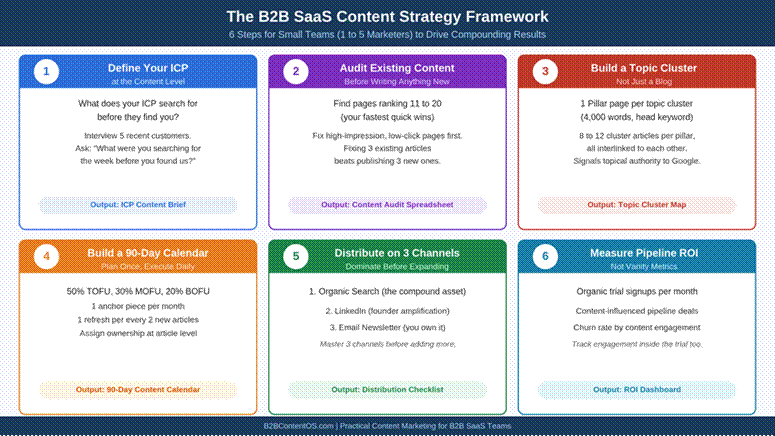
Figure 1: The Two-Lane SaaS Content Strategy. Acquisition and Retention must run simultaneously.
2. The SaaS Content Funnel: What to Create at Each Stage
To build a SaaS content funnel, match content format and intent to where your buyer is in their journey. Here is the breakdown that maps directly to pipeline.
TOFU: Top of Funnel, Problem-Aware Content
Your TOFU audience knows they have a problem but does not know your product exists. They are searching for answers, not software.
- Definitional guides: “What is [category]” articles that own the vocabulary of your space
- Industry benchmark reports: “State of [Your Category] 2026” with original data
- How-to guides: targeting high-volume informational keywords with low KD
- Approach comparisons: comparing methodologies, not tools, yet
The goal: Get found. Build trust. Get them on your list.
MOFU: Middle of Funnel, Solution-Aware Content
- Best-of listicles: “[Tool Category] for B2B Teams”
- “Your Product vs. Competitor” comparison pages
- ROI calculators and interactive tools
- Use-case case studies: “How [Company Type] uses [Your Product]”
- Webinars and recorded demo content
The goal: Position as the obvious choice for their specific use case.
BOFU: Bottom of Funnel, Product-Ready Content
- Customer success stories with quantified outcomes
- “Is [Your Product] right for [ICP]?” qualification articles
- Integration guides showing how your product fits their existing stack
- Onboarding previews that remove the fear of switching
The goal: Remove the last objection standing between the buyer and a trial signup.
Post-Sale Content: The Most Underrated SaaS Lever
According to research by Bain and Company published in Harvard Business Review, a 5% increase in customer retention can increase profits by 25% to 95%. Yet most SaaS content teams allocate zero budget to post-sale content.
Post-sale content that directly reduces churn:
- In-app onboarding guides and contextual tooltips
- Use-case tutorials: “How to [achieve outcome] with [your product]”
- Monthly product update digests sent by email
- Advanced feature guides for power users
- Customer community content, forums, Slack groups, Q and A threads
Key action from this section: Build a 30-day onboarding email sequence driven by educational content. This single workflow can reduce early churn by 20 to 40% for SaaS products with any learning curve.
3. The B2B SaaS Content Strategy Framework: 6 Steps
This six-step framework is what we use and recommend at B2BContentOS for SaaS teams with 1 to 5 marketers.
Figure 2: The 6-Step B2B SaaS Content Strategy Framework
Step 1: Define Your ICP at the Content Level
Most SaaS companies have an ICP document. Almost none have translated it into content terms. You need to answer:
- What specific problems does your ICP search for before they find you?
- What language do they use in job descriptions and LinkedIn posts?
- What tools are they already using? Your content can reference these to get found.
- What does a win look like for them 90 days after starting the trial?
Action: Interview 5 recent customers. Ask: “What were you searching for the week before you found us?” Their answers become your content brief.
Step 2: Audit Existing Content Before Writing More
Before publishing article number 101, run a quick content audit. Identify pages ranking 11 to 20 (quick wins), pages with high impressions but low clicks (fix the title and meta), and pages with high bounce rate and no conversions (improve the CTA).
We cover this in depth in our B2B content marketing audit guide. For a step-by-step process with a free spreadsheet template, see how to do a B2B content audit. For the tools to run it, see our roundup of the best content audit tools for 2026.
Short version: fixing three existing articles outperforms publishing three new ones in the short term.
Step 3: Build a Topic Cluster, Not a Blog
Random blog publishing kills SaaS content marketing. You need a topic cluster strategy: one pillar page per major topic, supported by 8 to 12 cluster articles that all interlink.
- Pillar page: “[Your Category]: The Complete Guide”, 4,000 words, targets the head keyword
- Cluster articles: target long-tail variations around the pillar keyword
- Internal links: every cluster article links back to the pillar and to 2 to 3 sibling articles
This structure signals topical authority to Google, not just one good article. Our B2B content marketing strategy guide covers the full topic cluster build-out process.
Step 4: Create a 90-Day Content Calendar
- Balance content mix: 50% TOFU, 30% MOFU, 20% BOFU
- Include one anchor piece per month, a pillar guide, original research, or a free tool
- Schedule content refreshes: 1 refresh for every 2 new articles published
- Assign article-level ownership, not task-level ownership
Use our B2B content marketing strategy checklist to make sure nothing is missed when building this calendar.
Step 5: Distribute on 3 Channels, Not 10
Pick 3 channels and dominate them before adding a fourth. The distribution stack that works for small SaaS teams:
- Organic search: the compound asset. Non-negotiable.
- LinkedIn: for founder-led content amplification, 2 to 3 posts per article
- Email newsletter: the only channel you truly own
For the full breakdown of every channel available, read our B2B content distribution channels guide. See how marketing automation for B2B content can amplify distribution without adding manual effort.
Step 6: Measure What Moves Pipeline, Not Vanity Metrics
Pageviews are not a SaaS metric. Read our B2B content marketing ROI guide for a complete attribution model. The dashboard that works for small teams:
| Metric | What It Tells You |
| Organic trial signups per month | Direct revenue contribution of content |
| Time on page by funnel stage | Content quality and engagement signal |
| MOFU content to trial conversion rate | How well comparison content converts |
| Organic pipeline influenced | Attribution across longer sales cycles |
| Churn rate by onboarding content engagement | Whether post-sale content reduces churn |
4. Content Types That Work Best for B2B SaaS
SEO Blog Posts: The Foundation
Prioritise these four formats:
- How-to guides: targeting “how to [do what your product does]” keywords
- Comparison pages: “Best [Tool Category] for [ICP]” and “[Competitor] alternative” articles
- Use-case pages: “[Your Product] for [Vertical or Role]”
- Integration pages: “[Your Product] with [Popular Tool] integration guide”
Integration pages are chronically underused. If your product integrates with 20 tools, you have 20 low-KD, high-intent articles you could write today. For format inspiration, see 15 content marketing ideas for B2B.
Product-Led Content: The Differentiator
- Free tools, calculators, graders, and templates that demonstrate product value
- Interactive demos embedded in blog posts
- “Try it yourself” mini features accessible without a signup
In practice, SaaS companies that embed free tools in their content attract significantly more backlinks than those publishing text-only articles.
Original Research: The Link Magnet
Publish one original research report per year. Survey your customers or analyse publicly available data. Title it “[Your Category] Benchmarks [Year].”
This single piece of content will attract more backlinks than 20 standard blog posts, get cited by journalists and industry publications, position you as the authority in your category, and give your sales team a data-driven conversation starter.
Case Studies: The Closer
According to the Demand Gen Report B2B Buyer Behavior Study, buyers rely on peer reviews and in-depth vendor research more than any other content type during the final stages of a purchase decision. Yet most SaaS case studies are vague and impossible to find on the website.
A high-converting SaaS case study always includes:
- A specific, quantified outcome in the headline: “How [Company] reduced churn by 34% in 90 days”
- The exact problem they had before, in their words
- A before and after comparison with real numbers
- The specific product feature that made the difference
- A CTA: “See how [Your Product] works for [their company type]”
5. SEO Strategy: Building a Topic Cluster That Compounds
The common advice is “publish more content.” Here is the problem: publishing without a keyword strategy means producing content Google has no reason to rank.
The solution is to go narrow and deep, not broad and shallow.
The SaaS Long-Tail Keyword Strategy
Instead of targeting “project management software” (KD: 78), target:
- “project management software for remote engineering teams” (KD: 12)
- “how to manage sprints without Jira” (KD: 8)
- “lightweight project management for 5-person startups” (KD: 6)
Use this formula: [Problem or Task] plus [Qualifier: Company Size, Role, or Vertical] plus [Optional: Timeframe or Outcome]
Competitor Alternative Pages: The MOFU Goldmine
“[Competitor] alternative” and “[Competitor] vs [Your Product]” pages convert at 3 to 8 times the rate of standard blog content. Structure each page as:
- Honest feature comparison in table format
- When Competitor X is the right choice, be fair
- When Your Product is the right choice, with specific use cases
- Three customer quotes specific to each scenario
- CTA: “Start your free trial” or “See a live demo”
Integration and Use-Case Pages
Create a page for every major integration your product supports:
- What the integration does
- Who benefits most, by role and use case
- Step-by-step setup guide
- What you can automate or unlock with this integration
These pages rank for “[Your Product] plus [Other Tool]” searches, which are made by people already using both tools who are one step away from buying.
6. Distribution: Getting Content in Front of the Right Buyers
Writing great content is 40% of the job. Distribution is the other 60%. For the full breakdown, see our B2B content distribution channels guide.
LinkedIn for SaaS Founders and Marketers
LinkedIn remains the single best organic distribution channel for B2B SaaS content in 2026. The algorithm still rewards original, first-person content, especially from founder accounts.
The LinkedIn repurposing formula per article:
- Day of publish: share the article with a personal take in 3 to 5 sentences. Share the counterintuitive insight, not just the link.
- Day 3: post a carousel breaking down the 5 key frameworks from the article
- Day 7: post a text-only hot take on one controversial point from the article
Three posts per article. About 90 minutes of work. Most SaaS teams skip this entirely.
Email Newsletter: The Asset Most SaaS Teams Ignore
Your email list is the only distribution channel you own. Every other platform can change its algorithm or shut down.
- Lead with one useful insight per issue, not a product announcement
- Link to your latest article with a read-time indicator
- Include one practical tip the reader can use today
- End with a soft CTA related to your product, not a hard sell
Aim for a 30% or higher open rate. If you are below 25%, fix your subject lines or list health, not your content. Use marketing automation workflows to build drip sequences that keep subscribers engaged between issues.
Content Syndication for SaaS
Syndicating to Medium, Dev.to, Hashnode, or industry newsletters extends reach without additional writing.
The key rule: always publish on your own domain first. Wait 2 to 4 weeks before syndicating. Include a canonical tag pointing back to your original where the platform supports it.
7. Measuring SaaS Content Marketing ROI
If you cannot measure your content, you cannot justify the budget. Here is the measurement framework we recommend. See our B2B content marketing ROI guide for a complete attribution model.
| Tier | Metric | Frequency |
| Tier 1, Pulse | New organic sessions from blog | Weekly, Monday |
| Tier 1, Pulse | New email subscribers from content | Weekly, Monday |
| Tier 1, Pulse | Trial signups attributed to organic | Weekly, Monday |
| Tier 2, Review | Organic keyword ranking movement, top 20 | Monthly |
| Tier 2, Review | Content-influenced pipeline | Monthly |
| Tier 2, Review | Top 10 articles by trial conversion rate | Monthly |
| Tier 3, Strategy | Content ROI: pipeline influenced times win rate times ACV divided by spend | Quarterly |
| Tier 3, Strategy | Churn rate by content engagement: engaged vs non-engaged | Quarterly |
| Tier 3, Strategy | Domain authority and backlink growth | Quarterly |
The metric most SaaS teams miss: Connect your blog to your product analytics. Track whether trial users who engage with onboarding content activate at higher rates than those who do not. This measurement directly justifies post-sale content investment.
8. Common SaaS Content Mistakes and How to Fix Them
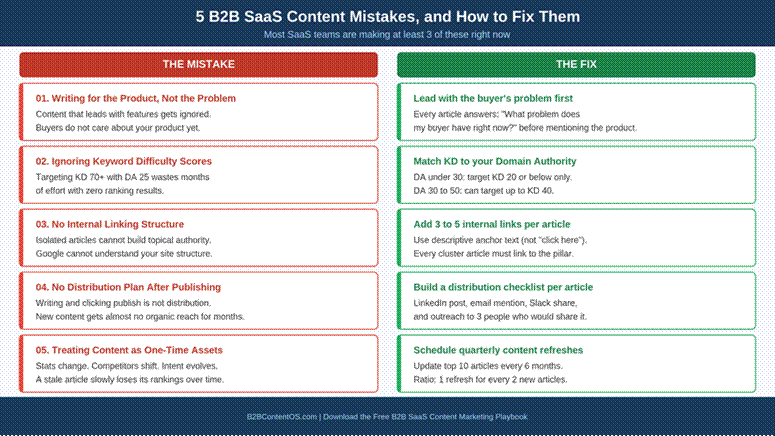
Figure 3: 5 Common B2B SaaS Content Mistakes and Their Fixes
Mistake 1: Writing for the Product, Not the Problem
Content that leads with features gets ignored. Content that leads with the buyer’s problem gets shared and linked.
Fix: Every article should answer “what problem does my buyer have right now?” before mentioning your product. For problem-first formats that work, see content marketing ideas for B2B.
Mistake 2: Ignoring Keyword Difficulty Scores
Publishing 3,000-word articles targeting KD 70 or higher when you have a domain authority of 25 wastes months of effort.
Fix: For new blogs with DA under 30, target KD 20 or below. For blogs with DA 30 to 50, you can target up to KD 40. Build authority before going after hard keywords.
Mistake 3: No Internal Linking Structure
Most SaaS blogs have hundreds of articles with zero internal links between them. Google cannot understand your site structure and cannot distribute page authority.
Fix: Every article should include 3 to 5 internal links using descriptive anchor text. Follow the linking structure used in our B2B content marketing strategy guide.
Mistake 4: Publishing Without a Distribution Plan
Writing an article and clicking publish is not distribution. If you have fewer than 10,000 monthly organic visitors, almost no one finds new content organically for months.
Fix: Use our B2B content distribution channels guide to build a 5-step distribution checklist for every article you publish.
Mistake 5: Treating Content as a One-Time Asset
Stats change. Competitors shift. Search intent evolves. An article published today will be stale in 12 months.
Fix: Update your top 10 performing articles every 6 months. The B2B content audit process includes a step-by-step refresh workflow that keeps rankings strong without writing from scratch.
9. What to Do Next
If you are starting from scratch, here is your 30-day action plan:
- Week 1: Audit your existing content. Find the 3 articles closest to page 1. Refresh those before writing anything new.
- Week 2: Build your topic cluster map. Use the B2B content marketing strategy guide as your architecture reference.
- Week 3: Write your first new article targeting a KD 15 or below keyword. Use the B2B content marketing strategy checklist to make sure nothing is missed.
- Week 4: Set up your distribution system using the B2B content distribution channels guide to pick 3 core channels and build a repeatable launch checklist.
From there, publish 2 to 3 articles per week and refresh 1 article per week. In 6 months you will have a compound content asset that drives pipeline without paid spend.
For tracking results, start with our B2B content marketing ROI guide.
10. Frequently Asked Questions
What is B2B content marketing for SaaS?
B2B content marketing for SaaS is the practice of creating and distributing educational content, including blog posts, case studies, guides, and tools, to attract, convert, and retain business customers for a software product. It differs from B2C SaaS marketing in that buying decisions involve multiple stakeholders, longer cycles, and content must address both technical and business outcomes simultaneously.
How much should a B2B SaaS company spend on content marketing?
According to the Content Marketing Institute 2025 B2B report, 46% of B2B marketers expect their content marketing budget to increase in 2025. For SaaS teams at the early stage, a realistic starting point is 1 to 2 dedicated writers, either in-house or freelance, focused exclusively on producing 2 to 3 articles per week.
How long does it take for SaaS content marketing to show results?
Most SaaS content takes 3 to 6 months to rank in Google search results, and 9 to 12 months to generate consistent organic pipeline. Short-term results, measured in weeks rather than months, come from LinkedIn distribution and email newsletters. Content marketing is a compound investment, not a paid-search tap you turn on and off.
What type of content converts best for B2B SaaS?
Bottom-of-funnel content, specifically comparison pages, case studies, and use-case guides, converts at the highest rate. TOFU content, including how-to guides and problem-focused articles, drives the highest volume of traffic and builds the audience that eventually converts. You need both working simultaneously.
Should B2B SaaS companies start with a blog or video content?
Start with written content, blog plus SEO. It has the highest long-term ROI because it compounds over time through search rankings. Once your blog drives 3,000 or more monthly organic sessions, layer in video to repurpose top-performing articles. Starting with video on a small team means too high a production cost per asset relative to the return.
How do you measure the ROI of SaaS content marketing?
Track three things: organic trial signups from blog traffic, content-influenced pipeline where the buyer read two or more pieces of your content before closing, and onboarding content engagement versus retention rate. Connect Google Search Console to your CRM to build a simple attribution model. Read our full content marketing ROI guide for the complete framework.