
Quick Answer: What are the top distribution channels for B2B content marketing?
The top B2B content distribution channels ranked by ROI are: (1) organic search (SEO) — highest long-term ROI but slow to build, (2) email newsletter — highest engagement for owned audiences, (3) LinkedIn — best for B2B professional reach and paid amplification, (4) content syndication via industry publications — builds authority and backlinks, (5) sales enablement (Slack, email, sales decks) — direct revenue impact. Most B2B teams underinvest in email and sales enablement relative to SEO, despite their higher conversion rates.
Disclosure: Some links in this post are affiliate links. If you sign up through them, I may earn a commission at no extra cost to you. I only recommend tools I believe are genuinely useful.
Creating valuable content is only half the work. Distribution decides whether the content reaches buyers or disappears in the noise. These distribution channels for B2B content marketing help you move content from your website to the screens of decision-makers who research solutions every day.
Content distribution channels are the systems you use to publish, promote, and circulate your marketing assets. These assets include blog posts, case studies, webinars, whitepapers, and videos. Each channel connects your content to a different part of the buyer journey. Some channels generate awareness. Others support evaluation and purchase decisions.
Research from the Content Marketing Institute (CMI) shows that 73% of B2B marketers use content marketing to generate leads, yet distribution remains the biggest challenge. Publishing alone does not create reach.
This article explains:
- What content distribution channels are
- The 6 organic channels that create long-term traffic
- The 7 platforms B2B marketers use most
- Tools that simplify distribution
- Metrics that reveal what works
When you combine the right channels, your content becomes easier to discover, easier to share, and easier for buyers to trust.
What are content distribution channels?
Content distribution channels are the platforms and methods used to deliver marketing content to a target audience. These channels move assets such as blog posts, reports, and videos from your marketing team to potential buyers.
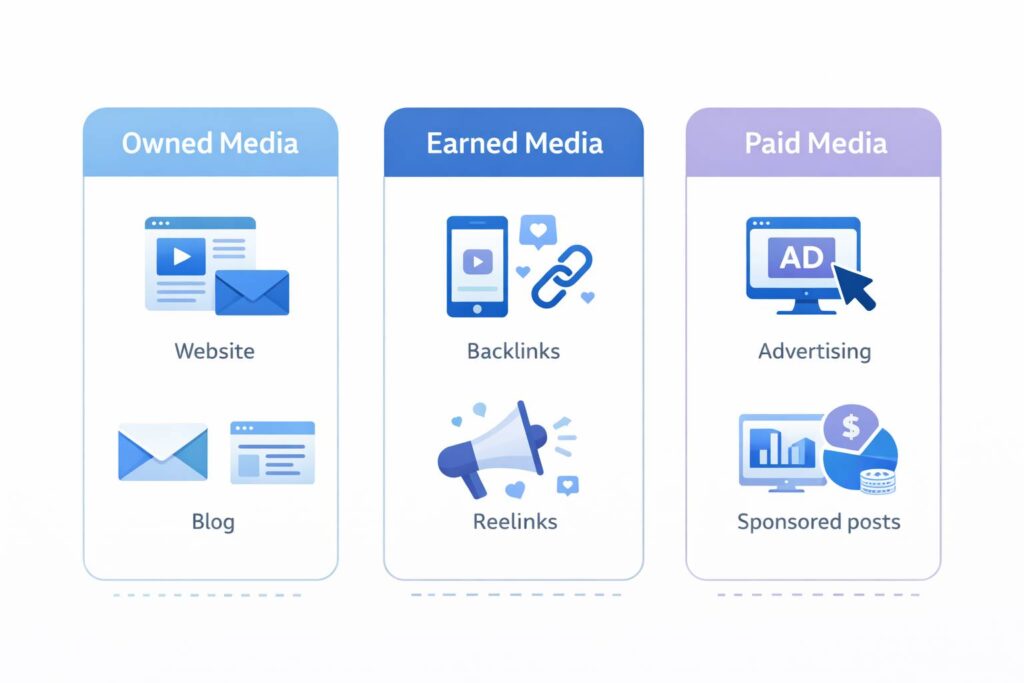
Content distribution falls into three main categories.
| Channel Type | Definition | Examples |
|---|---|---|
| Owned channels | Platforms your company controls | Website, blog, email list |
| Earned channels | Visibility created by others | Shares, backlinks, mentions |
| Paid channels | Distribution boosted with ad spend | Sponsored posts, paid search |
Owned channels create long-term value. Earned channels expand credibility. Paid channels accelerate reach.
Most B2B companies use a mix of these channels rather than relying on one. Buyers rarely discover a company through a single interaction. According to FocusVision, B2B buyers interact with 13 or more pieces of content before making a purchase decision.
Each distribution channel plays a role:
- Blogs attract search traffic
- Email nurtures existing prospects
- Social platforms support discovery and discussion
The goal is simple: place useful content wherever buyers research solutions.
Top 6 organic distribution channels to focus on
Organic distribution channels generate traffic without ongoing advertising spend. They require effort to build, but they produce value for years once established.
These channels form the core of sustainable 6 distribution channels for B2B content marketing strategies.
Organic channels share three advantages:
- They build authority in your niche
- They reduce dependence on paid ads
- They compound results as your content library grows
Many B2B companies see strong returns from organic distribution. HubSpot reports that companies publishing regular blog content generate 55% more website visitors than those that do not.
Focus your effort where your audience already searches for answers, compares solutions, and evaluates vendors.
1. Your website
Your website is the central hub of all content distribution. Every asset you create should live on your website first.
Unlike social platforms, your website operates without algorithm changes limiting visibility. You control the structure, navigation, and conversion paths.
A well-organized website supports distribution in three ways:
- Content library: Blogs, guides, and reports demonstrate expertise.
- Lead capture: Landing pages convert visitors into contacts.
- SEO authority: Search engines rank sites with structured content hubs.
B2B buyers often research during short breaks between meetings. Your website must load quickly and work smoothly on mobile devices.
Improve distribution through these website elements:
- Clear navigation to resource pages
- Internal links connecting related content
- Calls-to-action matched to visitor intent
- Search functionality for large content libraries
According to Google’s Think With Google research, 70% of B2B buyers watch videos or read articles during research before contacting a vendor. When prospects reach your website, the experience must guide them deeper into your content ecosystem.
Your website acts as the home base for every distribution channel.
2. Blog and organic search
Blog content drives discovery through search engines. When a prospect searches for a problem, the right article brings the prospect to your website.
Blogging remains one of the strongest channels in 6 distribution channels for B2B content marketing strategies. Each article targets a search query that reflects buyer intent.
Examples of search queries include:
- “how to choose CRM software”
- “B2B lead generation strategies”
- “marketing automation comparison”
Each query represents a potential customer researching solutions.
Blog content supports SEO (Search Engine Optimization) by building topical authority. Search engines reward websites that consistently publish useful, structured information.
The long-term value comes from compounding traffic. A well-written article can generate visitors for years.
Demand Metric research shows that content marketing generates three times more leads than traditional marketing while costing 62% less.
Focus blog topics on practical questions buyers ask during evaluation. Clear answers, examples, and data increase credibility.
Over time, your blog becomes a search-driven distribution engine.
3. Email marketing
Email marketing gives you direct communication with people who already showed interest in your content.
Unlike social platforms, email does not rely on algorithms deciding who sees your message. When someone subscribes, the message reaches the inbox.
Email works across every stage of the buyer journey:
- Awareness newsletters introduce educational content
- Nurture sequences deliver targeted resources
- Product emails support evaluation and decision making
Segmented email campaigns perform better than generic broadcasts. According to Mailchimp benchmarks, segmented campaigns generate 14% higher open rates and 100% higher click-through rates.
Effective B2B email distribution includes:
- Weekly or monthly newsletters
- Lead nurturing workflows
- Event invitations
- Product education sequences
Analytics reveal which content drives engagement. Metrics such as open rate, click-through rate, and conversions show which topics resonate.
Email marketing transforms content into ongoing conversations with potential buyers.
4. Video
Video simplifies complex B2B ideas. Instead of long explanations, a short demonstration can show how a solution works.
Video distribution works across several platforms:
- Website product pages
- YouTube search results
- Social media feeds
- Webinar libraries
Video consumption continues to grow. Wyzowl’s Video Marketing Report states that 91% of businesses use video as a marketing tool.
Effective B2B video formats include:
- Product demonstrations
- Webinar recordings
- Customer case studies
- Expert interviews
You do not need expensive equipment. Clear audio, structured scripts, and useful information matter more than studio-level production.
Video content increases engagement on websites. Visitors spend more time on pages that include video explanations.
Each video also becomes reusable content. A single recording can generate blog posts, social clips, and email content.
Video expands distribution by meeting buyers who prefer visual learning instead of reading.
5. Social Media
Social platforms help your content reach professionals during daily browsing. Many B2B buyers discover new ideas through social discussions before actively searching for solutions.
LinkedIn dominates B2B social engagement, but other platforms also contribute.
Different audiences prefer different platforms:
- Executives often follow industry news on X (Twitter)
- Developers participate in technical communities
- Marketers interact across multiple social networks
Social distribution works best when the content provides clear value.
Effective social media content includes:
- industry insights
- short educational threads
- data points from reports
- expert opinions
According to Statista, LinkedIn has over 1 billion users globally, many working in decision-making roles.
Consistent participation builds credibility. Responding to discussions, sharing insights, and commenting on industry news creates visibility for your content.
Social media supports discovery while directing traffic toward owned channels such as your website or newsletter.
6. Podcasting
Podcasts reach prospects during commutes, workouts, and other times when reading isn’t possible. The intimate format builds connection as listeners hear your voice regularly.
Starting a podcast positions you as a thought leader. Interview industry experts to provide value while expanding your network. Discuss trends, share insights, and answer listener questions. Each episode becomes evergreen content in your library.
Audio content has lower competition than written content in most B2B niches. Showing up consistently in someone’s earbuds builds familiarity and trust. Listeners often feel they know hosts personally, which smooths the path to business relationships.
Repurpose podcast content into blog posts, social snippets, and email newsletters. Transcripts become searchable text that helps with SEO. Audiograms with key quotes work well on social media. One recording generates content across multiple channels.
Top 7 Distribution Channels for B2B Content Marketing
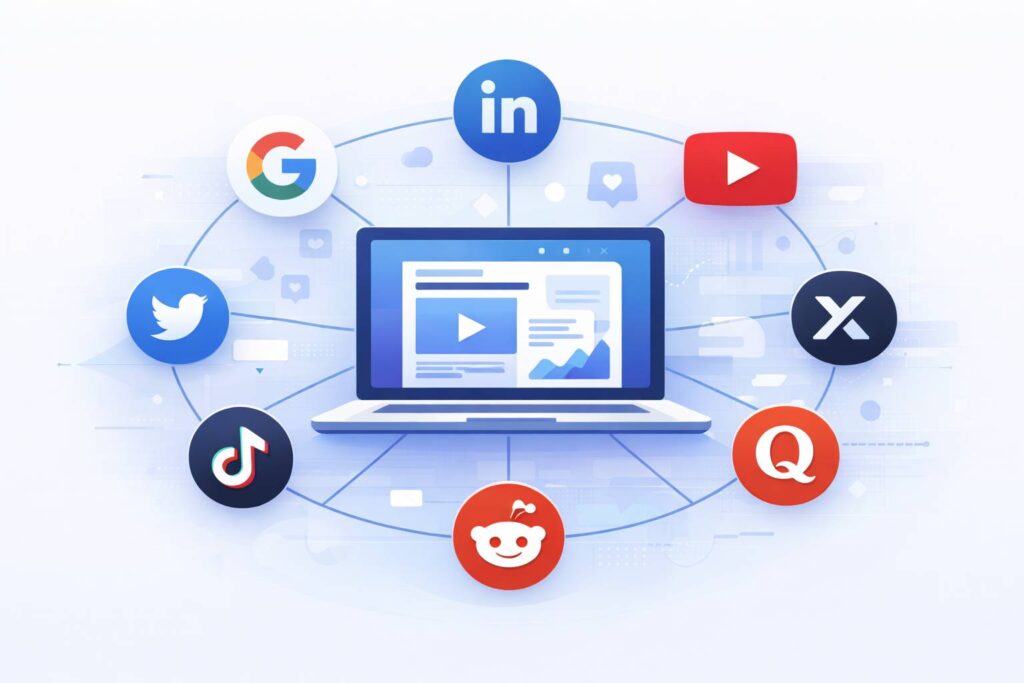
Beyond organic methods, certain platforms consistently deliver results for B2B marketers.
These platforms attract professionals researching products, discussing trends, and evaluating vendors.
The Top 7 Distribution Channels for B2B Content Marketing include:
- YouTube
- X (Twitter)
- Quora
- TikTok
Each platform has different content behavior and audience expectations. Understanding those patterns improves reach.
Some platforms focus on search intent. Others revolve around discussion and discovery. Successful distribution adapts the content format to match each platform.
Used together, these channels extend the reach of your content far beyond your website.
1. Google
Google controls most search traffic in B2B markets. Ranking well means being found when prospects actively search for solutions.
Optimize for search intent, not just keywords. Understand what someone wants when they type a query. Create content that directly answers their question or solves their problem. Technical SEO matters, but content quality determines long-term rankings.
Target different query types throughout the buyer journey. Informational searches lead to educational content. Commercial investigation queries need comparison guides. Transactional searches require clear product information and easy conversion paths.
Track rankings, organic traffic, and conversions from search. Adjust your content based on performance data. Google Search Console shows which queries drive traffic and where opportunities exist.
2. Youtube
YouTube is the second-largest search engine. B2B buyers watch tutorials, product demos, and expert interviews while researching purchases.
Create videos that answer common questions in your industry. Show your product in action. Share insights from your experience. Optimize titles, descriptions, and tags for searchability.
Thumbnails and opening seconds determine whether people watch. Hook viewers immediately by addressing their specific problem. Deliver value throughout rather than saving key information for the end.
Include links to relevant resources in descriptions. Add cards and end screens that guide viewers to related videos or your website. Turn engaged viewers into subscribers who see your future content.
3. Linkedin
LinkedIn reaches business professionals where they already think about work challenges. The platform favors content that sparks professional discussion.
Share insights, data, and perspectives that help your connections do their jobs better. Comment thoughtfully on others’ posts. Participate in relevant group discussions. Personal profiles often get more engagement than company pages.
Long-form articles published on LinkedIn can reach beyond your immediate network. The algorithm promotes posts that generate meaningful conversation. Ask questions, share experiences, and provide actionable advice.
Target decision-makers through content that addresses their specific concerns. Use LinkedIn’s publishing tools to establish authority. Engage consistently rather than posting sporadically.
4. X (Twitter)
Twitter facilitates real-time conversations about industry news and trends. Quick exchanges help you connect with prospects and influencers.
Share links to your content with context that sparks interest. Thread multiple tweets to expand on complex topics. Reply to relevant discussions to increase visibility.
Follow prospects, competitors, and industry leaders. Retweet valuable insights. Build relationships through consistent, helpful engagement. Twitter works best for staying top-of-mind rather than driving immediate conversions.
Use hashtags strategically to join broader conversations. Monitor mentions and relevant keywords. Respond quickly to questions and comments.
5. Quora
Quora users actively seek solutions to specific problems. Providing helpful answers positions you as an expert while driving targeted traffic.
Find questions related to your expertise. Write detailed, genuinely helpful responses. Include relevant examples and explain your reasoning. Add links to your content only when they truly add value.
Build authority by consistently answering questions in your niche. Upvotes increase visibility and establish credibility. Focus on quality over quantity.
Monitor questions about topics you cover. Set up alerts for keywords related to your business. Answer when you have genuine expertise to share.
6. Tiktok
TikTok’s B2B audience grows as the platform matures. Quick, engaging videos can reach younger professionals and decision-makers.
Short-form video content works for tips, quick insights, and behind-the-scenes glimpses. Make your first three seconds compelling. Use trending sounds while adapting them to business contexts.
Educational content performs well when delivered with personality. Explain concepts simply. Show your human side. Don’t treat TikTok like other platforms—embrace its casual, authentic style.
Test different content types to see what resonates. Track which videos drive profile visits and link clicks.
7. Reddit
Reddit communities discuss specific topics in depth. Subreddits related to your industry offer opportunities to share expertise and learn from prospects.
Participate genuinely before promoting anything. Build karma by contributing helpful comments. Understand each subreddit’s rules and culture. Self-promotion without relationship-building gets downvoted or banned.
Answer questions thoroughly. Share experiences and insights. When appropriate, link to your content as a resource that adds value to the discussion.
Find subreddits where your target audience hangs out. Listen to their concerns and language. Use these insights to inform your broader content strategy.
Popular Content Distribution Tools
Content distribution becomes complex when multiple channels operate simultaneously. Tools help coordinate publishing, scheduling, and analytics across platforms.
Several tools simplify B2B content distribution.
| Tool | Main Function |
|---|---|
| Buffer | Social media scheduling and analytics |
| Hootsuite | Multi-platform social media management |
| Mailchimp | Email campaigns and automation |
| HubSpot | Marketing automation and CRM integration |
| SEMrush | SEO research and content optimization |
| Ahrefs | Keyword analysis and backlink tracking |
Buffer and Hootsuite allow marketers to schedule posts across several social networks from one dashboard. Scheduled publishing maintains consistency even when teams work on different timelines.
Email platforms such as Mailchimp and HubSpot support list segmentation and automation. These features allow marketers to deliver targeted content to specific audience groups.
SEO tools such as SEMrush and Ahrefs reveal search demand and competitor content strategies. These insights guide blog topics and keyword targeting.
Content planning tools such as CoSchedule help teams coordinate blog publishing, social posts, and email campaigns in one calendar.
Analytics tools reveal which channels drive traffic and conversions. Data from these tools informs future distribution strategies.
Key Content Distribution Metrics to Keep Track of
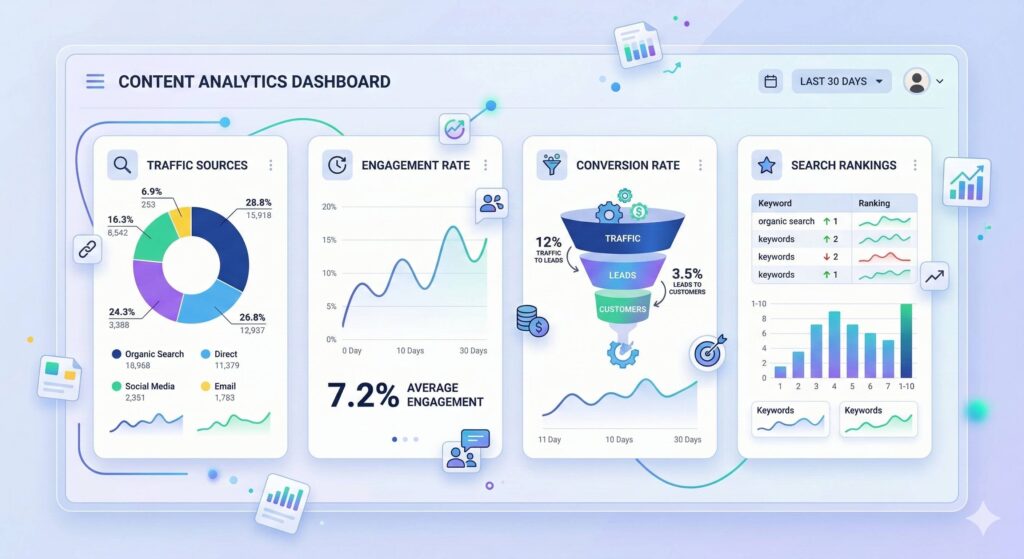
Content distribution should connect directly to business results.
Tracking the right metrics reveals which channels deserve more attention.
Important distribution metrics include:
- Traffic sources – shows where visitors originate
- Engagement metrics – time on page and bounce rate indicate content quality
- Click-through rate (CTR) – measures response to emails or social posts
- Conversion rate – reveals which channels generate leads
- Search rankings – indicates SEO performance
Tracking over time reveals patterns. Some content performs immediately, while other pieces gain traction months after publication.
Analytics platforms such as Google Analytics and Search Console help identify which distribution channels produce measurable outcomes.
In Summary
7 distribution channels for B2B content marketing help move valuable content from creation to discovery. Your website and blog create the foundation for long-term visibility through search traffic and resource libraries.
Email marketing builds relationships with prospects who already engaged with your content. Video simplifies complex topics and increases engagement across platforms. Social media expands reach through professional discussions, while podcasting reaches audiences during commutes and daily routines.
Platforms such as Google, YouTube, LinkedIn, X, Quora, TikTok, and Reddit extend distribution further.
A focused distribution strategy ensures your content reaches the right buyers, generates consistent traffic, and supports lead generation over time.
📧 Recommended Email Tool for B2B Teams
If you need a reliable email platform to run your automation workflows, AWeber is built for exactly this — trusted by 100,000+ small businesses, strong deliverability, and a free plan up to 500 subscribers. Try AWeber free →
