

Google published its first official guide to generative AI search on May 15, 2026, and the message for B2B content teams is blunt: optimizing for AI Overviews and AI Mode is still SEO. The guide names five areas to focus on, five tactics you can ignore, and one gap it never mentions, the off-site layer where AI citation decisions actually happen. This post decodes the spec for senior B2B marketers and turns it into a prioritized action plan.
What Google’s AI search guide actually says
Google’s new documentation page, “Optimizing your website for generative AI features on Google Search,” is the company’s first official optimization playbook for AI Overviews and AI Mode. It went live on May 15, 2026, expanding the earlier AI features documentation from 2025, and search professionals treated it as the reference document the industry had been asking for.
The timing matters. Google’s AI Mode had reached 75 million users by the day the guide was published, according to Search Engine Journal’s SEO Pulse update. AI Overviews already appeared in 52 percent of tracked searches as of early 2025, per Terakeet research cited by Single Grain, with the average AI answer running about 175 words and carrying 6 to 10 links to external sources.
The guide explains that generative AI features are rooted in the same ranking and quality systems that power classic Search. Two mechanisms do the work. Retrieval-augmented generation, or RAG, retrieves relevant pages from the Search index and grounds the answer in them. Query fan-out runs a set of related queries behind the scenes, then merges what it learns. In both cases, the material that gets cited comes from the index you already compete in.
That is why Google draws a clear line on terminology. The guide states: “From Google Search’s perspective, optimizing for generative AI search is optimizing for the search experience, and thus still SEO.” In other words, AEO and GEO are not separate disciplines. Google employees Gary Illyes and Cherry Prommawin made the same point at Search Central Live, and now it is written into the documentation. For a senior B2B marketer the practical takeaway is simple: the work you already do for organic visibility is the foundation, but the guide also tells you which parts of the current GEO hype to ignore. We covered this distinction in our breakdown of AEO vs GEO vs SEO and in our complete generative engine optimization guide.
The RAG Readiness Framework: 5 moves from the spec
Every recommendation in Google’s guide maps to one question: will this help a retrieval system find, parse, and cite my content? We turned the spec into the RAG Readiness Framework, five moves that cover content, access, structure, entity accuracy, and measurement. Work through them in order, because each one feeds the next.
Move 1: Publish non-commodity content with a first-hand point of view
The highest-impact move in the guide is content that cannot be reproduced by summarizing the web. Google contrasts commodity content, its example is “7 Tips for First-Time Homebuyers,” with non-commodity content like “Why We Waived the Inspection & Saved Money: A Look Inside the Sewer Line.” The second one wins because it carries first-hand experience no other page has.
For B2B teams this means the editorial calendar should favor original research, product teardowns, benchmark tests, and SME-led explanations over recycled listicles. The practical proof exists. Moz documented how DSLD Mortgage restructured an informational guide with bulleted takeaways, a streamlined intro, and a named mortgage professional as author, and the page started appearing in AI Overviews. The mechanics are the same: unique experience plus clean structure plus credible authorship. If you need a template, our guide to building an original B2B research program that AI engines cite walks through the full process.
Move 2: Keep every candidate page crawlable, indexed, and snippet-eligible
Technical prerequisites come before content quality, because a page that cannot be retrieved cannot be cited. Google requires three things: the page must be indexed, it must be eligible to show in Search with a snippet, and your site must be verified and included in generative AI features inside Search Console.
Crawler access is where most B2B sites quietly fail. Semrush’s AI optimization guidance recommends checking that robots.txt and meta tags do not block Google-Extended, ChatGPT-User, or OAI-SearchBot. One blocked crawler line removes your entire site from a retrieval set. Also follow the standard technical playbook: semantic HTML where possible, JavaScript SEO best practices if you use a framework, good page experience, and reduced duplicate content. Google’s guide is explicit that “the way Google Search finds and processes your pages remains the core of how our AI systems access your data.”
Move 3: Structure pages for clean extraction
AI systems lift answers from your page in pieces, so structure decides what gets lifted. Google is equally clear about what this does not mean: you do not need to chunk content into tiny fragments. The systems understand multi-topic pages and select the relevant piece, and Danny Sullivan confirmed in January 2026 that Google engineers actively advised against chunking.
What works is old-fashioned editorial clarity. Organize content by paragraphs and sections, use headings that signal structure, and open each H2 with a direct one-sentence answer. Bullet lists, tables, and definition-first paragraphs make facts easy to lift. There is a second, less obvious requirement: keep your key evidence in text, not only in images. Moz warns that visuals rarely appear in AI chat results, so if your best data lives inside a diagram, it is invisible to the retrieval system. Pair every figure with a captioned, descriptive alternative in the text. Our post on measuring AI search visibility shows how to check whether your structure is actually getting cited.
Move 4: Lock entity accuracy across every property you control
Generative AI answers describe you as much as they rank you, so your entity details must be consistent everywhere you control them. Google’s guide dedicates a full section to local and ecommerce details: Google Business Profiles, Merchant Center feeds, and Business Agent, the conversational experience that lets customers chat with your brand on Search.
For a B2B company the same logic applies to product names, descriptions, positioning, and pricing across your site, review profiles, app store listings, and partner pages. Semrush’s research found that AI systems weigh consistency heavily when choosing which description of a brand to use. Moz documented the payoff in a local context: Patino Law firm optimized its Google Business Profile and local service pages, then watched Gemini cite those exact details for personal injury queries. The same pattern works for B2B: a consistent, complete entity profile is the input, and accurate AI descriptions are the output.
Move 5: Measure with Search Console’s Generative AI performance report
You can now measure generative AI visibility directly, and you should pair the official report with your own referral tracking. Google introduced the Generative AI performance report in Search Console, showing impressions, clicks, and CTR from generative AI features on Search and Discover, so the old objection that AI traffic is untrackable no longer holds.
Set up a GA4 custom channel group for AI referrals as a complement. Match referrers containing chatgpt.com, perplexity.ai, and gemini.google.com, and note the known gap: ChatGPT desktop and mobile app traffic can land in direct/none, so manual prompt audits stay part of the routine. Pick 3 to 5 comparison prompts your buyers actually use, run them in ChatGPT, Gemini, and AI Mode monthly, and log whether you appear and how you are described. Google also warns to be skeptical of third-party tools claiming access to internal Google metrics, since no such tool exists. For the full measurement setup, including regex patterns, see our guide to how to measure AI search visibility.
The 5 things Google says you can stop doing
Google’s guide includes a mythbusting section that names five popular AEO and GEO tactics as unnecessary for Search visibility. If you spent money or engineering time on any of them, you can stop. The table below summarizes what the hype promised and what Google actually says.
The pattern behind all five myths is the same: create machine-readable artifacts that Google says it does not use. The countermove is simpler than the hype makes it sound, focus on content, technical health, and standard SEO, because that is exactly what the retrieval systems consume.
What most guides miss: the off-site layer where citations are won
Google’s official guide stops at your own website, but the data shows AI answers cite independent third-party sources far more often than corporate content. This is the gap that turns “still SEO” into a two-layer strategy for B2B teams.
Semrush’s survey of 1,000 US consumers found that 43 percent have discovered a brand through an AI platform. The surprising part is what makes a brand stand out in those answers: only 20 percent of respondents said being first-mentioned mattered, while the clarity and accuracy of the description dominated. Semrush’s AI Visibility Study sharpens the point. In the digital technology category, Wikipedia gets referenced more than once per ChatGPT response. Reddit drives over 120 percent citation frequency in technology and consumer electronics queries. Even Microsoft’s corporate blog generates fewer AI citations than Reddit threads about Microsoft products.
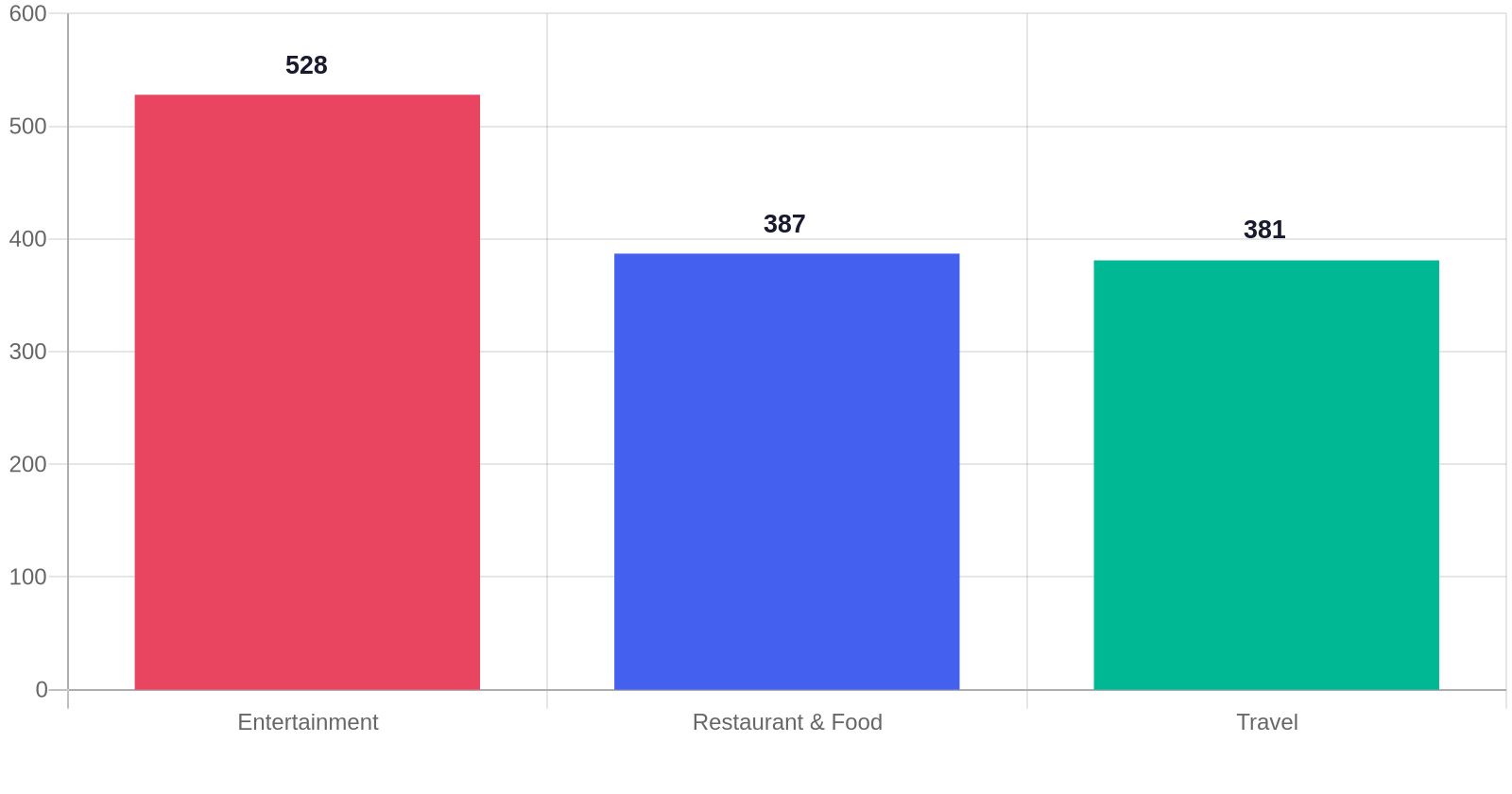

What does this mean in practice? Two named examples from Moz’s GEO research show the playbook. The skincare brand The Ordinary baked two positioning phrases, “best value skincare” and “science-backed skincare,” into every PR release, product description, and interview. Those phrases echoed naturally across Reddit and blogs, and AI systems now associate the brand with them. Unilever got repeatedly cited by ChatGPT in discussions about microplastics without publishing the underlying research itself, because it was referenced in an independent third-party academic study. That is indirect grounding: you get cited by being present in the sources the models trust.
For B2B, the off-site layer has four concrete components: claim and complete your G2, Capterra, and Trustpilot profiles; pitch inclusion in the comparison roundups AI systems already pull from; contribute genuinely to the communities where your buyers ask questions; and pursue the analyst reports that already appear in your category’s top citations. Google’s guide does not tell you how to build any of this, which is why Semrush’s Alex Lindley concluded, “Google didn’t write a guide for this.” We covered the trust mechanics in depth in our piece on trust architecture in the AI era and the buyer behavior behind it in what B2B buyers actually do with AI.
Where to spend your next 10 hours
If you have a limited window this week, use this prioritization matrix instead of guessing. Every option below traces to a requirement in Google’s guide or to the off-site data that explains how citations actually happen.
A worked example makes the matrix concrete. Consider Meridian CRM, a fictional mid-market CRM vendor with a three-person content team. Its crawler audit found that a dated robots.txt rule blocked Google-Extended, so the team removed it in 20 minutes. Its prompt audit showed ChatGPT describing the product with features retired two years earlier, traced to a launch recap that ranked on page one. The team updated that page, corrected the product description on its G2 profile, and started a review-request flow. None of those steps required a GEO budget. They required a checklist.
A 30-day rollout plan
Here is how to sequence the framework, the myths, and the off-site layer into four working weeks. Blocks are text-only so the list renders cleanly everywhere.
- Week 1, baseline and access. Verify Search Console ownership and the Generative AI performance report. Run a crawler check for Google-Extended, ChatGPT-User, and OAI-SearchBot. Capture the perception baseline with five buyer prompts. Output: a one-page audit with the blocking issues.
- Week 2, content. Pick the three pages that rake in the most impressions and rewrite each to lead with first-hand experience or original data. Add direct-answer H2s where the page structure is vague. Update author bios with credentials and add a visible last-updated date.
- Week 3, off-site. Claim or complete G2, Capterra, and Trustpilot profiles with current features and pricing. Fix any outdated description you found in week one. Answer three real questions in the communities your buyers actually read, with substance, not links.
- Week 4, measure and report. Pull the Generative AI performance report, compare it to the week-one baseline, and re-run the five prompt audit. Log every inaccuracy, trace each one to its source, and queue the corrections. Publish the results internally so the work has a visible owner.
Meridian CRM followed this plan and ended week four with two concrete wins: its G2 profile now carries current pricing, and its perception log shrank from nine inaccuracies to three. The remaining three all traced to one analyst roundup that lists an outdated feature set, now flagged for the next briefing cycle. That is the pace to expect, measurable progress in a month, not instant answers.
What Most Teams Get Wrong
The teams that stall on AI search optimization tend to repeat the same six mistakes, and all of them are avoidable once you see the pattern.
Treating GEO as a separate discipline is mistake one. Google’s guide states plainly that optimizing for generative AI search is still SEO, so the teams that win are the ones that fold AI visibility into their existing SEO program instead of buying a parallel stack.
Paying for the myth stack is mistake two. llms.txt services, chunking consultants, and AI-schema products monetize confusion. Google named each one unnecessary, and every dollar there is a dollar not spent on content or off-site presence.
Assuming rank equals AI visibility is mistake three. Moz’s research shows organic rankings do not guarantee AI citations, because the models blend your page with community sources, reviews, and analyst reports. A competitor with a weaker site and strong Reddit and G2 sentiment can be recommended over you.
Locking answers inside images is mistake four. If your best data lives in a diagram or a screenshot, retrieval systems cannot lift it. Pair every visual with the same facts in text, and captions plus alt text are not enough on their own.
Chasing first mention instead of accuracy is mistake five. Only one in five consumers said being first-mentioned made a brand stand out; the rest cared about how clearly the brand was described. A wrong description in an AI answer is worse than no mention.
Waiting for perfect attribution is mistake six. The Generative AI performance report exists, and manual prompt audits cost an hour a week. The teams that start with imperfect data learn the shape of the problem six months before the teams that wait.
What To Do Next
Start with the moves that cost nothing but attention. Read Google’s official guide once, so you can tell the difference between what the spec says and what vendors claim. Run the crawler check for blocked AI crawlers today, then capture your perception baseline with five buyer prompts. Both steps take less than an hour and give you a defensible starting point.
From there, protect the two hours a week for the off-site layer, because that is where B2B citations are actually decided. Claim the review profiles, fix the outdated descriptions, and answer questions where your buyers already are. If you want the full operational picture first, our GEO complete guide covers the end-to-end program, and our comparison of the best AI SEO tools for small teams helps you choose software that supports the work instead of selling you shortcuts.
Frequently Asked Questions
Is AI search optimization different from SEO? Google says no. The official guide states that optimizing for generative AI search is still SEO, because AI features retrieve from the same index and quality systems. The practical difference for B2B is that citations also depend on off-site sources like review platforms and communities, which classic SEO guidance underplays.
Does Google use llms.txt files? No. Google Search ignores llms.txt and other special AI markup entirely, according to the official guide. Creating such files neither helps nor hurts your Google visibility, though other services you use may still consume them.
Should we chunk our content for AI systems? No. Google says there is no requirement to break content into small pieces, and its engineers advised against the practice. Clear structure with headings and direct answers does more than any fragmentation strategy.
What is the difference between AI Overviews and AI Mode? AI Overviews are the AI-generated summaries that appear directly in Search results, averaging around 175 words with 6 to 10 links. AI Mode is Google’s conversational search experience, which had reached about 75 million users by May 2026.
How do we track whether AI search is sending us traffic? Use the Generative AI performance report in Search Console for impressions, clicks, and CTR from AI features, and add a GA4 custom channel group that matches chatgpt.com, perplexity.ai, and gemini.google.com referrers. Manual prompt audits stay necessary because app-based ChatGPT traffic can land in direct/none.
Do we need special schema for AI visibility? No. There is no special AI schema markup, but standard structured data remains valuable because it earns rich results in classic Search. Keep your existing schema program running.
