

A 90-day B2B content plan for a small marketing team needs three things: a realistic output target based on actual headcount, a phased 30/60/90 structure that proves value before scaling, and a way to prioritize topics so limited hours go toward pages that can actually rank and convert. Most templates skip the first part entirely. They assume you have a content strategist, two writers, and a designer on call. If you’re running content solo or with one other person, that gap is why so many 90-day plans stall around day 40.

What a 90-Day Content Plan Actually Needs for a Small Team
A small-team content plan needs a capacity ceiling before it needs a calendar. Set the calendar first and you’ll overcommit, miss half the deadlines, and spend day 90 explaining why the plan slipped instead of reviewing results. Set the ceiling first and the calendar becomes a simple math problem: how many hours do you have, how long does each content type take, and how many pieces can you realistically ship without burning out the person doing the work.
Team size also changes which tactics are worth attempting. A five-person team can run a link-building campaign, a webinar series, and a blog cadence in parallel. A solo marketer running all three at once will finish none of them well. The plan below is built around matching ambition to actual capacity, not the other way around.
The Content Capacity Score: Size Your Plan to Your Real Team
The Content Capacity Score is a simple way to translate headcount and hours into a weekly output target before you write a single calendar entry. Score your team on two inputs: total content hours available per week, and average hours per published piece at your quality bar. Divide the first by the second and you get a defensible weekly output number, not a guess borrowed from a marketing plan built for a bigger team.
Most B2B teams underestimate hours per piece badly. A researched, 2,000-word article with an original framework, a data table, and verified sources takes six to ten hours end to end once you count research, writing, editing, and publishing. A quick update or a short FAQ post takes two to three. Use your own past posts to calibrate this number instead of a generic average.
| Team Size | Realistic Weekly Content Hours | Sustainable Output | Best-Fit Content Types |
|---|---|---|---|
| Solo marketer (also doing everything else) | 4-6 hours | 1 post every 1-2 weeks | Long-form guides, templates, checklists that compound over time |
| Two-person team | 10-15 hours combined | 1-2 posts per week | Blog cadence plus one repurposed asset per post |
| Three-to-five person team | 25-40 hours combined | 2-3 posts per week plus one gated asset monthly | Blog, case studies, webinars, light paid promotion |
| Agency or in-house team with dedicated writers | 40+ hours | 4+ posts per week | Full-funnel content including video and interactive tools |
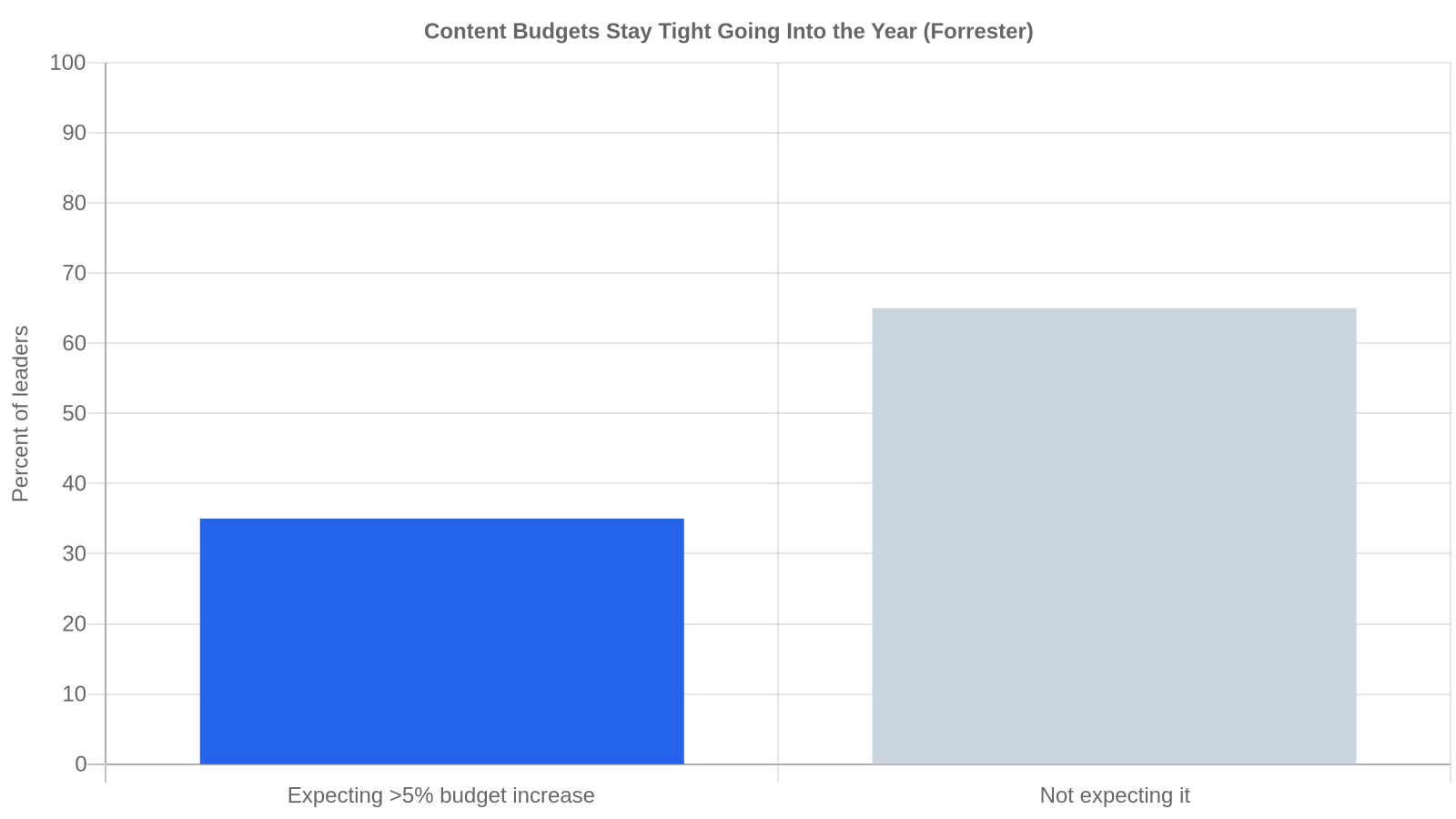
Most B2B content teams fall into the first two rows. Budget growth for content isn’t rescuing anyone soon either: only 35% of B2B marketing leaders expected a budget increase greater than 5% heading into the year, per Forrester’s Budget Planning Survey. Your plan should be built for the team and budget you have in ninety days, not the team you hope to have by day 91.
Days 1-30: Build the Foundation Before You Publish More
The first thirty days are about baseline and quick wins, not volume. Spend the first week auditing what already exists: which posts get traffic, which pages rank on page two and could move up with light edits, and which topics you’ve never covered. Use that audit to pick your first five topics instead of starting from a blank calendar.
By day 15, publish your first one or two pieces and set your measurement baseline: current organic sessions, current ranking keywords, and current conversions from content. By day 30, you should have a working topic list scored by priority, a repeatable brief template, and two to four published pieces that prove the process works at your real capacity, not an aspirational one.
Days 31-60: Build a Repeatable Cadence and Prove the Model
The middle thirty days are where most small teams either find their rhythm or quietly fall behind. Lock in a fixed publishing day and stick to it even if the post isn’t perfect. A consistent, slightly imperfect cadence beats a perfect post that arrives two weeks late, because search engines and readers both reward consistency.
This is also when you start repurposing. Every long-form post should generate at least one shorter asset: a LinkedIn post, an email, or a short video script. A two-person team that repurposes well can look like a four-person team from the outside, without adding headcount. It’s worth the effort: B2B buyers now consume roughly 13.4 pieces of content on average before they ever contact sales, so more useful formats of the same core idea genuinely help. By day 60, you should have six to ten published pieces, a clear sense of which topics are gaining traction, and early signals on what to double down on in the final phase.
Days 61-90: Scale What’s Working and Cut What Isn’t
The final thirty days are for addition by subtraction. Look at your day-60 data and stop producing the content type or topic cluster with the weakest early signals, even if it was part of the original plan. Redirect that capacity toward the two or three topics showing real traction in rankings, engagement, or pipeline influence.
Use this phase to build one larger asset your capacity couldn’t support earlier: a downloadable template, a data-backed pillar page, or a short email sequence tied to your best-performing post. By day 90, you should have a full quarter of published content, a documented capacity number you trust, and a shortlist of what to keep, cut, or scale in the next ninety days.
The Step-by-Step Workflow to Build Your 90-Day Plan
Follow this sequence in order. Skipping steps is what turns a 90-day plan into a 90-day scramble.
- Calculate your Content Capacity Score using real hours-per-piece data from your last five published posts, not an industry average.
- Audit existing content to find quick-win updates before committing hours to net-new topics.
- Build a prioritized topic list scored by search intent, competition, and internal linking fit, capped at your capacity ceiling.
- Set a fixed publishing cadence and put it on a shared editorial calendar visible to anyone who depends on your content.
- Define one repurposing step for every long-form piece before you publish it, not after.
- Set a day-30 and day-60 checkpoint on your calendar now, with specific metrics to review at each one.
- Reserve the final two weeks of the quarter for one larger asset instead of squeezing it in alongside regular cadence.
If you want the underlying system this workflow plugs into, see our guide on building a repeatable content engine for small B2B teams.
What Most Teams Get Wrong When Planning 90 Days of Content
The most common mistake is copying a content calendar built for a bigger team and assuming willpower will close the gap. It won’t. The plan fails around week five or six when the backlog becomes visible and the team starts cutting corners on research or editing to keep pace, which quietly damages the content quality the whole plan depended on.
The second mistake is treating all ninety days as equal. Teams that publish at the same intensity from day one through day ninety miss the chance to learn from early data and redirect effort. The plan should get sharper as it goes, not stay static.
The third mistake is skipping the checkpoint reviews because the team is too busy producing to stop and look at what’s working. A fifteen-minute review at day 30 and day 60 is what turns a content calendar into a content strategy. Without it, you’re just publishing on a schedule and hoping.
Frequently Asked Questions
How many blog posts should a small B2B team publish in 90 days?
A solo marketer can sustainably publish six to twelve posts in ninety days at one to two hours-per-piece efficiency gains from templates and repeatable briefs. A two-person team can typically manage twelve to twenty-four. Use your Content Capacity Score rather than a fixed number, since hours-per-piece varies a lot by content type and research depth.
What’s the difference between a 90-day plan and a full content strategy?
A 90-day plan is an execution sprint: specific topics, a publishing cadence, and checkpoints inside one quarter. A content strategy is the longer-term thinking behind it, covering audience, positioning, and channel mix over a year or more. You need both, but the 90-day plan is what actually gets published while the strategy stays mostly the same.
Should a small team focus on new content or updating old posts first?
Start with a quick audit before committing to either. If you have existing posts sitting on page two of search results, updating them for thirty to sixty minutes often produces faster ranking gains than writing something new from scratch. Reserve net-new content for topics you genuinely haven’t covered yet.
How do I know if my 90-day content plan is realistic?
Compare your planned output against your Content Capacity Score. If the calendar requires more hours per week than your team actually has after accounting for editing, promotion, and meetings, it isn’t realistic no matter how good the topic list looks. Cut the plan to match capacity before day one, not after you’ve already missed three deadlines.
What should I measure at the 30 and 60-day checkpoints?
Track organic sessions, keyword rankings for your priority topics, and any conversion signal tied to content, such as email signups or demo requests. Also track a simple internal metric: percentage of planned posts actually published on schedule. That number tells you whether your capacity estimate was accurate.
Can a one-person marketing team really run a 90-day content plan alone?
Yes, but the plan has to be built for one person from the start, not scaled down from a team plan. That usually means fewer, longer-lasting pieces like templates and guides instead of high-frequency short posts, and heavier reliance on repurposing each piece into multiple formats. Our 90-day operating plan for one-person content teams walks through this exact setup in more depth.
What To Do Next
Calculate your Content Capacity Score this week using your last five published posts, not a guess. Build your topic list against that real number, not against a template written for a bigger team. Put your day-30 and day-60 checkpoints on the calendar right now, before you publish anything, so they don’t get skipped once the backlog builds. Prioritize updating any existing posts sitting on page two of search results before committing hours to new topics. And when day 90 arrives, cut the weakest-performing content type from the next quarter’s plan instead of carrying it forward out of habit. If you’re still assembling the operating rhythm behind this plan, our B2B content operating system playbook is the next thing to read.
