
Quick Answer: What should a B2B export content marketing checklist include for manufacturers?
A B2B export content marketing checklist for manufacturers should cover: market-specific buyer persona research, localized keyword research for each target country, translated or culturally adapted landing pages, export compliance documentation (HS codes, certifications), and case studies featuring local reference customers. Manufacturers should also create content addressing common export barriers like payment terms, logistics, and regulatory compliance in each target market.
Disclosure: Some links in this post are affiliate links. If you sign up through them, I may earn a commission at no extra cost to you. I only recommend tools I believe are genuinely useful.
An export content marketing checklist for manufacturers needs to cover compliance, localization, and trust signals before it ever gets to keywords or distribution. That is the part every generic B2B content checklist skips, because most of them were never written for a company trying to sell machinery to a buyer in another country who has never heard of you.
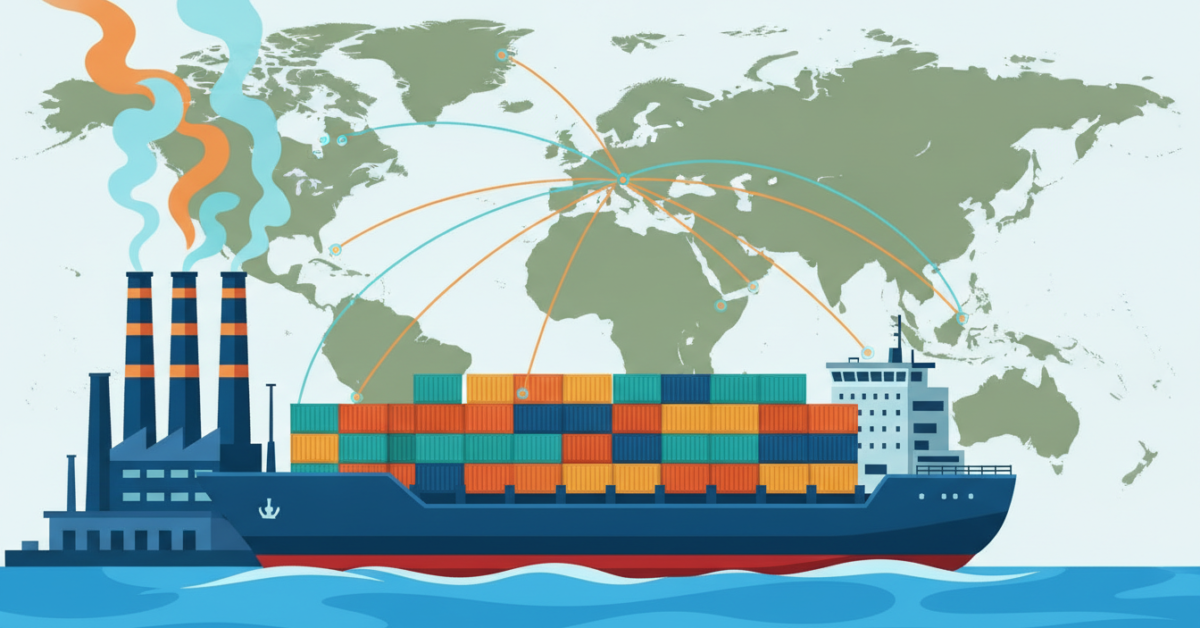
Why Generic B2B Content Checklists Fail Export-Focused Manufacturers
Search for content marketing advice aimed at manufacturers and you will find two kinds of articles: generic B2B checklists that could apply to any industry, and manufacturing content guides that assume you are selling to domestic buyers only. Neither addresses what actually changes when your buyer is evaluating you from another country, in a market with different certification requirements, different trust signals, and often a different language.
An export buyer cannot walk your factory floor before they sign a purchase order. Your content has to do the trust-building work a sales visit would normally do, and it has to do it before you ever reach the multilingual translation question most checklists treat as the whole problem.
The Export Content Stack: Five Layers Most Manufacturers Skip
Domestic B2B content marketing has roughly three layers: awareness, consideration, decision. Export content marketing needs five, because two entire layers exist purely to compensate for the trust and information gap a buyer feels when they cannot see your operation in person.
- Compliance Layer: Certifications, standards (CE marking, ISO, RoHS, industry-specific compliance for your target markets), and documentation that proves you can legally and safely ship into that market.
- Trust Layer: Case studies from buyers in or near the target region, third-party certifications, factory video content, and capacity/quality proof points a buyer cannot verify in person.
- Localization Layer: Not just translation. Currency, units of measurement, regional terminology, and content that reflects how that specific market actually buys (some regions favor distributors, some favor direct deals).
- Distribution Layer: Trade show content, industry directory listings, and the channels your specific export markets actually use to find suppliers (these vary significantly by region and are rarely just “LinkedIn and Google”).
- Sales Enablement Layer: Incoterms explainers, lead time and logistics content, and answers to the procurement-specific questions an international buying committee will ask that a domestic one will not.
Most manufacturers build the first three layers, sometimes, and skip the last two entirely. The Distribution and Sales Enablement layers are usually where deals actually stall, not awareness.
What Each Layer Needs Before You Move to the Next
| Layer | Minimum Content | Skip This and What Happens |
|---|---|---|
| Compliance | Certification page per target market, standards documentation | Buyers disqualify you in procurement screening before a conversation starts |
| Trust | 1-2 case studies from comparable regions, factory/process video | Buyers default to a competitor who already has visible proof |
| Localization | Pricing in local currency or clear conversion, correct units, accurate terminology | Buyers assume you have not actually sold into their market before |
| Distribution | Presence in the 1-2 channels that market actually uses | You are invisible to buyers who are not searching the way you assumed |
| Sales Enablement | Incoterms, lead time, and logistics content | Deals stall in procurement over questions your content never answered |
If you already have a general B2B content marketing strategy checklist in place, the five layers above are not a replacement for it. They are what you add on top, specifically for export markets.
The Actual Checklist
Before You Write Anything
- List your actual target export markets by name, not “international” as a category
- For each market, identify the certifications or standards a buyer there will expect to see before they take you seriously
- Identify whether that market typically buys direct or through distributors, since this changes who your content needs to persuade
Compliance and Trust Content
- Build a dedicated certifications and standards page per target market or region (not one generic global page)
- Add at least one case study or reference customer from a comparable market, not just your home market
- Create factory or process video content; export buyers weight this more heavily than domestic buyers do, since it substitutes for a site visit
- Document quality control and production capacity clearly, since this is a recurring procurement question for international buyers
Localization (Beyond Translation)
- Convert pricing and specifications into the units and currency your target market actually uses
- Check terminology against how that market’s industry actually describes your product category, not a literal translation
- Adjust content depth to the typical buying process in that market (some regions expect more documentation upfront, some expect a relationship conversation first)
Distribution for Export Markets
- Identify the 1-2 channels your specific target market actually uses to find suppliers (trade directories, regional trade shows, sector-specific platforms vary widely by region)
- Build or update trade show content (pre-show, on-site, and follow-up) if physical trade shows still matter in your target markets, which they often do for manufacturing
- List in relevant export and trade directories your target market’s buyers actually check
Sales Enablement for International Buyers
- Publish a plain-language Incoterms explainer specific to how you ship
- Document realistic lead times and logistics expectations per region
- Anticipate and answer the procurement-committee questions that come up repeatedly for cross-border deals (payment terms, customs handling, after-sales support location)
How to Pick Your First Export Market to Build Content For
Score each candidate market on three things: existing demand signal (inbound inquiries, trade show contacts, distributor interest), certification complexity (how much compliance content you would need to build before you could compete), and your ability to deliver (lead times and logistics you can realistically support). A market with strong demand but low certification complexity is your fastest win. A market with strong demand but heavy certification requirements is still worth pursuing, it just needs the Compliance layer built first, not skipped.
Resist the instinct to build content for the biggest market first. The biggest market is usually also the most competitive and the most certification-heavy. The market with the clearest existing signal is almost always the better starting point, even if it is smaller.
What Most Manufacturers Get Wrong
The most common mistake is treating export content marketing as a translation project. Teams translate the homepage, maybe a product page, and consider the job done. The buyer still cannot verify your certifications, still cannot see your factory, and still has no idea what your lead times actually look like for their region. Translation without the Compliance and Trust layers does not move a skeptical international buyer.
The second mistake is building one generic “international” page instead of market-specific content. A buyer in one region cares about completely different certifications and works through completely different channels than a buyer in another. One pattern we see constantly: manufacturers with strong domestic content who treat every export market identically, then wonder why conversion is flat across all of them.
The third mistake is skipping the Sales Enablement layer entirely. Compliance and trust content gets a buyer interested. Logistics, Incoterms, and lead-time content is what actually gets a deal through procurement. Most manufacturers stop building content right when the buyer is closest to signing. We see this constantly: a procurement team goes quiet for two weeks not because they lost interest, but because nobody answered their logistics question and nobody on the supplier side noticed the silence meant something.
Export Content Marketing FAQs
Do I need separate content for every export market?
Not entirely separate, but you need market-specific compliance and localization content at minimum. A shared core (case studies, process content) can work across markets, but certifications, units, currency, and channel strategy need to be specific to each target market.
Is translation enough to start exporting through content?
No. Translation handles language, not trust. An international buyer still needs compliance documentation, proof of capacity, and answers to logistics questions before translation becomes relevant at all.
Which export markets should I prioritize content for first?
Start with whichever market has the clearest existing demand signal, whether that is inbound inquiries, trade show interest, or a distributor relationship already in motion. Building content for a market with zero existing signal is a guess; building it for one with early demand is a bet with better odds.
Do trade shows still matter if I am investing in content?
Yes, particularly in manufacturing. Trade show content and digital content reinforce each other. Buyers research a supplier digitally before a show and again after meeting them, so the content needs to support both moments.
What is the single highest-impact piece of content to build first?
A market-specific certifications and compliance page. It is the piece most likely to disqualify or qualify you before a conversation even starts, and it is the layer most manufacturers skip entirely.
What To Do Next
Pick one target export market, not all of them at once. Build the Compliance and Trust layers for that single market first, since those are what get you past procurement screening. Only move to Localization and Distribution once that foundation exists. If you do not have a documented content process yet, set one up using a real editorial calendar before you try to scale this across multiple export markets at once, since export content sprawls fast without one. Then come back to this checklist market by market, not all at once.
