

Fifty-one percent of software buyers now start their research with an AI chatbot rather than a Google search. That number is from G2’s 2026 buyer behavior report, and it has not plateaued. For most B2B marketing teams, it means a growing share of their potential buyers are getting answers, recommendations, and vendor shortlists from ChatGPT, Perplexity, and Google AI Mode before they ever see an organic search result.
If your company is not showing up in those AI-generated answers, you are invisible to a portion of the market that is actively looking for what you sell. Your Domain Authority, your keyword rankings, and your traffic numbers will not tell you that. They will look fine. The problem will be happening upstream, in a place most SEO dashboards do not measure yet.
This is not an argument that SEO no longer matters. It does. But it is no longer sufficient on its own. The companies winning B2B visibility right now are building on top of SEO, not instead of it. They are earning citations in AI-generated answers. They are showing up in the shortlists AI produces when a buyer asks “what are the best tools for X.” They are getting credited by name when AI summarizes a category. That requires a different approach from ranking on page one.
Here is what that approach looks like, why B2B companies face a specific version of this challenge, and what to do about it.
What Changed and Why Your SEO Score Does Not Show It
Organic click-through rate dropped 61% on queries that triggered AI Overviews between June 2024 and September 2025. That figure comes from Averi.ai’s analysis of AI-referred traffic across thousands of B2B sites. When a buyer gets a complete answer from an AI summary, they often do not click through to any source. The content did its job for the AI engine. It never delivered a visit.
At the same time, something interesting is happening with the traffic that does come from AI. Visitors arriving from AI-generated answers convert at 14.2% on average, compared to 2.8% for standard Google organic traffic. The volume is smaller. The intent is higher. AI-referred buyers have already had their awareness question answered. They arrive already oriented toward a decision.
The gap between these two facts is the central challenge. You can have strong rankings, healthy organic traffic, and a solid Rank Math score while being essentially absent from AI-generated answers. Most visibility tools are not measuring the right thing yet. They are measuring where you rank when someone types a query into Google. They are not measuring whether ChatGPT mentions you when a buyer asks it to recommend vendors in your category.
Only 11% of websites are cited by both ChatGPT and Perplexity simultaneously. That means the vast majority of B2B companies are visible on at most one AI platform and invisible on the others. And only 18% of brands have any active AI visibility strategy at all. The gap between the companies taking this seriously and those that are not is growing fast.
The organic traffic curves in Google Analytics are not flat yet for most companies. But the direction is set. Search Engine Land’s 2026 GEO guide projects that 25% of total search volume will migrate to AI-native platforms by end of 2026. For B2B specifically, where buyers are more likely to use AI tools for research and where the buying cycle is long, the shift is already material.
The B2B Buying Committee Problem AI Makes Worse
B2B buying is not a single-person activity. The average enterprise purchase involves six to ten stakeholders, each with different concerns and different ways of doing research. A CFO is asking about ROI and total cost of ownership. A security team lead is asking about compliance and data handling. A VP of Marketing is asking which vendors are best in class for their specific use case. Procurement is checking whether the company is on an approved vendor list.
Each of those people is running separate queries. And AI search is giving each of them a potentially different answer.
This is not how traditional SEO worked. When your company ranked for a keyword, it ranked for everyone who searched it. The page was the same for the CFO and the security lead. But AI-generated answers are personalized by query phrasing, conversation context, and platform. A technical evaluator asking Perplexity “which B2B marketing automation platforms have the best API documentation” may get a completely different shortlist than a marketing director asking ChatGPT “what are the top B2B marketing automation platforms for mid-market companies.”
If your content only speaks to one buyer persona, AI engines will only surface you for that persona’s queries. The CFO searching for cost justification frameworks may never hear your name from an AI, even if the VP of Marketing would. This buying committee fragmentation is not a problem most B2B marketing teams have thought about yet. It requires deliberately building content that speaks to each stakeholder’s specific questions, not just the primary buyer persona.
There is a second problem specific to B2B: the AI shortlist. When a buyer asks an AI “who are the top vendors for X,” the AI typically produces three to five names. Getting excluded from that shortlist is a zero-sum outcome. Your competitors are in it. You are not. No amount of strong content or high domain authority helps if the AI has decided, based on whatever signals it is using, that you belong in the second tier.
Understanding how AI engines construct those shortlists, and actively managing your position in them, is now a core B2B marketing responsibility. We will get to the audit and the tactics in a moment. First, a framework for thinking about where your visibility actually stands.
The AI Visibility Stack
To win visibility in AI search, you need to be strong across five distinct layers. Each layer builds on the one below it. Being strong at one layer while weak at another creates gaps that AI engines will exploit. We call this the AI Visibility Stack.
Layer 1: Citations. This is whether AI engines can find and use your content as a source. It requires your pages to be crawlable, ungated, and structured in a way that AI models can parse. If your best thinking is behind a lead form, AI will not cite it. If your pages load slowly or have messy markup, you are working against yourself here.
Layer 2: Coverage. This is whether you have content that answers the specific questions your buyers are asking AI. Not the keywords your buyers type into Google. The actual questions they ask in natural language. “What is the difference between X and Y?” “When should a mid-market company switch from tool A to tool B?” “What should I look for in a vendor for this use case?” Coverage gaps at this layer mean you are invisible for entire categories of buyer intent, even if your foundational SEO is strong.
Layer 3: Clarity. This is whether your content gives AI a clean, quotable answer, or makes it work hard to extract one. AI engines favor content with clear topic sentences, direct answers at the start of each section, and consistent terminology. Content written to build suspense before revealing the answer, or content that qualifies everything before committing to a recommendation, is less likely to be cited. Clarity is about writing for extraction, not just for engagement.
Layer 4: Credibility. This is whether third parties are talking about you in places AI trusts. AI engines do not just read your own website. They read Reddit threads, LinkedIn posts, G2 and Capterra reviews, analyst reports, and industry publications. If those sources mention your company positively, accurately, and in context, AI is more likely to include you in its answers. Credibility is your earned authority in the places you do not control.
Layer 5: Consistency. This is whether the signals across all of those sources tell a coherent story about what your company does and who it is for. If your own website says one thing, your G2 reviews imply another, and your LinkedIn positioning is different again, AI engines will struggle to categorize you accurately. Inconsistency creates noise. Consistency creates a clear signal that AI can pattern-match against buyer queries.
Here is how to score your current position across the stack:
| Layer | Strong (3) | Partial (2) | Weak (1) |
|---|---|---|---|
| Citations | All key pages ungated, fast, crawlable, schema-marked | Some gated content, inconsistent schema | Most content gated or behind slow/broken pages |
| Coverage | Content for all major buyer personas and question types | Content for primary persona only | Mostly product-focused or keyword-stuffed content |
| Clarity | Direct answers at section tops, extractable quote paragraphs | Some sections clear, others buried | Long wind-ups before answers, heavy qualifications throughout |
| Credibility | Mentioned positively on G2, Reddit, LinkedIn, industry press | Strong reviews, sparse third-party mentions | Little or no third-party discussion of your brand |
| Consistency | Same positioning and terminology everywhere | Mostly consistent, minor variations | Conflicting descriptions across channels |
Score yourself 1 to 3 on each layer. A total score below 10 means AI engines have limited ability to accurately represent you. Between 10 and 13 means partial visibility with significant gaps. Above 13 means you have a solid foundation. The specific layers where you scored lowest are your priority fix areas, not a broad overhaul.
How to Audit Your AI Search Visibility Today
Before you make any changes, you need to know where you currently stand. This five-step audit takes one afternoon and gives you a clear picture of your AI visibility across the platforms your buyers are actually using.
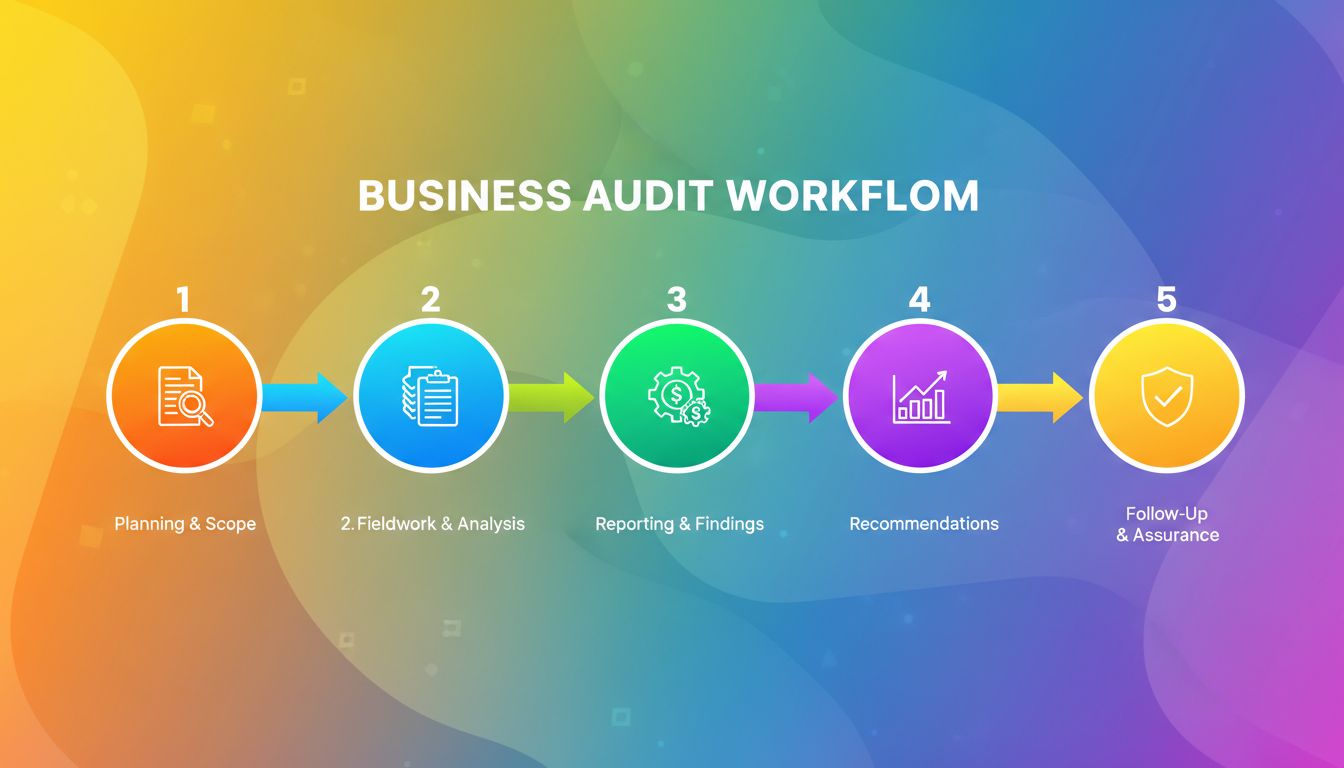
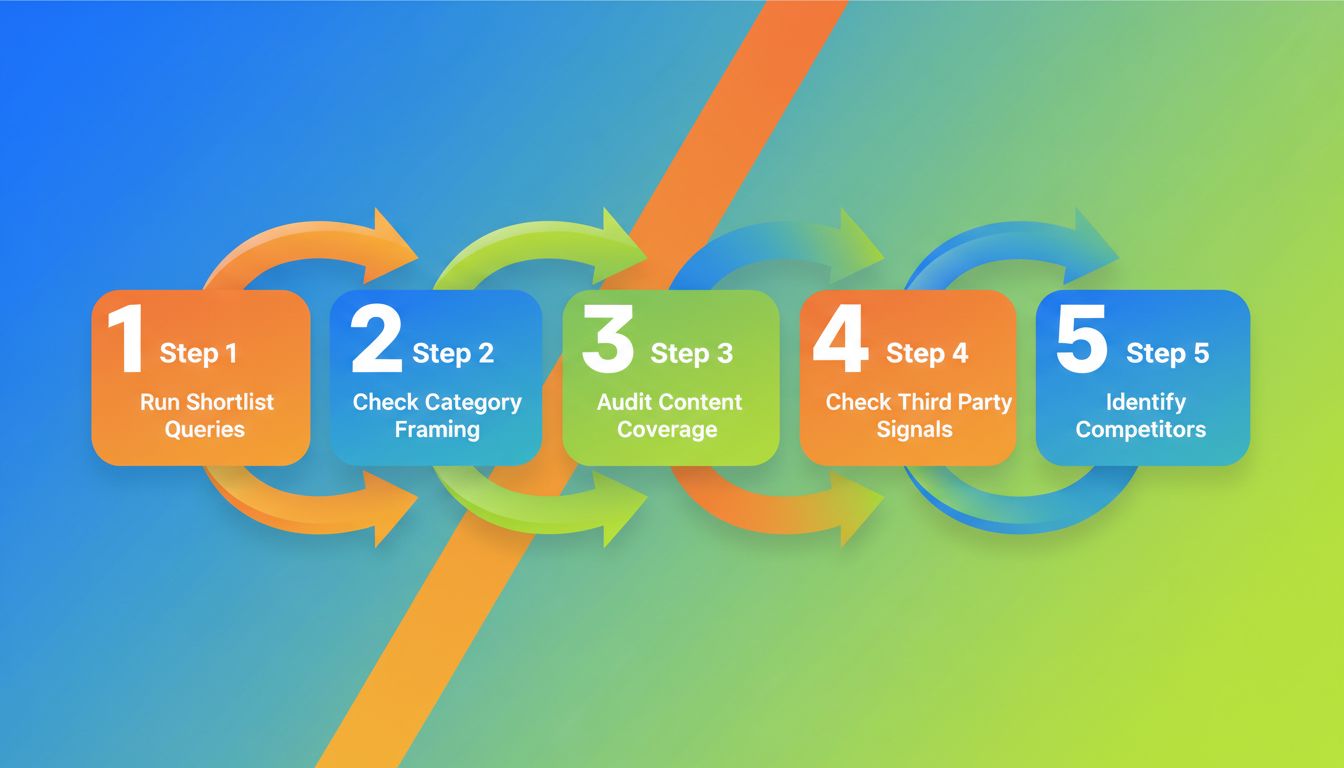
Step 1: Run the shortlist queries. Open ChatGPT, Perplexity, and Google AI Mode separately. In each one, run five to ten queries your buyers would actually ask when evaluating a solution like yours. Use natural language, not keyword-style queries. “What are the best B2B marketing automation platforms for a 50-person SaaS company?” not “B2B marketing automation tools.” Record which vendors appear in each shortlist. Note whether your company appears, how it is described, and in what position.
Step 2: Check your category framing. Ask each AI platform directly: “What does [your company name] do?” and “What is [your company name] best known for?” Compare the answers to how you actually describe yourself. Inaccurate or incomplete AI descriptions of your company are a red flag. They suggest the AI is working from thin or conflicting signals and may be actively misrepresenting you to buyers.
Step 3: Audit your ungated content coverage. List the ten most common questions your buyers ask during the sales process. Then check whether you have a publicly accessible, AI-crawlable page that answers each one. Not a gated white paper. Not a sales deck. A real page on your website that an AI can read and cite. If six of ten questions are unanswered by ungated content, you have a coverage gap that explains why AI does not mention you for those queries.
Step 4: Check third-party signals. Search for your company name on Reddit, G2, Capterra, and in industry newsletters or publications. AI engines weight these sources heavily for credibility signals. If there is very little discussion of your company in those places, or if the discussion is negative or inaccurate, that directly affects your AI citation rate. Note both volume and sentiment.
Step 5: Identify your shortlist competitors. From step 1, list the companies that appeared in the shortlists where you did not. These are your AI search competitors, and they may be different from your traditional SEO competitors. Look at two or three of them. What do they do differently at the Citations, Coverage, and Credibility layers? That gap analysis tells you exactly where to invest first.
Run this audit fresh every quarter. AI engines update frequently. A company that was not appearing in shortlists three months ago may start appearing after publishing a cluster of well-structured content. The competitive picture changes faster than traditional SEO rankings do.
Five Moves That Earn AI Citations
Once you know where your gaps are, these are the moves that close them. They are not quick fixes. Each one is a genuine content and distribution commitment. But the pattern we see in B2B companies that have moved from invisible to frequently cited in AI answers is consistent across all five.
Move 1: Build ungated answer content for every buying stage question. AI engines cite accessible content. If your most authoritative thinking is locked behind a lead form, it is not in the running for citation. This does not mean you have to give everything away. It means the content that answers “how do I evaluate a solution like yours” and “what are the tradeoffs between approach A and approach B” needs to live on public pages. Think of it as moving your best sales conversation content out of the gated layer and onto the web.
Move 2: Write for extraction, not just engagement. Every major section of a page should open with a sentence that directly answers the question implied by the heading. No wind-up. No building context before the point. AI engines are essentially doing extraction: pulling the most relevant, quotable answer to a query. If your answer is buried in paragraph four, after three paragraphs of context-setting, it will not be extracted. Paragraph one should do the work. Studies have found that content containing direct quotations earns 41% more AI visibility, and content with statistics earns 32% more. Both require that the answer be clear and upfront, not buried.
Move 3: Earn mentions on platforms AI trusts. AI citation rates are heavily influenced by third-party mentions on Reddit, LinkedIn, G2, industry-specific communities, and credible publications. This is not SEO link building. AI models are reading those conversations and using them to assess whether a vendor is credible and relevant. The practical implication is that getting genuine customers to post in relevant subreddits, answer questions on LinkedIn, and leave detailed reviews on G2 is now a direct AI visibility strategy. It is also why treating customer advocacy as a pure pipeline activity misses its role in AI search.
Move 4: Publish consistent, persona-specific content for each buying committee member. Given what we covered about the buying committee fragmentation problem, this is especially critical for B2B. You need a content layer for the technical evaluator (how does this integrate, what does the API look like, what are the security certifications), a layer for the economic buyer (what is the ROI case, how does pricing scale, what does implementation cost), and a layer for the operational end user (what does day-to-day use actually look like, what does onboarding require). Each layer gets discovered by a different type of AI query. Building all three is what gets you cited across the full committee, not just to the primary champion.
Move 5: Actively manage your category positioning everywhere. If your website describes you as “an AI-powered revenue operations platform” but your G2 reviews call you “a sales forecasting tool” and your LinkedIn company page says “helping B2B teams close more deals,” AI engines are receiving three different signals about who you are. They will resolve that conflict however they can, which usually means a vague or partially accurate description. Audit your positioning across your own site, all third-party review platforms, your LinkedIn page, your press coverage, and your partners’ descriptions of you. Align them around one clear, consistent description of what you do, who you do it for, and what makes you different.
What Most B2B Teams Get Wrong
The biggest mistake we see is treating AI search as an SEO task and handing it to whoever manages keyword rankings. That approach produces incremental improvements to the Citations layer, usually around schema markup and page speed, while missing the Coverage, Credibility, and Consistency gaps entirely. Schema markup matters. But a company with perfect schema and no third-party mentions will still be absent from AI shortlists. This is a cross-functional problem. Content, demand gen, customer marketing, and PR all have roles.
The second mistake is optimizing only for the company’s primary buyer persona. In a strong B2B content marketing strategy, you know your ICP deeply. But AI search is surfacing your company to six to ten different stakeholders per deal. Content that only speaks to the champion means you are invisible to the CFO, the technical evaluator, and the security team. That creates friction later in the sales cycle, when those other stakeholders do their own AI-assisted research and find thin or absent results for their specific questions.
The third mistake is measuring success by traffic. AI-referred traffic is often small in absolute volume and misattributed in GA4, showing up as direct. If you stop at traffic analysis, AI visibility improvements will look like nothing. B2B content marketing ROI in an AI-search world requires pipeline-level attribution. You need to be asking in sales calls and in onboarding surveys where buyers first heard about you, and whether they encountered the company name in an AI-generated answer. That qualitative signal is the leading indicator. Traffic data will lag by months.
The fourth mistake is waiting. Ninety percent of ChatGPT citations come from pages ranking 21st or lower in traditional Google results, or from pages that do not rank on Google at all (per The B2B Playbook). The AI citation economy is not purely a function of existing domain authority. A well-structured, ungated, credible piece of content on a newer site can earn citations faster than a slow-loading page from a high-authority domain. The opportunity to establish AI visibility before your larger competitors lock it in is real, but it is time-limited.
Metrics That Replace Rank Tracking
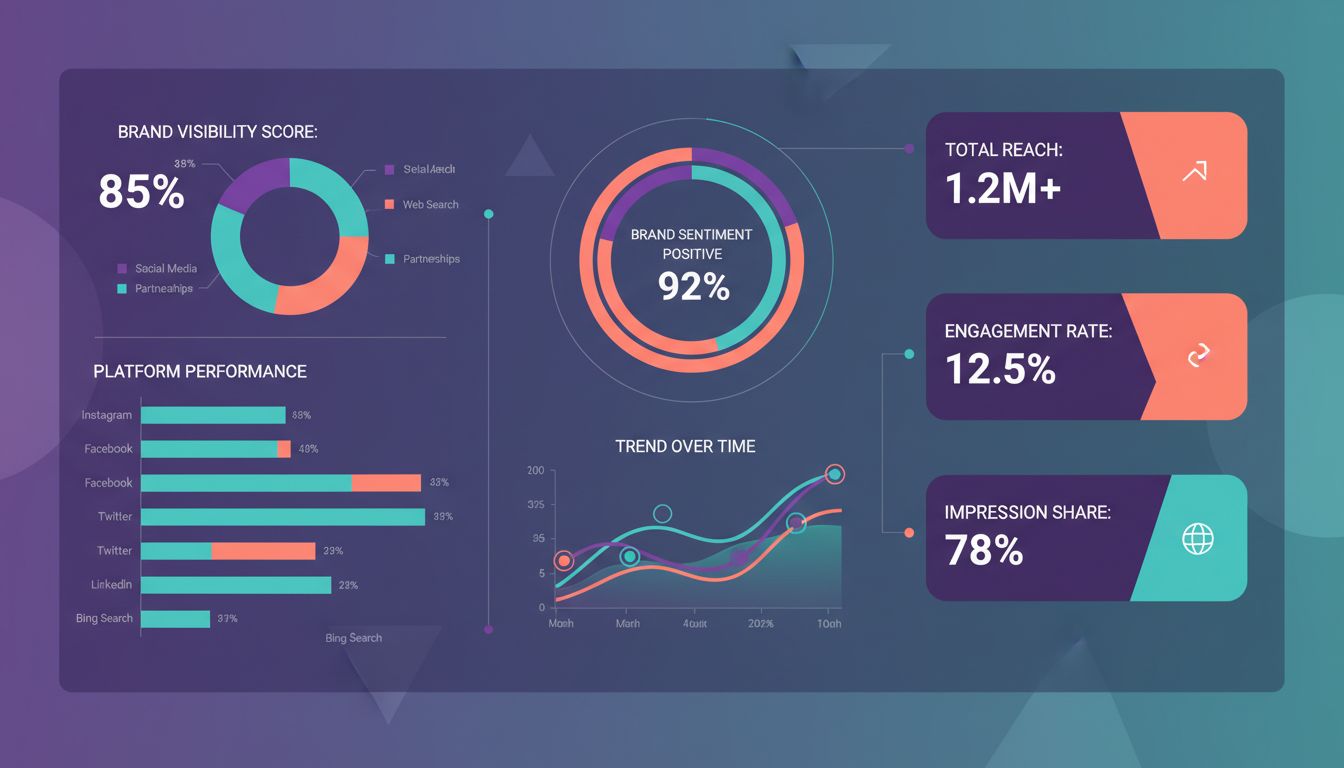
Traditional rank tracking is not the right measurement tool for AI visibility. Position 1 on Google for a query that now triggers an AI Overview may deliver fewer clicks than position 5 on a query that does not. And your rank on Google does not predict whether you appear in a ChatGPT shortlist at all.
The metrics that actually tell you how you are doing in AI search are different. Here are the four that matter most for B2B.
AI Share of Voice (AI SoV) measures how frequently your brand is mentioned in AI-generated answers for your target query set, relative to competitors. You build this by running a defined set of queries monthly across ChatGPT, Perplexity, and Google AI Mode, then recording which brands appear. Your AI SoV is the percentage of those appearances that include your company. A rising AI SoV against a stable or shrinking organic share means you are winning the more important battle right now.
Brand Visibility Score is a composite of how accurately and positively AI platforms describe your company when asked directly. Run the “what does [company] do” queries monthly. Score the accuracy and completeness of the answers. Inaccurate descriptions are a signal of weak or conflicting credibility signals. Improving accuracy over time is a direct result of the consistency work described in Move 5 above.
Share of Model (SoM) is a newer concept being tracked by AI analytics platforms. It measures how prominently your company appears in AI-generated answers, not just whether you appear. A brief mention in a list of eight is different from being the top recommendation or the first name mentioned. Share of Model tracks your position and prominence in those answers over time.
Pipeline-attributed AI citations is the most important metric and the hardest to track. In your sales calls, in your onboarding surveys, and in your win/loss interviews, start asking: “Where did you first hear about us?” and “Did you use any AI tools in your research?” Build a tally of deals where the buyer mentions encountering your company name in an AI-generated answer. Over six to twelve months, this gives you a pipeline attribution number for AI visibility, which is the only metric that will matter to leadership.
Note that AI-referred traffic in GA4 will undercount your actual AI-driven visits significantly. AI tools do not always pass referrer information. Many buyers copy a recommendation from ChatGPT and navigate directly. The traffic shows as direct. Until GA4 and AI platforms develop better attribution handoffs, qualitative pipeline attribution is more reliable than the traffic data alone. This attribution dark funnel problem is one reason the tension between content marketing and demand generation is getting sharper in B2B teams right now. Both camps are claiming influence over pipeline that is genuinely hard to attribute.
What To Do Next
The full AI visibility picture can feel overwhelming when you look at it all at once. It is not. The AI Visibility Stack gives you a structured way to prioritize. Here is what that looks like in practice across a 90-day window.
Week 1. Run the five-step audit. Do it properly, with real queries across all three AI platforms. Take a screenshot of every shortlist query result and save it. This is your baseline. Everything you measure later will be relative to where you start today. Alongside the audit, score yourself on the AI Visibility Stack to identify your two lowest-scoring layers.
Month 1. Fix your Citations layer if it is weak. Check that your core pages are crawlable, ungated, fast-loading, and structured with proper Article and FAQ schema. Add direct-answer paragraphs (40 to 60 words, stating a clear answer to the implied question) to the tops of your most important sections. This is the fastest layer to improve and gives you a foundation for everything else.
Simultaneously, audit your consistency across all external platforms. Make a list of every place your company is described in words you did not write: G2, Capterra, LinkedIn, your partners’ sites, press coverage. Note every discrepancy. Start correcting the ones you control, and contact platforms where the description is wrong.
Month 2. Address your Coverage gaps. Take the list of questions your buyers ask during the sales process. For each one that does not have a public, well-structured answer on your site, write it. These do not need to be long. A 600-word page that directly answers “what is the ROI case for [your category] in a 50-person SaaS company” is more useful for AI citations than a 3,000-word thought leadership piece that buries the answer. Focus on the buying committee layers you identified as weak: technical evaluator, economic buyer, operational end user.
Month 3. Build your Credibility signals. Launch a customer advocacy push. Get existing customers to share their experiences on Reddit threads, LinkedIn posts, and in their G2 or Capterra reviews. The goal is not just more reviews. It is genuine, specific, publicly visible discussion of your company in the places AI engines read. One detailed Reddit thread from a genuine customer saying “we evaluated X, Y, and Z and chose [your company] because of A and B” is worth more for AI credibility than ten generic five-star ratings.
Re-run your audit at 90 days. Your AI Share of Voice should be moving. Your brand description accuracy should be improving. The deals that come in should start to include at least some buyers who mention encountering your name in an AI answer. That qualitative signal, even from one or two deals, is the first real return on your AI visibility investment. Build from there.
B2B companies that treat AI search as an extension of existing SEO will find marginal gains. Companies that treat it as a new visibility layer, with its own audit methodology, its own content requirements, its own measurement framework, and its own cross-functional ownership, will build the kind of compounding advantage that is very hard to replicate once established. The window to do this before the AI shortlist in your category gets locked in is still open. For most B2B markets, it is open for another 12 to 18 months. After that, the incumbents in those shortlists will be much harder to displace.
Frequently Asked Questions
What is the difference between SEO and AI search optimization?
SEO focuses on ranking in traditional search engine results pages through keyword targeting, link building, and technical optimization. AI search optimization, sometimes called GEO (Generative Engine Optimization) or AEO (Answer Engine Optimization), focuses on getting your content cited and your brand mentioned in AI-generated answers. Both rely on a foundation of good content and technical health, but AI search requires additional work on content structure for extraction, third-party credibility signals, and consistency of brand positioning across sources AI reads.
How long does it take to see results from AI visibility work?
Citations layer improvements (schema, ungated access, page structure) can show results in four to eight weeks as AI models re-crawl and re-index content. Coverage and Credibility improvements take longer, typically three to six months before the new content and third-party signals are consistently influencing AI answers. Plan for a six-month horizon before expecting meaningful changes in your AI Share of Voice metrics.
Does my company need to appear on ChatGPT and Perplexity separately?
Yes, and that requires work beyond just optimizing your own site. Each AI platform draws on different sources and weights them differently. Only 11% of websites are cited by both ChatGPT and Perplexity simultaneously. Perplexity tends to cite newer, more recent content. ChatGPT draws more heavily from Reddit, forums, and established publications. A dual-platform strategy means diversifying your third-party presence across the sources each platform prefers, not just improving your own website.
What should I do if AI platforms are describing my company inaccurately?
Start by auditing every external source that describes your company: review platforms, press coverage, partner sites, directories. Correct inaccuracies you control. For platforms you do not control, publish clear, direct, public-facing content on your own site that defines exactly what you do. Over time, consistent, well-structured first-party content can shift how AI models characterize you. If the inaccuracy is on a high-traffic platform like Reddit or G2, having real customers post accurate, detailed descriptions there is the fastest correction.
Is gated content hurting my AI visibility?
Yes, for citation purposes. AI engines cannot cite content they cannot access. Gated white papers, gated reports, and login-required pages are invisible to AI models. That does not mean you should ungate everything. It means the ungated layer of your content needs to be genuinely substantive. Move your best thinking about buyer questions, category tradeoffs, and vendor evaluation criteria out of gated formats and onto public pages. Keep gated content for deep-dive templates, proprietary data, or premium tools that are worth the friction for high-intent prospects.
How does this apply to a B2B company with a long sales cycle?
A long sales cycle creates more touchpoints where AI search can influence buyer perception. A buyer who first encounters your company name in a ChatGPT shortlist in month one of their research may validate that impression with a Perplexity query in month three and a Google AI Mode search in month five. Each of those touchpoints requires that your AI visibility be strong at that stage of inquiry, which means your content coverage needs to span awareness, evaluation, and shortlisting stages. The human-in-the-loop AI content workflow used by many B2B teams helps maintain coverage across all of those stages without burning out the content team.
