

A B2B content workflow template maps six stages from idea to published post: intake, brief, draft, review, publish, and distribute, with a named owner and a maximum time limit at each stage. Most templates online stop at “write it, edit it, publish it” and never say what to do when a post sits stuck in SME review for three weeks. That stuck stage is the real reason most small teams’ content calendars slip, not a lack of ideas.
What a B2B Content Workflow Template Actually Needs
A working workflow template needs three things a generic template skips: a named owner per stage, a maximum time limit per stage, and a documented escalation path for when a stage stalls. Without those three, a workflow diagram is just a flowchart nobody follows after week two.
Most templates you’ll find online describe the stages fine, covering a five-step process of strategy, assign, publish, promote, and analyze. Intake, brief, draft, edit, publish, promote: that part isn’t the hard part. The hard part is what happens when a piece sits in “waiting on SME” for eleven days because the subject matter expert has three other priorities. A template that doesn’t plan for that is a template built for a team that doesn’t actually exist.

The Workflow Bottleneck Map: Find Where Your Content Actually Gets Stuck
The Workflow Bottleneck Map is a simple diagnostic: track how many days each piece of content spends in each stage for your last ten posts, then compare those numbers against a maximum time budget per stage. Whichever stage consistently blows its budget is your real bottleneck, and it’s rarely the stage teams assume.
Most teams assume writing is the slow part and buy tools to speed up drafting. In practice, the stages that actually stall are SME review, internal approval, and design or asset creation, the stages with a dependency on someone outside the core content team. Fixing drafting speed doesn’t help if the bottleneck is a stakeholder who takes eight days to answer a Slack message. Even guides written specifically for B2B teams tend to skip this: most B2B workflow breakdowns cover review and approval as a single generic step without addressing what happens when that step has no deadline attached to it.
| Stage | Owner | Time Budget | Common Bottleneck Cause | Fix |
|---|---|---|---|---|
| Intake | Content lead | 1 day | Topic not scored or prioritized | Use a standing topic list scored in advance, not ad hoc requests |
| Brief | Content lead or writer | 1-2 days | Brief template missing SEO or audience detail | Use a repeatable brief template with required fields, not a blank doc |
| Draft | Writer | 3-5 days | Unclear brief forces research mid-draft | Reject vague briefs before drafting starts, not after |
| SME/expert review | Subject matter expert | 2 days | SME has no dedicated time blocked for review | Batch review requests weekly with a hard deadline, not one-off pings |
| Approval | Manager or stakeholder | 1-2 days | No single approver, or approver has no context | Name exactly one final approver, send them the brief upfront |
| Publish and distribute | Content lead | 1 day | Publishing treated as an afterthought | Build publishing and repurposing into the same checklist as writing |
Run this against your own last ten posts before adopting any workflow tool. The stage that blows its budget most often is the one worth fixing first, and it’s usually not the one a new piece of software claims to solve.
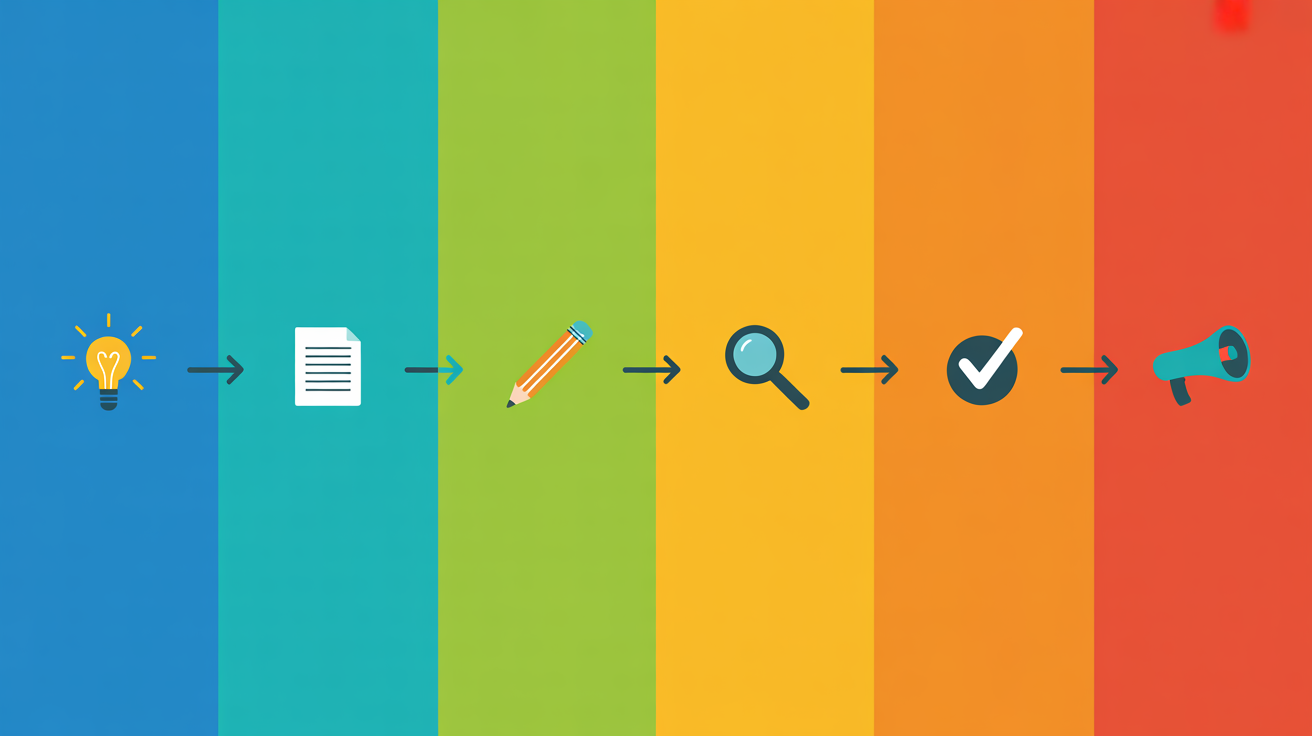
The Step-by-Step Workflow: From Idea to Published Post
Follow these stages in order, and don’t let a piece skip a stage even when it feels urgent. Skipping stages under pressure is exactly how quality slips.
- Score and log the topic idea against your existing editorial calendar, checking it doesn’t duplicate a published post.
- Write a brief using a fixed template with required fields: audience, search intent, target keyword, competitor gaps, and word count range. A content brief template removes this as a recurring decision.
- Assign the draft to a writer with a firm deadline, not a vague “whenever you get to it.”
- Send the draft to any required SME in a single batched request with a two-day turnaround clearly stated, not an open-ended “take a look when you can.”
- Route to exactly one named approver. Two or more approvers with equal authority is the single most common cause of approval-stage stalls.
- Publish on a fixed weekly day, with distribution assets (social posts, email blurb) prepared before the draft is even finished, not after.
- Log the actual days spent in each stage so your next Workflow Bottleneck Map review has real data instead of a guess.
If you want the broader system this workflow plugs into, see our guide to building a repeatable content engine for small B2B teams.
What Most Teams Get Wrong With Content Workflows
The most common mistake is building a workflow diagram once and never checking whether the team actually follows it. A workflow that lives in a slide deck but not in the tool people use daily gets ignored within a month.
The second mistake is having no single approver. When two stakeholders can both approve or reject a piece, content sits waiting for whichever one responds first, and disagreements between them create indefinite stalls with no clear resolution path.
The third mistake is treating distribution as a task you think about after the post goes live. By then the momentum from publishing is already gone. Distribution assets should be drafted alongside the piece, not bolted on afterward.
The fourth mistake is skipping the data. Teams that never track how long content actually spends in each stage keep guessing at what’s slow, and usually guess wrong. The Workflow Bottleneck Map only works if someone logs real stage durations, even roughly.
Frequently Asked Questions
What tool should a small B2B team use to manage a content workflow?
Any tool with visible stages and due dates works, including Trello, Asana, Notion, or a shared spreadsheet. The tool matters far less than whether every piece has a named owner and a time budget per stage. A simple spreadsheet with strict discipline beats an expensive tool nobody updates.
How many stages should a B2B content workflow have?
Six stages cover most B2B content: intake, brief, draft, review, approval, and publish/distribute. Adding more stages than that usually adds bureaucracy without adding quality. Fewer than five and you risk skipping a step that actually matters, like SME review.
Who should own the content workflow for a small team?
One person, usually the content lead or marketing manager, should own the overall workflow even if they don’t personally do every stage. Shared ownership across multiple people without one final decision-maker is exactly what causes bottlenecks in the review and approval stages.
How long should each stage of a content workflow take?
As a starting benchmark: one day for intake, one to two days for the brief, three to five days for the draft, two days for SME review, one to two days for approval, and one day for publishing. Adjust based on your own Workflow Bottleneck Map data rather than treating these as fixed rules.
What causes most content workflow bottlenecks?
Stages that depend on someone outside the core content team, most often SME review and stakeholder approval, cause the majority of delays. These stages stall because the outside party has no dedicated time blocked for the request and no firm deadline attached to it.
Should a workflow template be different for a solo marketer versus a team of five?
The stages stay the same, but a solo marketer collapses several roles into one person and should set a personal deadline for each stage instead of assigning it to someone else. A five-person team should name a distinct owner for each stage to avoid the same person becoming the bottleneck everywhere.
Download the B2B content workflow template to log your own stage owners, time budgets, and actual days spent.
What To Do Next
Pull your last ten published posts and log how many days each one spent in every stage, even roughly from memory or your project tool’s activity log. Compare those numbers against the time budgets in the Workflow Bottleneck Map table above and find your actual slow stage, not the one you assume is slow. Name exactly one approver for content going forward if you currently have more than one. Build distribution assets alongside the draft instead of after publishing. And revisit this data every quarter, since the bottleneck shifts as your team and workload change.
