

A B2B content operating system is the set of repeatable people, process, and tool decisions that let a lean team publish consistent, quality content without reinventing the workflow every single week. It is not a content calendar and it is not a tech stack. It is the connective tissue between the two: who owns intake, how a draft moves from idea to published post, and what happens when the one person running the whole thing gets pulled onto something else.
Most guides to content operations are written for teams of eight or more, with a managing editor, two writers, a designer, and a strategist. One widely cited framework covers team structure, SME workflows, and QA stages in detail, but it assumes a robust existing tech stack and does not address what happens when a single content owner becomes unavailable. If you are a marketing team of one to three people trying to publish weekly, that advice does not fully transfer. You do not need a governance committee. You need four things working together and a plan for what happens when one of them breaks.
What a B2B Content Operating System Actually Is
A content operating system is the minimum set of rules that keeps content moving from idea to published post without you having to make the same decision twice. It answers four questions every time, automatically: where does an idea come from, who turns it into a draft, who approves it, and where does it go after it publishes. If you cannot answer all four in one sentence each, you have a content calendar, not an operating system.
Lean teams often confuse activity with system. Publishing three posts a week feels productive, but if each one required a fresh round of “who’s writing this” and “where does this go once it’s live,” you are running on improvisation. An operating system removes the improvisation, not the creativity.
The Load-Bearing Wall Framework
The Load-Bearing Wall Framework treats your content operation like a small building. It has four walls that carry the actual weight: Intake, Production, Distribution, and Measurement. Remove any one of them and the whole structure sags, no matter how good your writing is. Most lean teams over-invest in Production (the actual writing and editing) and under-invest in the other three, which is why content gets published but never compounds.
| Wall | What it owns | Minimum viable version for a lean team |
|---|---|---|
| Intake | Where topics come from and how they get scored | One shared sheet with keyword, priority, and funnel stage. No idea gets written without a row. |
| Production | Brief, draft, edit, approve | A standard brief template and a single named approver, even if that approver is you on a different day. |
| Distribution | Where content goes after it publishes | A repurposing checklist: one LinkedIn post, one email mention, one internal link added to an older page. |
| Measurement | What tells you it worked | A monthly quarter-hour review of clicks, rankings, and one pipeline-touching metric. |
Notice what is missing from that table: headcount. The Load-Bearing Wall Framework works whether one person wears all four hats or a team of five splits them. What breaks lean operations is not team size. It is skipping a wall entirely because nobody explicitly owns it. This is the same failure mode we cover in depth in our guide to running a one-person B2B content team, and it is worth reading alongside this framework if you are the sole owner of all four walls.
DIY Stack vs. Agency Retainer vs. Enterprise MarTech
Choosing a content operations setup comes down to three real options for most lean B2B teams, and the right one depends on budget and how much process discipline you already have, not company size alone.
| Approach | Monthly cost range | Best fit | Biggest risk |
|---|---|---|---|
| DIY stack (sheets, docs, a brief template, a free scheduler) | $0 to $200 | Teams of one to two who need discipline more than tooling | Breaks the moment the one person managing it goes on vacation |
| Agency retainer with an internal owner | $3,000 to $10,000 | Teams with budget but no bandwidth for production | Quality drifts if nobody internal reviews briefs against real customer language |
| Enterprise MarTech stack (CMS, DAM, workflow tool, BI dashboard) | $1,000+ in software alone, plus admin time | Teams past 500 published assets with multiple contributors | Tool overhead eats the time it was supposed to save |
One pattern we repeatedly see in audits: teams jump straight to the enterprise stack column because it looks more serious, then spend three months configuring a workflow tool instead of publishing. If you are under twenty active contributors to content, the DIY stack column with strict wall ownership beats a half-configured enterprise tool every time. For a longer walkthrough of building that lightweight version step by step, see our guide to a repeatable content engine for small teams.
How to Build Your Operating System in Five Steps
Building a working content operating system takes one afternoon, not a quarter-long project. Here is the order that avoids the most common stalls.
- Write down your four wall owners. Even if it is the same name four times, name them explicitly in a shared document.
- Standardize one brief template. Pull the fields from your best-performing past post: keyword, search intent, internal links to include, and word count target based on real competitor research, not a fixed number. Our own content brief generator is one way to keep this step consistent without building the template from scratch.
- Set one approval gate per piece. Not three rounds of feedback. One named person signs off before publish.
- Build a five-minute distribution checklist. One social post, one internal link added to a related older page, one line in your next newsletter. Pair this with a couple of marketing automation workflows so the checklist runs itself instead of relying on memory.
- Schedule a fifteen-minute monthly review. Look at clicks, rankings, and one metric tied to pipeline. Adjust intake priorities based on what actually moved.
What Most Teams Get Wrong
The biggest mistake teams make is building the system around the person instead of the role. When “who approves this” is answered with a name instead of a title, the whole operation stops the day that person is unavailable. We see this constantly in audits of one and two-person content teams: every process lives in one person’s head, and nothing is written down because writing it down felt like overkill for a small team.
The second mistake is skipping the Distribution wall entirely. Teams publish a post, mark the task done, and move to the next brief. Six months later they wonder why traffic is flat despite consistent publishing. A post that never gets repurposed, internally linked, or mentioned anywhere else is a post that only Google ever sees.
The third mistake is measuring too late. Waiting a full quarter to check whether a topic cluster is working means three more months of budget spent on a direction that was already failing by week four. A short monthly check catches this early enough to redirect the next batch of briefs. Forrester’s content strategy and operations model makes a similar point at the enterprise level: operations maturity, not headcount, is what determines whether content compounds or stalls.
The Single Point of Failure Audit
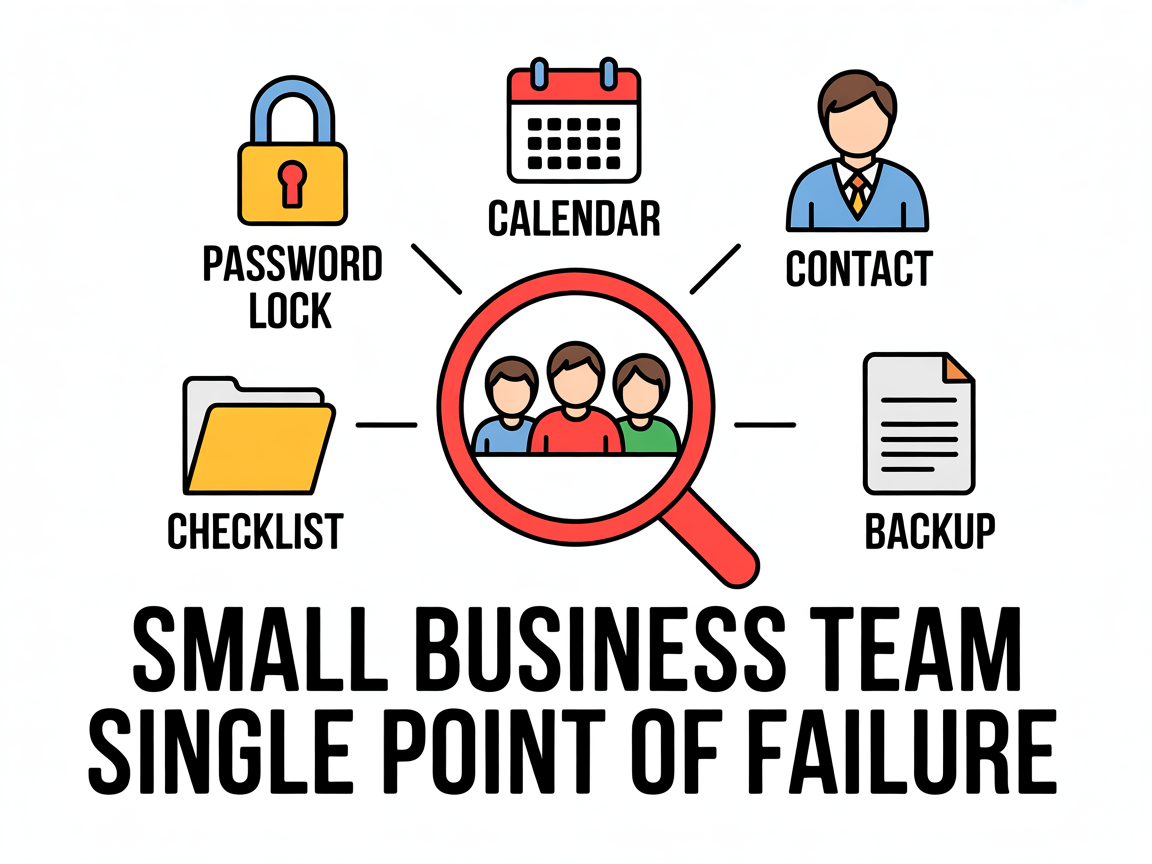
Run this check once a quarter, especially if your content operation runs on one or two people.
- Is there a written brief template anywhere outside one person’s inbox?
- If the primary writer was out for two weeks, could someone else find the topic queue and priority order?
- Are login credentials for your CMS, scheduler, and analytics tools stored somewhere besides one person’s personal password manager?
- Does anyone besides the content owner know which posts are due for a refresh this quarter?
- Is there a record of which internal links point to which pages, or does that knowledge live only in someone’s memory?
Answering “no” to two or more of these is not a hypothetical risk. It is a system that is one sick day away from stalling.
Frequently Asked Questions
How is a content operating system different from a content calendar?
A content calendar tells you what publishes and when. A content operating system tells you who owns each stage, what the brief standard is, and what happens after publish. You can have a full calendar and still have no operating system if nobody owns distribution or measurement.
Do we need project management software to run this?
No. A shared spreadsheet and a shared doc template cover the DIY stack tier described above. Project management software helps once you have more than three regular contributors, but it is not a prerequisite for a working system.
How often should we revisit our content operating system?
Review wall ownership every quarter and the brief template every six months. Revisit sooner if a wall owner changes roles or leaves, since that is exactly when undocumented processes break.
What is the minimum team size this framework works for?
One person. The four walls still need owners even if one person holds all four titles. The framework forces you to notice when a wall is being skipped, which happens most often on solo teams under deadline pressure.
Should distribution happen before or after measurement?
Distribution happens immediately after publish, within the same week. Measurement happens on a monthly cadence, looking back at everything distributed that month. Treating them as the same step is why many teams skip distribution once they get busy.
What To Do Next
Start with the Single Point of Failure Audit above before you touch your brief template or your calendar. If two or more answers come back “no,” fix that first. A better brief template will not save an operation where all the process knowledge lives in one inbox.
Once the audit is clean, name your four wall owners in writing this week, even if every name is the same. Then set the fifteen-minute monthly review on the calendar before you need it, not after traffic drops and you are scrambling to explain why.
