
Quick Answer: How do you start B2B sales and get your first leads?
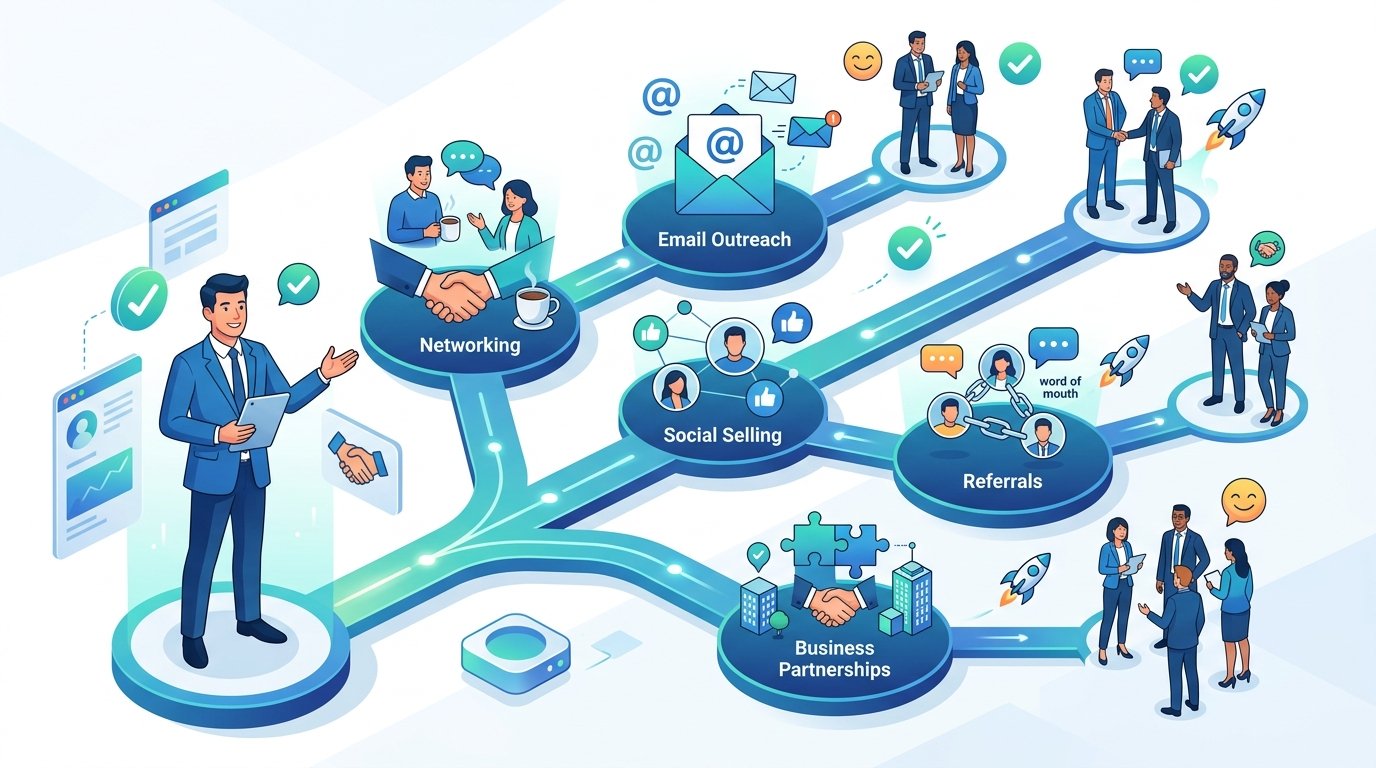
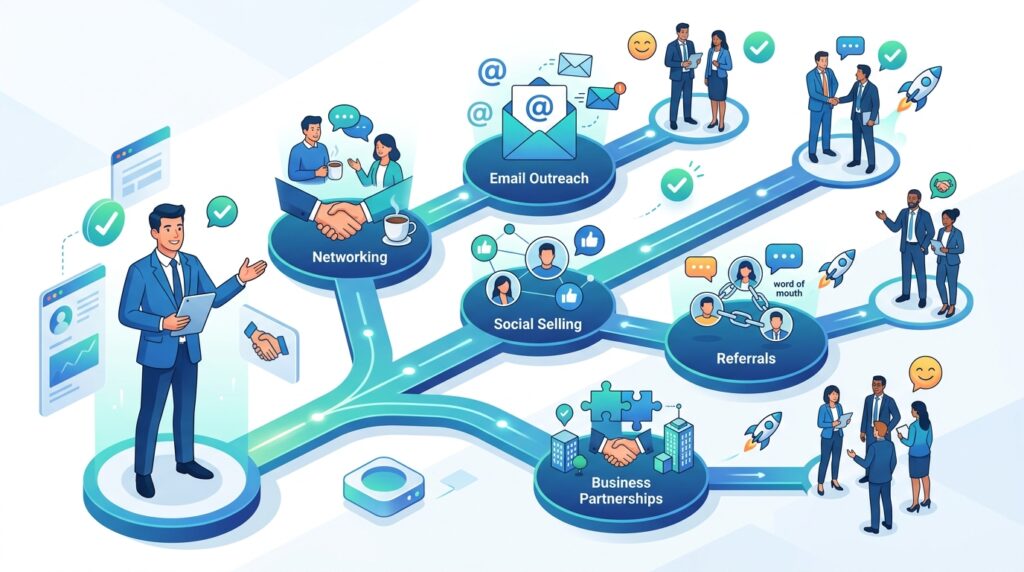
Start B2B sales by identifying 20–30 ideal target companies using LinkedIn Sales Navigator or Apollo.io, then build a list of decision-maker contacts with verified emails. Use a 5-touch outreach sequence: a personalized LinkedIn connection request, followed by a value-first email referencing a specific problem they likely face, then a follow-up with a relevant case study or free resource. Book discovery calls, not demos — ask about their current process before pitching a solution.
Selling to other businesses can feel terrifying. When you sell to a regular person, they make a quick choice based on budget or feeling. When you sell to a company, you have to deal with budgets, bosses, procurement departments, and long wait times.
If you are trying to figure out b2b sales how to start, you do not need a massive team or a huge budget. You just need a simple, repeatable process to find the right people and talk to them like human beings. Let us look at how you can get your first business customers without losing your mind.
Table of Contents
Find Your Perfect Customer First
You cannot sell to every company in the world. Even if your software or service can help any business, you must narrow your focus. In business sales, this is called your Ideal Customer Profile. Think about who gets the most value from what you offer.
If you sell accounting software, you could sell to restaurants, construction companies, or tech startups. But each of these groups has different pain points. A restaurant cares about food costs. A construction company cares about subcontractor invoices.
Pick one specific group to start. Let us say you choose local construction companies with ten to fifty employees. This focus makes your message clear. When you talk to them, you can use their industry terms. They will feel like you built your offer just for them.
Building a Simple Lead List
Once you know your target group, you need to find the actual people who make decisions. You want to reach the person who has the power to sign a check or approve a contract. In a small business, this is the owner. In a larger company, it might be a manager or director.
You can use LinkedIn to find these people. Search for your target industry and job titles. For example, search for “Owner” or “Operations Manager” in the construction industry within your city. Do not buy huge email lists from shady websites. These lists are often outdated. Many of those emails will bounce, which hurts your email domain health. Instead, build a list of fifty high-quality prospects by hand. Look at their company websites. Read their social media posts. Make sure they are a real fit before you ever try to contact them.
Writing Outreach Emails That People Actually Read
Most business emails are terrible. They are long paragraphs of text explaining every feature of a product. Nobody has time to read those. Your prospects are busy people with full inboxes. Your goal with a first email is not to close a sale. You just want to start a conversation.
Let us look at a bad email versus a good email to make this clear. Here is an example of a bad email:
Dear Sir or Madam, We are a leading global provider of advanced cloud solutions. Our modern platform helps companies manage their operations, improve workflows, and create incredible value. We offer twenty-four-seven support and a wide range of features. Would you like a demo?
This email is bad because it is all about the seller, not the buyer. It uses boring corporate speak. Now, here is a good email:
Hi Sarah, I saw your post on LinkedIn about hiring three new project managers for your Seattle office. With rapid growth, keeping project communication organized can get messy. We help construction teams coordinate tasks without using endless email threads. Do you have ten minutes for a quick call this Thursday at 2 PM?
This works because it is highly personalized. It mentions a real event, which is the hiring of new managers. It addresses a specific problem that comes with that event. It is short, under five sentences, and ends with a clear, low-pressure question.
How to Run Your First Sales Meeting
When someone agrees to a call, do not open a fifty-slide presentation and talk for thirty minutes. This is a common mistake for beginners. Instead, ask questions. You want to understand their situation. According to the history of Business-to-business commerce, successful sales have always been about solving problems, not just pushing products.
Start the call by thanking them for their time. Then, ask open-ended questions. Here are a few examples you can use:
- What is your biggest bottleneck right now?
- How are you currently handling your invoicing?
- If you could fix one thing about your daily workflow, what would it be?
Listen carefully to their answers. Let them do eighty percent of the talking. Once you understand their pain, explain how your product solves that specific problem. If they complain about manual data entry, show them how your tool automates that task. Skip the features they do not care about.
Setting Your Price and Closing the Deal
When you are starting, pricing can be tricky. You might feel tempted to charge very little money just to get a customer. This is usually a mistake. If your price is too low, businesses will assume your product or service is low-quality. They might think you will not be around to support them next year. On the other hand, if your price is too high, you might struggle to get your first few sales.
The solution is to offer a pilot program. Tell your early prospects that you are looking for three partner companies to test your system. If they give you feedback and let you use their company as a success story, you will give them a fifty percent discount for the first six months. This approach does three things. It explains why the price is lower, it creates a sense of urgency, and it gives you valuable testimonials that you can use to sign your next customers.
Keep Your Pipeline Organized
You do not need expensive software to track your sales when you are beginning. A simple spreadsheet works perfectly fine. Create columns for the company name, contact person, email address, last contact date, status, and next steps. Update this spreadsheet every single day.
Sales require persistence. Most deals do not close on the first call. You will need to follow up multiple times. If someone says they are interested but busy, set a reminder to email them again in a week. Without a spreadsheet, you will forget to follow up, and you will lose deals that were close to buying.
In Summary
Now you have a basic framework. The hardest part is simply starting. You do not need more research or better tools. You need activity. To execute your plan for b2b sales how to start, you must take real action right now.
Open a blank spreadsheet today. Find ten companies in your area that fit your ideal customer profile. Use LinkedIn to find the name of the owner or department head for each company. Write down their contact information. Tomorrow morning, send them a short, helpful email. If you do this every day, you will build momentum, get comfortable talking to prospects, and close your first business customer.
Recommended Tool: AWeber
If you’re building a B2B email list alongside your content marketing, AWeber is the most reliable option for small teams. Free up to 500 subscribers, with inbox placement rates that consistently outperform most competitors.
Affiliate disclosure: Some links in this post are affiliate links. If you sign up through them, I may earn a small commission at no extra cost to you.
