

Writesonic is a useful first-draft tool for B2B blog content and email sequences. It cuts production time on standard content types by roughly 50 to 70 percent. For technical content, case studies, and anything that requires proprietary proof points or deep subject-matter expertise, it falls short. This review maps exactly where Writesonic earns its place in a B2B content workflow and where it does not.
Writesonic at a Glance: What B2B Teams Actually Get
Writesonic launched in 2020 and now centers on two core tools: an AI Article Writer for long-form content generation, and Chatsonic, a conversational AI with real-time web access. For B2B teams, those two tools serve different purposes. The Article Writer handles the repetitive drafting work. Chatsonic handles research tasks and time-sensitive queries that a static AI model cannot reliably cover.
What Writesonic is not: a brand voice engine, a replacement for subject-matter expertise, or a tool that understands your specific ICP pain points without significant prompting. You still bring the positioning and the editorial judgment. Writesonic handles the typing.
The B2B Content Fit Score: Where Writesonic Earns Its Keep
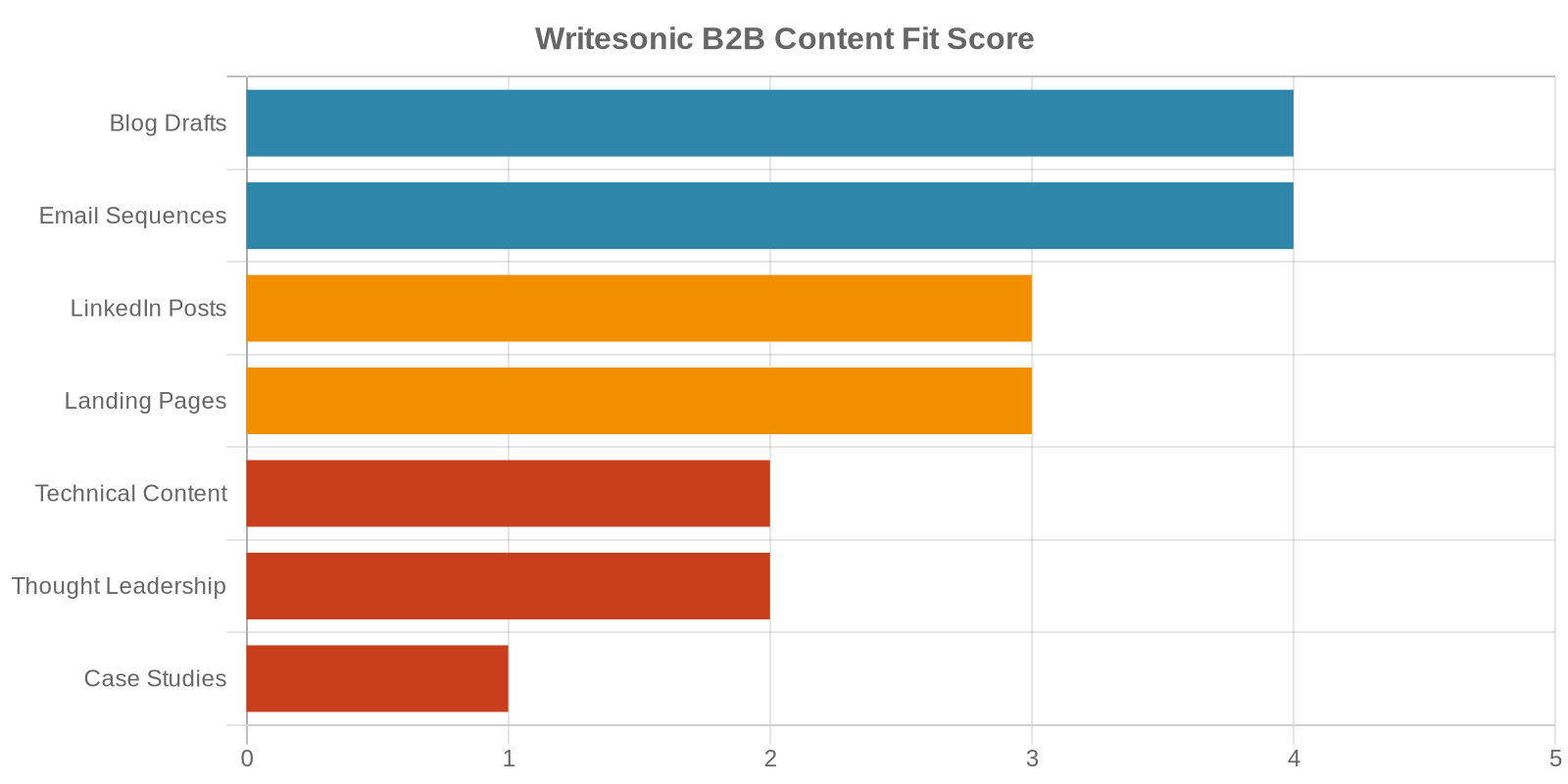
Rather than reviewing every feature, the more useful question is which content types B2B teams should actually run through Writesonic. The B2B Content Fit Score rates Writesonic on each content type on a scale of 1 (avoid) to 5 (use freely), based on how much human intervention the output typically requires before it is publishable.
| Content Type | Fit Score | What Writesonic Does Well | What It Misses |
|---|---|---|---|
| Blog first drafts | 4/5 | Structure, SEO scaffolding, initial prose on broad topics | Depth on niche topics, proprietary angles |
| Email sequences | 4/5 | Sequence logic, variation generation, subject line testing | Brand-specific voice, CTA precision |
| LinkedIn posts | 3/5 | Hook variations, blog repurposing structure | Authentic practitioner tone |
| Landing page copy | 3/5 | Headline and CTA options to test | Positioning nuance, conversion specifics |
| Technical content | 2/5 | High-level structural explanations | Accurate technical depth |
| Thought leadership | 2/5 | Outline and supporting paragraph structure | Genuine perspective, industry nuance |
| Case studies | 1/5 | Template format only | Everything factual, requires your real data |
The pattern is consistent. Writesonic adds the most value where structure and prose quality matter and factual specificity matters less. The further a content type moves toward proprietary data or technical accuracy, the faster the fit score drops.
Where Writesonic Genuinely Saves B2B Teams Time
Affiliate link — we earn a small commission at no extra cost to you.
Three content types where the subscription fee pays for itself every month.
Blog first drafts. The Article Writer produces a structured 1,500 to 2,500 word draft in under two minutes from a topic, target keyword, and brief audience description. The output reads like a competent generalist wrote it. On broad B2B topics like content marketing strategy, demand generation, or email nurture, the accuracy is serviceable. Your job shifts from writing to editing. That is faster.
For a standard 1,800-word blog post, this cuts production time from around four hours to one. The math works for teams publishing two or more pieces per week. It works less well for teams where the bottleneck is strategy and research, not typing speed.
Email sequences. Writesonic generates a multi-email sequence from a brief input: campaign goal, audience persona, product, and tone. The sequences follow logical nurture flows from awareness to consideration. Subject line variations are useful for A/B testing. You will still rewrite the CTAs and adjust the tone, but having five working draft emails in three minutes beats starting from a blank template.
LinkedIn content at scale. If you are repurposing blog posts for LinkedIn, Writesonic’s social templates work for generating initial variations. Give it a key paragraph and a target angle and it produces four or five post drafts to iterate on. The output is not publish-ready, but it is faster to edit a draft than to write from nothing.
Where Writesonic Falls Short for B2B Teams

Three places where Writesonic will cost you more time than it saves.
Case studies. Writesonic can produce a case study template, but the content has to come entirely from you. Customer quotes, metrics, implementation details, before-and-after specifics: none of that exists inside the AI. Teams that try to use Writesonic for case studies end up with a generic format wrapped around placeholder text. Write case studies in your own document editor where you can pull in real data directly.
Technical content. For content requiring accurate technical depth, integration documentation, product comparisons with specific feature specifications, or security and compliance content, Writesonic generates plausible-sounding prose that may be factually wrong. Technical content is exactly where you need a human subject-matter expert reviewing every paragraph. AI is not a shortcut here. It is a liability if no one catches the errors.
Thought leadership. Strong thought leadership takes a real position that challenges something. Writesonic produces balanced, hedge-everything prose that agrees with common wisdom. It cannot take a contrarian position because it does not have experience, industry relationships, or a perspective informed by years in a specific market. Use Writesonic to draft the structure and supporting paragraphs. Write the core arguments yourself.
How to Build a Writesonic Workflow for a Lean B2B Content Team
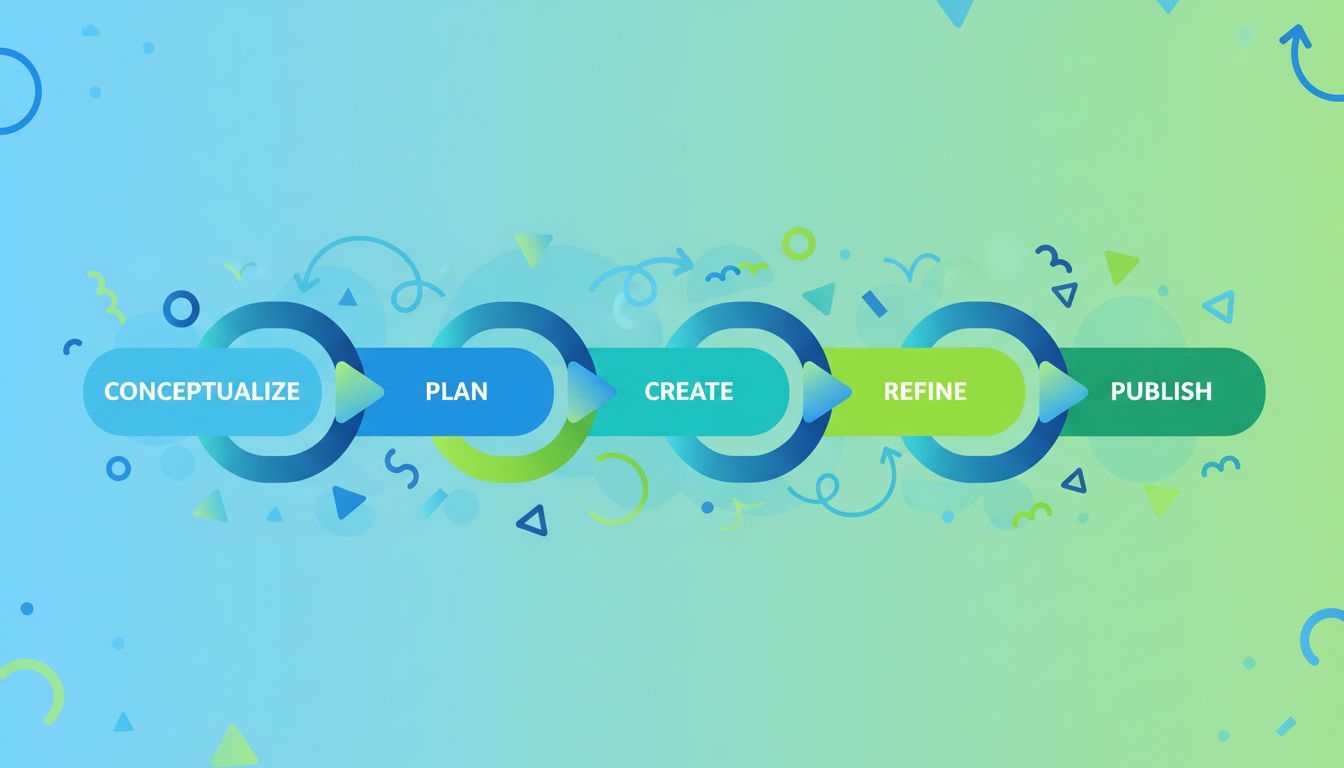
Here is a five-step workflow that gets useful output from Writesonic without letting it dilute your content quality.
Step 1: Brief before you generate. Do not open Writesonic until you have a content brief ready. At minimum: the target keyword, the target reader, the main claim the article makes, and two or three supporting points. Better briefs produce better AI output. Without a brief, Writesonic generates generic content because you have given it no specifics to work with. A B2B content brief template works well as your pre-generation checklist.
Step 2: Generate the structure first. Use the Article Writer to produce an outline before asking it to fill in the body. Review the H2 structure carefully. If the outline covers the wrong angles or misses key questions your reader has, fix it before you generate 2,000 words you will discard.
Step 3: Generate section by section. For posts longer than 1,500 words, generate each section separately rather than requesting the full draft at once. Section-level generation gives you more control over tone and depth. It also makes editing faster because you are working in smaller units.
Step 4: Run a human review on every section. Every section that Writesonic generates needs a human eye before it goes anywhere. Check factual accuracy, add your real-world examples and proof points, and rewrite any passage that sounds robotic or hedged. This is the human-in-the-loop AI content workflow, and it is not an optional step.
Step 5: Do a brand voice pass last. After the factual and structural edit, read the post aloud. Anything that sounds like a committee wrote it or reads too generically needs a rewrite in your team’s actual voice.
Writesonic vs. Jasper vs. Copy.ai for B2B Content Teams
If you are comparing tools, here is how Writesonic stacks up against the two most common alternatives for B2B content teams.
| Feature | Writesonic | Jasper | Copy.ai |
|---|---|---|---|
| Long-form blog drafts | Strong | Strong | Adequate |
| Real-time web access | Yes (Chatsonic) | Limited | No |
| Email sequence generation | Good | Good | Good |
| Brand voice training | Basic | Advanced | Moderate |
| Built-in SEO scoring | Yes | Via integrations | Via integrations |
| Starting price | ~$20/month | ~$39/month | ~$36/month |
| Best for B2B teams | Budget-focused teams needing volume | Teams needing brand voice consistency | Teams focused on short-form copy |
Writesonic wins on value for B2B teams primarily producing blog volume and email content. Jasper wins on brand voice consistency for teams that need AI output to match a specific established tone at scale. Copy.ai is stronger for short-form ad and sales copy. For teams running content research alongside drafting, Writesonic’s real-time web access via Chatsonic is a genuine differentiator.
If you also need a dedicated SEO content tool for briefs and competitor research, see Frase vs Surfer SEO for B2B Content Teams for how to choose between the two leading options.
Writesonic Pricing: What B2B Teams Actually Need
Writesonic’s pricing starts around $20 per month for an individual plan and scales to $1,499 per month for agency plans. For most small B2B content teams of one to three people, the mid-tier plan at around $40 to $80 per month is the practical entry point. It covers unlimited words and full Article Writer access.
The free plan limits output length and is suitable for evaluating the tool, not for real content production. If you are running a trial, test it on a real piece of content at the mid-tier level before committing to a paid plan.
For teams where one person is producing four or more pieces of long-form content per month, Writesonic typically pays for itself. If you save two hours of writing time per post and your time is worth $75 per hour, one saved post covers the monthly subscription fee. The ROI case is clearest for content volume, which is exactly where Writesonic is strongest.
What Most B2B Teams Get Wrong With AI Writing Tools
The pattern of misuse is consistent across teams. Four mistakes show up repeatedly in how B2B content teams use AI writing tools.
Publishing first-draft output without editing. AI-generated content has recognizable patterns: hedged language, balanced structures, generic examples. Experienced B2B readers notice immediately. The tool is a draft machine, not a publishing machine. If your process does not include a substantive human edit before publication, Writesonic will gradually erode your content quality and authority.
Skipping the brief. Vague inputs produce vague outputs. Teams that give Writesonic a title and a keyword and expect a strong article get a generic article that covers the topic at surface level. The brief is where your expertise lives. It is also where you encode your ICP specifics, your angle, and your main claims. Do not shortcut it.
Using it for content that requires proprietary data. Case studies, original research, customer stories, and product-specific comparisons are the posts that build authority in a B2B niche. None of them can be meaningfully AI-generated. Teams that delegate these content types to AI end up with content that looks complete but does not do its job.
Not building a human review step into the workflow. The human-in-the-loop AI content workflow is not optional if you care about factual accuracy and brand voice. Teams that skip this step because it feels slow end up with published errors and off-brand content that costs more to fix than it saved to generate.
FAQs
Is Writesonic good for B2B content marketing?
Yes, for specific content types. Writesonic works well for B2B blog first drafts, email sequences, and LinkedIn content repurposing. It is not suitable for case studies, original research, or content requiring deep technical accuracy. Every output needs a substantive human review before publication.
How does Writesonic compare to Jasper for B2B teams?
Writesonic is cheaper and has stronger built-in real-time web access via Chatsonic. Jasper offers more advanced brand voice training, which matters for teams needing AI output to match a specific tone consistently. For B2B teams on a budget producing primarily blog content, Writesonic is the better starting point.
Does Writesonic produce SEO-ready content?
It produces content with basic SEO scaffolding: keyword insertion, header structure, and an internal scoring system. It does not replace a dedicated SEO content tool. For competitive B2B topics, pair Writesonic with a tool like Frase or Surfer to validate keyword coverage and structure. See the Frase vs Surfer comparison for how those tools differ.
How long does it take to produce a blog post with Writesonic?
The Article Writer produces a 1,500 to 2,500 word first draft in under two minutes. Plan for one to two additional hours for editing, fact-checking, and voice revision before the post is publishable. The draft is a starting point, not a finished piece.
Can a solo B2B content marketer use Writesonic effectively?
Yes. Solo content marketers and small two-person teams are the clearest fit. The tool handles the volume problem, producing consistent first drafts, so small teams can focus time on editing, strategy, and content types that require genuine human expertise.
Is Writesonic worth the cost for small B2B teams?
For teams producing three or more pieces of long-form content per month, yes. The time savings on drafting alone typically cover the subscription fee. For teams producing one or two pieces a month where speed is not the constraint, the cost-benefit case is weaker.
Affiliate link — we earn a small commission at no extra cost to you.
What To Do Next
If you are evaluating Writesonic for your B2B content program, three steps will tell you whether it fits.
Start your trial on a real content brief, not a throwaway topic. Use a piece you were actually going to write. The B2B content brief template will help you structure the input so you get usable output from the first try.
Define your guardrails before you scale. Decide in advance which content types will go through Writesonic, which need an SME to write first, and which require real customer data that AI cannot supply. Without those guardrails, teams tend to over-rely on the tool for content that ends up diluting their authority.
Build the human review step into your workflow before you publish anything. The human-in-the-loop AI content workflow covers how to structure that review without slowing your publishing cadence. Start there, then add Writesonic to the front end of that process.
Ready to test it yourself? Start a free Writesonic trial and run your first real brief through it. The free tier is enough to see whether the Article Writer output quality suits your audience before committing to a paid plan.
